

Achieving global equitable access to robotic surgery
 0
0 Graphical Abstract
Abstract
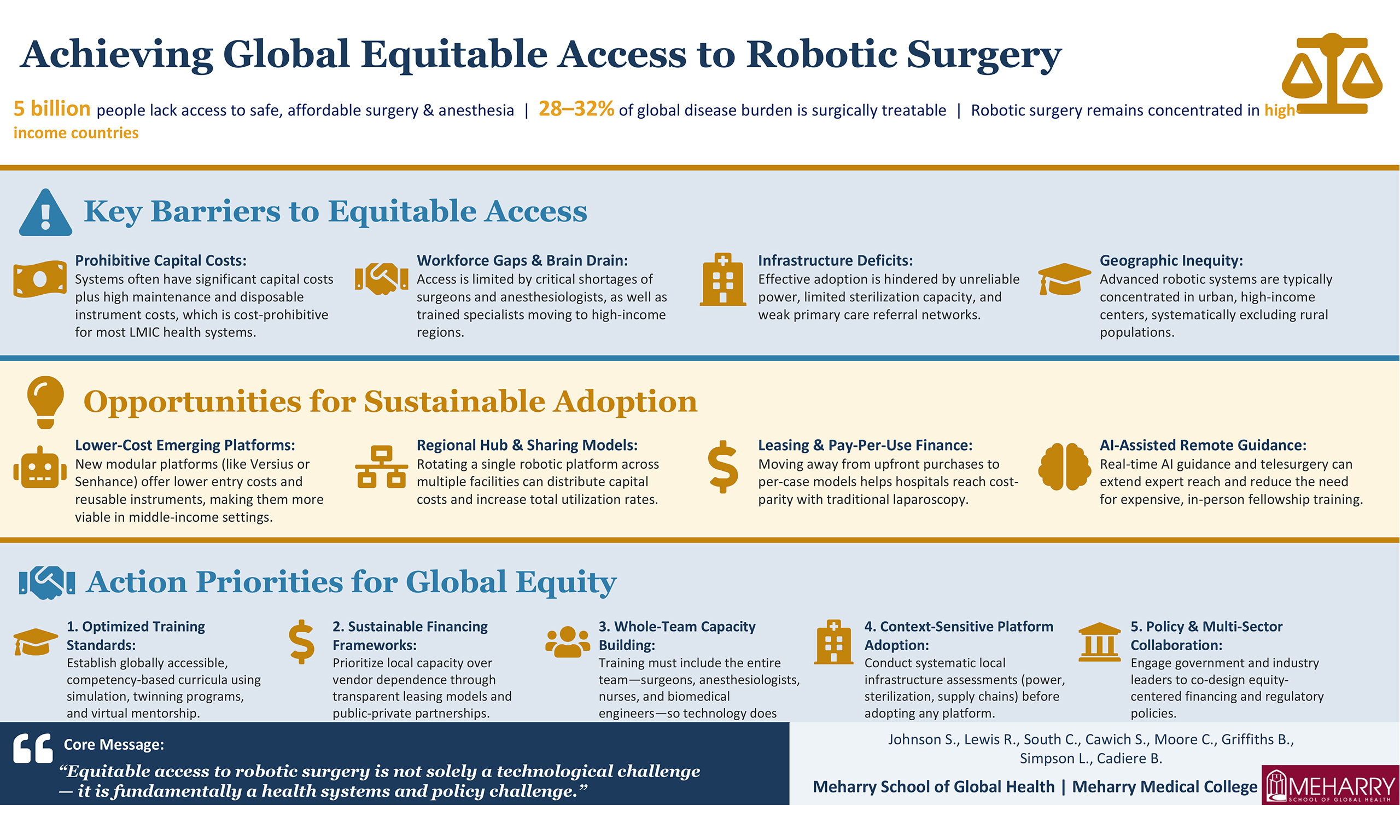
There are proven benefits accompanying robotic surgery for patients, surgeons, communities, and health systems. At the same time, there have been challenges in expanding its use in global, rural, and low-resource settings. These challenges include inequitable access to technology, disparities in surgical education and training, economic challenges, and structural or systemic barriers. In this paper, we examine these disparities and discuss innovative ways in which these obstacles can be tackled in order to ensure broader global access to robotic surgery. These include collaboration with government, industry, and health system leadership to create multi-partner and multidisciplinary implementation models, accounting for country-specific variables such as health policies, financing models, availability of surgically trained workforce, and training models. The introduction of lower-cost platforms, expanded access to current platforms, and healthcare policies and financial models prioritizing access to safe, affordable surgical care are necessary.
Keywords


 Download PDF
INTRODUCTION
Although minimally invasive surgery (MIS) is accepted as the modern standard of care for many surgical diseases[1,2], there are disparities in MIS access across the globe[3-5]. This inequity creates an ethical dilemma since it deviates from the World Health Organization constitution that considers the “highest attainable standard of health as a fundamental right of every human being without distinction of race, geography, religion, economic, or social condition”[6,7]. Achieving equity is one of the basic tenets of fairness and human rights in modern society[6,7].
In an attempt to bring attention to these inequities, Mitzman et al. coined the term “MIS deserts” to describe areas where MIS access/utilization remained subpar[8]. We discuss the factors contributing to the existence of MIS deserts and discuss strategies to achieve equitable global access to robotic surgery.
IMPACT OF MIS
The advantages of MIS are multifaceted. Surgeons who utilize MIS techniques experience better ergonomics and greater operator comfort, that translate into fatigue mitigation, reduced musculoskeletal strain, and increased longevity in their careers[9]. Robotic platforms offer the added advantage of superior visualization through high-definition cameras, tremor reduction, and better maneuverability with surgical instruments[10].
These impact outcomes by exposing patients to fewer postoperative complications and improved surgical quality outcomes[1,2]. The resultant rapid recovery, improved mobility, reduced demand for hospital-based resources, and morbidity containment results in faster return to work and drives long-term cost reduction, ultimately benefiting the society and the entire healthcare system[1,2,9].
ACCESS TO MIS
Although 28%-32% of global disease burden is attributable to surgically treatable conditions, over half the global population cannot access surgical treatment[11]. In other words, an estimated 5-billion people worldwide lack access to safe and affordable surgical care[11]. This would result in a predicted negative effect on overall health status, healthcare expenditure, life expectancy, and functionality for those populations affected[12]. Some estimate that, without urgent investment in surgical scale-up, low- and middle-income countries (LMICs) would sustain cumulative losses in economic productivity of US$12.3 trillion between 2015 and 2030[11].
Many authors defined factors contributing to MIS deserts, including: inadequately trained workforces, paucity of MIS equipped hospitals, inadequate insurance coverage, limited healthcare funding, geography, economic circumstance, and individualized limitations within specific healthcare delivery systems[10,13,14]. Despite better understanding of these factors, there has been little measurable progress toward global MIS equity over the past three decades.
This dismal view of global health metrics dims further when four factors are brought into focus: (1) the data documenting the superiority of MIS is robust[1-5]; (2) the statistics quoted describe general access to surgical care[11,12]; (3) inequities worsen when we focus on MIS deserts alone instead of surgery in general[3-5]; and (4) the disparities expand further when robotic surgery is substituted for MIS deserts. The reality is that the gaps are even greater in robotic surgery, where higher capital costs and increased infrastructure needs exacerbate existing barriers to equitable care.
CURRENT STATE OF GLOBAL ROBOTIC SURGERY
The key components of robotic surgical platforms are mechanical arms that replicate the movement of surgeons’ hands with remarkable precision[13]. The surgeon manipulates the robotic instruments from a console that features high-definition 3D visualization systems to provide depth perception and clarity[15]. The robotic system’s software includes advanced algorithms that assist with real-time tracking and motion scaling, ensuring smooth and controlled movements[15]. Some platforms also feature simulation capabilities for training, allowing surgeons to practice techniques in a virtual environment[15]. Robotic systems may also be integrated with various imaging technologies such as fluoroscopy or magnetic resonance imaging (MRI), providing real-time feedback and enhanced intraoperative guidance[16]. These systems are equipped with safety and override features that prevent accidental movements or errors and ensure that they operate reliably[15]. The smaller incisions and wristed intracorporeal movement of the instruments decrease movement, torque and abdominal wall trauma[15]. These components make robotic surgical platforms superior to conventional laparoscopy.
Currently, several surgical platforms are in use [Table 1]. The Intuitive Surgical da Vinci system is the most widely adopted, operating in over 70 countries[15]. It received U.S. Food and Drug Administration (FDA) approval in 2000 and has more than 8,600 platforms deployed worldwide, with more than 14 million procedures performed worldwide by 2022 in virtually all surgical subspecialties[15]. Newer systems such as Versius, Hugo, and Senhance are also gaining traction and expanding utilization across Europe, Asia, and Latin America[17-19].
A comparison of robotic surgical platforms in clinical use
| Platform | Developer | FDA approval/entry year | Approximate cost (USD) | Countries deployed | Applications | Key features | Safety profile | Notes |
| da Vinci (Xi/X/Xi SP) | Intuitive Surgical (USA) | 2000 (original); Xi 2014 | $1.5-$2.5M + $100k/year | 70+ | All major general surgery (hernia, colorectal, bariatric, foregut, etc.) | 3D vision, wristed instruments, proprietary console | Extensive safety data; considered gold standard | 8,000+ systems installed globally[15,20] |
| Versius | CMR Surgical (UK) | CE: 2019, India 2019, US: 2024 | ~$1M | 20+ | Colorectal, cholecystectomy, hernia | Modular arms, open console, portability | Growing data, CE-cleared, FDA-approved | Targets cost-sensitive systems, mobile design[18,20] |
| Hugo™ RAS | Medtronic (Ireland/USA) | CE: 2021, LatAm 2022, US trials ongoing | ~$1M | 10+ (Europe, LatAm, Asia) | Cholecystectomy, urology, GYN | Open console, modular carts, integration with Medtronic instruments | Ongoing post-market studies | Aims to challenge da Vinci in cost and integration[19,20] |
| Senhance | Asensus Surgical (USA) | CE: 2012, FDA: 2017 | ~$1M | 20+ | Colorectal, hernia, bariatrics, GYN | Haptic feedback, eye tracking, open console | Safe; fewer complications; slower uptake | Laparoscopic skill translation; minimal footprint[17,20] |
| OTSAW (under development) | OTSAW Digital (Singapore) | In R&D | TBD | TBD | Targeting general and MIS | AI-assisted navigation | TBD | AI integration focus[20,21] |
| Avatera | Avatera Medical (Germany) | CE: 2019 | ~$1M | Select EU markets | General and urologic surgery | Single-use instruments, compact system | Limited safety data published | Focus on reducing sterilization and infection risks[20,22] |
| REVO-i | Meere Company (South Korea) | South Korea: 2018 | ~$1M | Korea + select Asia | Urology, general | da Vinci-like system | Minimal safety reports available | Still very limited in distribution[23] |
| Maestro™ | Moon Surgical (France/USA) | FDA: Dec 2022; CE: Sept 2023; Commercial FDA: June 2024 | Not disclosed; lower-cost positioning | US + select EU | General, bariatric, GYN, urologic, colorectal | Robotic assistant; holds/positions instruments and camera; compatible with standard laparoscopic tools; AI ScoPilot (FDA 2025); NVIDIA Holoscan | 2,300+ patients (US/EU, 2025); early commercial phase; SAGES TAVAC reviewed 2023 | Laparoscopic assistant model (not fully autonomous); one-hour onboarding; targets cost-sensitive, high-volume laparoscopy markets[20,24] |
| Intuitive Ion (robotic bronchoscopy, not general surgery) | Intuitive Surgical | 2019 | ~$600k | 100+ | Thoracic diagnostics | Catheter-based robotic arm | Not for general surgery | Included for context - not used for general surgery[15] |
While the da Vinci system has the highest upfront and recurring costs, other platforms may offer lower cost for specialized applications, as listed in Table 1[17-19]. The da Vinci and Hugo systems utilize proprietary consoles, whereas the Versius and Senhance platforms feature modular, open-architecture designs[15,17-19]. Additionally, the da Vinci instruments have limited reusability, while Senhance and Versius emphasize reusability, and the Avatera platform utilizes disposable tools[15,17-19].
With 25 years of FDA approval, the da Vinci system boasts the longest safety record and a substantial body of studies on safety and efficacy[15]. It has also established simulation tools to facilitate adoption and training[15]. Other platforms show promising safety profiles but require longer-term data to confirm their effectiveness.
COSTS OF ROBOTIC SURGERY ACCESS
The rapid adoption of robotic surgery has widened the disparity because LMIC health systems have limited funding to afford the technology[25,26]. It is useful to distinguish between three levels of cost burden: capital costs borne primarily by hospitals and health systems (acquisition and installation), per-case costs driven by disposable instruments and consumables, and system-level costs borne by governments and payers through reimbursement structures. The initial investment to obtain the most commonly utilized robotic platform ranges from approximately USD $1.5-2.5 million, with additional costs for maintenance, training, and consumables[25]. Newer systems have lower capital costs, which may impact global adoption[25].
Many studies have examined the cost-effectiveness of robotic surgery, yielding mixed results. Ng et al. observed an increase in robotic surgery between 2012 and 2019, accompanied by increased hospitalization costs for all robotic surgeries reviewed[27]. Conversely, other studies suggest that the initial capital costs of robotic-assisted surgery are offset by the long-term benefits, including reduced hospital stays, quicker recovery times, lower complication rates, and improved surgical outcomes[28].
Healthcare systems considering acquisition should consider a per-case model. When capital costs are amortized over expected annual procedure volumes, the per-case cost of robotic surgery decreases substantially with increasing utilization; systems performing < 100 robotic cases annually may find per-case costs prohibitive, while those achieving ≥ 300 cases annually may approach cost-parity with laparoscopic approaches[28].
EFFECTIVENESS OF ROBOTIC SURGERY
Robotic surgery offers many advantages over laparoscopic, including three-dimensional visualization, tremor reduction, increased instrument dexterity, and greater degrees of freedom of wristed instruments[10,13]. These benefits directly lead to better exposure in the operative field, accurate dissection planes, and technically proficient procedures. The resulting data demonstrate that robotic procedures result in lower complication rates, decreased blood loss, shorter hospitalization, improved overall patient satisfaction scores, quicker return to daily activities, reduced hospital costs and long-term healthcare costs[28]. Procedure-specific advantages have also been documented, such as decreased anastomotic leak rates in robotic Roux-en-Y gastric bypasses[2], decreased blood loss in robotic hysterectomies[29], and decreased mortality in robotic cardiac surgery[30].
While robotic surgery is propelled by technology-driven advantages, conventional laparoscopic approaches are effective, equally viable, and often yield comparable results without the high capital investment for robotic systems[31]. Indeed, for simple procedures, such as cholecystectomy, appendectomy, and straightforward herniorrhaphy, well-performed laparoscopic surgery achieves equivalent outcomes at substantially lower cost, and should remain the standard of care in resource-limited settings where robotic investment is not feasible[31,32]. This should be balanced by the fact that laparoscopy has a steep learning curve, which can prove challenging for surgeons who have not yet mastered the approach[9].
GLOBAL DISTRIBUTION
When discussing the distribution of robotic platforms, it is important to distinguish between low-income (LIC) and middle-income countries (MICs), as their challenges and viable solutions differ substantially. In LICs, such as those in sub-Saharan Africa, there are critical shortages of basic surgical infrastructure, trained workforce, and safe perioperative capacity, making direct robotic adoption impractical without foundational investment[11,33]. On the other hand, MICs such as Brazil, India, and Thailand may have the institutional infrastructure to support phased robotic adoption, but face barriers of affordability, uneven geographic distribution of technology, and inequitable access across urban and rural populations[33-36]. These challenges are magnified when considering access to robotic surgery, which requires substantial healthcare resources, including reliable power, strong information technology services, and a robust hospital infrastructure[25].
STRATEGIES TO ACHIEVE EQUITABLE ACCESS TO ROBOTIC SURGERY
It is clear that there cannot be a single overarching strategy to achieve equitable access to robotic surgery for all nations across the globe since each nation faces differing individual challenges. However, we attempt to discuss strategies to overcome the obstacles in general.
Human resources
A key barrier to adopting robotic surgery is the lack of a diverse and adequately trained surgical workforce, and difficulty attracting and retaining trained specialists[37]. This becomes especially relevant in LMICs because trained surgeons may perceive these healthcare systems as unattractive due to the potential for them to de-skill with low case volumes, lack of institutional support due to poor healthcare budgets, a paucity of opportunities for continued medical education, and a paucity of the necessary infrastructure, equipment and multidisciplinary workforce to support modern practice[32,37,38].
The first step, therefore, is to make the healthcare environment in LMICs attractive in order to attract trained healthcare personnel. Traditionally, healthcare personnel had to travel to high-volume centers for training. This led to the well-described “brain drain phenomenon” - the emigration of highly-trained surgeons from LMICs to high-income countries (HICs)[39]. A potential solution may be to explore on-site training in LMICs where visiting trainers from high-income nations may form alliances/relationships with teachers and training programs in LMICs. This requires infrastructure, and international cooperation.
We should also recognize that many LICs deal with critical shortages of all categories of trained staff. In these systems, training of surgeons alone would not be sufficient. For example, it is estimated that anaesthesiologists number < 1/100,000 population in many sub-Saharan African countries - an insufficient number to safely conduct robotic cases[40]. Additionally, post-operative follow-up for patients who undergo robotic procedures at central hospitals depends on functional primary care, referral, and rehabilitation infrastructure, which is often weak or under-resourced in LICs[41]. Balancing technology introduction with sustained local capacity building (training all levels of healthcare staff) is essential to prevent the acquisition of equipment that cannot be maintained or safely operated. The second step for any implementation strategy must account for the full care continuum, not solely the operative episode[34].
Healthcare funding
In many LMICs, healthcare receives a small portion of national budgets, frequently insufficient to meet basic healthcare needs[25]. In these models, the high capital costs for robotic platforms may be prohibitive. This is a major contributor to unequal global deployment patterns. In these settings, it is important for the medical fraternity to present the feasibility data discussed previously to policymakers so that they appreciate that acquisition is a long-term investment that brings financial benefits and improvements in societal and national wellbeing[32,36-38].
Once a decision is made for capital acquisition, it is important to consider the specifications of each robotic platform [Table 1]. Platform selection must account for on-the-ground adaptability rather than technical specifications alone. The Versius system’s modular arm design offers theoretical portability advantages in facilities lacking elevators or large operating theaters, though the feasibility of inter-facility transport and the training cycle required for local biomedical engineers must be evaluated in context[18]. The Senhance system’s reusable instrument model could reduce per-case consumable costs significantly, but requires reliable sterilization infrastructure and stable supply chains - conditions that cannot be assumed in LICs where consumable shortages have disrupted surgical programs[17]. The da Vinci system’s reliance on stable high-voltage electrical supply is a critical infrastructure consideration in settings where power outages are routine; backup power solutions must be integral to any deployment plan. Decisions about platform adoption in resource-limited settings should be informed by systematic local infrastructure assessments rather than defaulting to platforms designed for high-resource environments.
Several innovative models to improve access to robotic surgery globally exist. Regional equipment sharing centers, in which a single robotic system serves multiple hospitals on a scheduled basis, can substantially improve utilization rates while distributing capital costs across institutions[42]. Equipment leasing and pay-per-procedure financial models can reduce prohibitive upfront investment, enabling health systems in LMICs to introduce robotic surgery incrementally[42]. Teleoperative and artificial intelligence (AI)-assisted remote guidance systems hold promise for extending surgical expertise to underserved areas, though regulatory, latency, and infrastructure challenges must be addressed before widespread adoption.
Access to robotic consumables
Limited resources, particularly in acquiring MIS consumables, pose significant challenges. Innovative approaches have emerged, including collaborations with medical supply companies and partnerships between HIC institutions and private sector facilities within LMICs[42]. These efforts help reduce patient and government costs while fostering public trust in MIS and the broader healthcare system.
To avoid exacerbating inequities, public–private partnerships must be structured with clear governance frameworks that prioritize local capacity building, ensure transparent pricing and technology transfer, establish sustainable maintenance and consumable supply chains, and include provisions for training local engineers and clinical staff rather than creating long-term dependence on external vendors. Forming partnerships with organizations sharing common interests can significantly enhance the development and sustainability of robotic programs in globally under-resourced communities.
Access to training
One strategy to increase access to training in LMICs is to establish training programs at local universities and develop partnerships with surgical societies in HICs. Concrete models include regional robotic training hubs that serve multiple facilities across a geographic area, HIC–LMIC “twinning” programs pairing institutions for sustained faculty exchange and mentorship, mobile simulation laboratories capable of reaching rural hospitals, and shared-platform arrangements in which a single robotic system rotates among several partner hospitals to reduce per-institution capital burden and increase aggregate utilization rates. Innovative methods such as simulation-based education and distance mentoring offer solutions to overcome training limitations faced by healthcare professionals in resource-limited settings.
Ensuring access to high-quality training curriculum produces diverse trainees, who are more likely to work in underserved communities, particularly those with higher levels of Medicaid or government insurance[43,44]. Ensuring equitable access to training requires action across four interdependent domains: (1) access to robotic platforms for hands-on training; (2) access to qualified faculty and surgeon educators; (3) access to simulation tools, including virtual-reality trainers and box trainers; and (4) standardization of curricula and competency assessment frameworks across training programs globally[45].
Access to simulation and standardized curriculum
While there is mandatory residency training in laparoscopic surgery to qualify for the American Board of Surgery examination, there is currently no compulsory curriculum or requirements for robotic surgery[45]. It has been reported that there is a wide variation in access to robotic training for residents and inconsistencies in skills assessments[46,47]. In response to this in 2007, the Society of American Gastrointestinal and Endoscopic Surgeons (SAGES), responsible for administering the Fundamentals of Laparoscopic Surgery examination, highlighted the need for a formalized, standardized robotic curriculum[48].
Access to faculty
Global data demonstrates significant disparities in surgeons’ access to MIS education, especially in LMIC, rural, and low-resource communities[25,42]. The disparity is greater in global access to robotic surgical education due to reduced access to robotic platforms/simulators, shortage of surgeon educators, and limited access to robotic training centers[25]. We anticipate that this should improve within the next decade corollary with the increase in global access to robotic platforms. The largest robotic surgical company operating in over 70 countries, and new technology platforms are continually entering the market[16].
Environmental sustainability considerations
The operating room accounts for one-third of hospital waste production and substantial energy consumption[49,50]. Robotic systems, in particular, have a notable impact on sustainability due to high waste and energy use[51]. Robotic systems generate substantial single-use instrument waste and consume significantly more energy per-case than conventional laparoscopy[51]. While surgeons are motivated to implement surgical sustainability initiatives, their specific knowledge remains low on methods to improve sustainability in surgical practices[52]. Specific mitigation strategies include prioritizing reusable instrument platforms in procurement decisions and investing in energy-efficient robotic systems and operating room infrastructure. Industry leaders, regulatory bodies, and surgical societies should collaborate to develop and enforce sustainability standards, conduct life-cycle analyses of robotic platforms, and incorporate environmental impact metrics into adoption decision frameworks.
FUTURE PERSPECTIVES
Several powerful robotic and AI-assisted surgical innovations have emerged, such as digital twin simulations, image-based segmentation, and advanced vision models, which possess the ability to provide autonomous suturing. While these cutting-edge innovations and future developments have the potential to enhance surgical care, they may also widen the gap in equitable access to these technologies[53]. However, it also presents an underexplored opportunity to lower training barriers by enabling surgeons with limited robotic experience to perform procedures safely under AI-assisted, real-time, remote expert supervision, reducing the dependency on in-person fellowship training. Low-cost AI integrated with entry-level robotic platforms could create a viable pathway for LMICs to introduce robotic-assisted surgery at a fraction of current costs. Realizing this potential will require deliberate investment in open-access AI training datasets, affordable computational infrastructure, and international regulatory harmonization that does not inadvertently restrict LMIC adoption[47].
CONCLUSIONS
While robotic surgery brings proven benefits for patients, surgeons, communities, and health systems, there are challenges in expanding its use in global, rural, and low-resource settings. Collaboration with government, industry, and health system leadership is now required to create multi-partner implementation models, accounting for country-specific variables such as health policies, financing models, availability of surgically trained workforce, and training models. The introduction of lower-cost platforms, expanded access to current platforms, and healthcare policies and financial models prioritizing access to safe, affordable surgical care are necessary.
Three action-oriented priorities should guide the field: (1) establish globally harmonized, competency-based training standards for robotic surgery that are accessible to surgeons in LMICs through simulation, twinning programs, and virtual mentorship; (2) develop sustainable, context-appropriate financing and equipment-sharing models - including leasing, regional hubs, and public–private partnerships with robust governance - to broaden platform access beyond high-income hospital systems; and (3) build comprehensive, whole-team capacity that includes surgeons, anesthesiologists, nurses, and biomedical engineers, ensuring that technology introduction does not outpace local ability to operate, maintain, and benefit from it safely and equitably.
DECLARATIONS
Authors’ contributions
Made substantial contributions to conception and design of the study: Johnson S, South C, Cawich SO, Moore C, Simpson L, Cadiere B
Made substantial contributions to literature review and interpretation of the available literature: Johnson S, Lewis R, South C, Moore C, Griffiths B, Cadiere B
Provided administrative, technical, and material support: Lewis R, South C, Moore C, Griffiths B, Simpson L
Approved the final version of this manuscript and consented to manuscript submission: Johnson S, Lewis R, South C, Cawich SO, Moore C, Griffiths B, Simpson L, Cadiere B
Availability of data and materials
Not applicable.
AI and AI-assisted tools statement
Not applicable.
Financial support and sponsorship
None.
Conflicts of interest
All authors declared that there are no conflicts of interest.
Ethical approval and consent to participate
Not applicable.
Consent for publication
Not applicable.
Copyright
© The Author(s) 2026.
REFERENCES
1. Mohiuddin K, Swanson SJ. Maximizing the benefit of minimally invasive surgery. J Surg Oncol. 2013;108:315-9.
2. Snyder BE, Wilson T, Leong BY, Klein C, Wilson EB. Robotic-assisted Roux-en-Y Gastric bypass: minimizing morbidity and mortality. Obes Surg. 2010;20:265-70.
3. Horsey ML, Lai D, Sparks AD, et al. Disparities in utilization of robotic surgery for colon cancer: an evaluation of the U.S. National Cancer Database. J Robot Surg. 2022;16:1299-306.
4. Blake EA, Sheeder J, Behbakht K, Guntupalli SR, Guy MS. Factors impacting use of robotic surgery for treatment of endometrial cancer in the United States. Ann Surg Oncol. 2016;23:3744-8.
5. Tatarian T, McPartland C, Nie L, et al. Socioeconomic disparities in the utilization of primary robotic hernia repair. Surg Endosc. 2023;37:4829-33.
6. World Health Organization. Health systems: equity. Available from: https://www.who.int/health-topics/equity. [Last accessed on 8 Jun 2026].
7. Ghebreyesus TA. Health is a fundamental human right. Statement by WHO Director General on December 10, 2017. Available from: https://www.who.int/news-room/commentaries/detail/health-is-a-fundamental-human-right. [Last accessed on 8 Jun 2026].
8. Mitzman B, Johnson S, Lichtveld M, Culbertson R, Fong ZV. Minimally invasive surgery deserts: is there a role for robotic assisted surgery? JSLS. 2024;28:e2024.00039.
9. Stefanidis D, Wang F, Korndorffer JR Jr, Dunne JB, Scott DJ. Robotic assistance improves intracorporeal suturing performance and safety in the operating room while decreasing operator workload. Surg Endosc. 2010;24:377-82.
11. Meara JG, Leather AJM, Hagander L, et al. Global Surgery 2030: evidence and solutions for achieving health, welfare, and economic development. Lancet. 2015;386:569-624.
12. Ndugga N, Hill L, Pillai D, Artiga S. Race, inequality, and health. 2025. Available from: https://www.kff.org/health-policy-101-race-inequality-and-health/. [Last accessed on 8 Jun 2026].
13. Reddy K, Gharde P, Tayade H, Patil M, Reddy LS, Surya D. Advancements in robotic surgery: a comprehensive overview of current utilizations and upcoming frontiers. Cureus. 2023;15:e50415.
14. Dawes D. The political determinants of health. Johns Hopkins University Press; 2020. Available from: https://books.google.tt/books?id=3OLMDwAAQBAJ&printsec=frontcover#v=onepage&q&f=false. [Last accessed on 8 Jun 2026].
15. Intuitive Surgical. Investor relations & clinical data. Available from: https://www.intuitive.com. [Last accessed on 8 Jun 2026].
16. Tappero S, Fallara G, Chierigo F, et al. Intraoperative image-guidance during robotic surgery: is there clinical evidence of enhanced patient outcomes? Eur J Nucl Med Mol Imaging. 2024;51:3061-78.
17. Asensus Surgical. Senhance surgical system. Available from: https://www.asensus.com/senhance. [Last accessed on 8 Jun 2026].
18. CMR Surgical. Versius robotic system overview. Available from: https://us.cmrsurgical.com/. [Last accessed on 8 Jun 2026].
19. Medtronic. Hugo RAS system. Available from: https://www.medtronic.com/hugo. [Last accessed on 8 Jun 2026].
20. Lee A, Baker TS, Bederson JB, Rapoport BI. Levels of autonomy in FDA-cleared surgical robots: a systematic review. NPJ Digit Med. 2024;7:103.
21. OTSAW Digital. Surgical robotics R&D. Available from: https://www.otsaw.com. [Last accessed on 8 Jun 2026].
22. Avatera Medical GmbH. Robot-assisted surgery. Available from: https://avatera.eu/1/robot-assisted-surgery/. [Last accessed on 8 Jun 2026].
23. Meere Company. REVO-i surgical robot. Available from: https://www.meerecompany.com. [Last accessed on 8 Jun 2026].
24. Salas Parra RD, Pechman D. Moon Surgical Maestro surgical robotics system: a SAGES technology and value assessment. 2023. Available from: https://www.sages.org/publications/tavac/moon-surgical-maestro-surgical-robotics-system/. [Last accessed on 8 Jun 2026].
25. Balakrishnan G, Krishnamurthy A. Robotic surgeries for cancer in low- and middle-income countries: hope or hype in surgical oncology? Int J Adv Med Health Res. 2023;10:64-70.
26. Bakunda L, Nyjong DM, Lorenzetti D, et al. Understanding disparities in access to and quality of surgical care for African, Caribbean and Black communities in high-income countries with universal healthcare: a scoping review protocol. BMJ Open. 2025;15:e099213.
27. Ng AP, Sanaiha Y, Bakhtiyar SS, Ebrahimian S, Branche C, Benharash P. National analysis of cost disparities in robotic-assisted versus laparoscopic abdominal operations. Surgery. 2023;173:1340-5.
28. South C, Megafu O, Moore C, et al. Robotic surgery in safety-net hospitals: addressing health disparities and improving access to care. Am Surg. 2025;91:639-43.
29. Brunes M, Johannesson U, Häbel H, Söderberg MW, Ek M. Effects of obesity on peri- and postoperative outcomes in patients undergoing robotic versus conventional hysterectomy. J Minim Invasive Gynecol. 2021;28:228-36.
30. Yanagawa F, Perez M, Bell T, Grim R, Martin J, Ahuja V. Critical outcomes in nonrobotic vs robotic-assisted cardiac surgery. JAMA Surg. 2015;150:771-7.
31. Rogula T, Koprivanac M, Janik MR, et al. Does robotic Roux-en-Y Gastric bypass provide outcome advantages over standard laparoscopic approaches? Obes Surg. 2018;28:2589-96.
32. Prete FP, Pezzolla A, Prete F, et al. Robotic versus laparoscopic minimally invasive surgery for rectal cancer: a systematic review and meta-analysis of randomized controlled trials. Ann Surg. 2018;267:1034-46.
33. Mehta A, Cheng Ng J, Andrew Awuah W, et al. Embracing robotic surgery in low- and middle-income countries: potential benefits, challenges, and scope in the future. Ann Med Surg. 2022;84:104803.
34. Yiengpruksawan A, Akaraviputh T, Methasate A, Chinswangwatanakul V. Robotic surgery in Thailand: current status and future development. Siriraj Med J. 2018;70:466-70. Available from: https://he02.tci-thaijo.org/index.php/sirirajmedj/article/view/152768. [Last accessed on 8 Jun 2026].
35. Alves Martins BA, Filho OM, Ghezzi TL, et al. An overview of robotic colorectal surgery adoption and training in Brazil. Medicina. 2023;59:1675.
36. Udwadia TE. Robotic surgery is ready for prime time in India: against the motion. J Minim Access Surg. 2015;11:5-9.
37. Shaw RD, Eid MA, Bleicher J, et al. Current barriers in robotic surgery training for general surgery residents. J Surg Educ. 2022;79:606-13.
38. Burke J, Gnanaraj J, Dhanda J, et al. Robotic surgery in low- and middle-income countries. Bulletin. 2024;106:138-41.
39. El Saghir NS, Anderson BO, Gralow J, et al. Impact of merit-based immigration policies on brain drain from low- and middle-income countries. JCO Glob Oncol. 2020;6:185-9.
40. Law TJ, Bulamba F, Ochieng JP, et al.; Global Anesthesia Workforce Study Group. Anesthesia provider training and practice models: a survey of Africa. Anesth Analg. 2019;129:839-46.
41. Pittalis C, Brugha R, Gajewski J. Surgical referral systems in low- and middle-income countries: a review of the evidence. PLoS One. 2019;14:e0223328.
42. Cawich SO, Johnson S, Dapri G, et al. Disparities in access to minimally invasive surgery in low and middle-income countries. Am Surg. 2025;91:696-701.
43. Moy E. Physician race and care of minority and medically indigent patients. JAMA. 1995;273:1515.
44. Marrast LM, Zallman L, Woolhandler S, Bor DH, McCormick D. Minority physicians’ role in the care of underserved patients: diversifying the physician workforce may be key in addressing health disparities. JAMA Intern Med. 2014;174:289-91.
45. Porterfield JR Jr, Podolsky D, Ballecer C, et al. Structured resident training in robotic surgery: recommendations of the Robotic Surgery Education Working Group. J Surg Educ. 2024;81:9-16.
46. George LC, O’Neill R, Merchant AM. Residency training in robotic general surgery: a survey of program directors. Minim Invasive Surg. 2018;2018:8464298.
47. Tom CM, Maciel JD, Korn A, et al. A survey of robotic surgery training curricula in general surgery residency programs: how close are we to a standardized curriculum? Am J Surg. 2019;217:256-60.
48. Herron DM, Marohn M; SAGES-MIRA Robotic Surgery Consensus Group. A consensus document on robotic surgery. Surg Endosc. 2008;22:313-25; discussion 311.
49. Shoham MA, Baker NM, Peterson ME, Fox P. The environmental impact of surgery: a systematic review. Surgery. 2022;172:897-905.
50. Huo B, Eussen MMM, Marconi S, et al. Scoping review for the SAGES EAES joint collaborative on sustainability in surgical practice. Surg Endosc. 2024;38:5483-504.
51. Papadopoulou A, Kumar NS, Vanhoestenberghe A, Francis NK. Environmental sustainability in robotic and laparoscopic surgery: systematic review. Br J Surg. 2022;109:921-32.
52. Sathe TS, Alseidi A, Bellato V, et al. Perspectives on sustainability among surgeons: findings from the SAGES-EAES sustainability in surgical practice task force survey. Surg Endosc. 2024;38:5803-14.
Cite This Article
 Open Access
How to Cite
Download Citation
If you have the appropriate software installed, you can download article citation data to the citation manager of your choice. Simply select your manager software from the list below and click on download.
Export Citation File
Type of Import
Tips on Downloading Citation
Citation Manager File Format
Type of Import
Direct Import: When the Direct Import option is selected (the default state), a dialogue box will give you the option to Save or Open the downloaded citation data. Choosing Open will either launch your citation manager or give you a choice of applications with which to use the metadata. The Save option saves the file locally for later use.
Indirect Import: When the Indirect Import option is selected, the metadata is displayed and may be copied and pasted as needed.
About This Article
Copyright

Data & Comments
Data
0









Comments
Comments must be written in English. Spam, offensive content, impersonation, and private information will not be permitted. If any comment is reported and identified as inappropriate content by OAE staff, the comment will be removed without notice. If you have any queries or need any help, please contact us at support@oaepublish.com.