



Does the presence of polychlorinated alkanes in plastic fruit stickers adhesive pose a threat to human health?
 0
0 Abstract
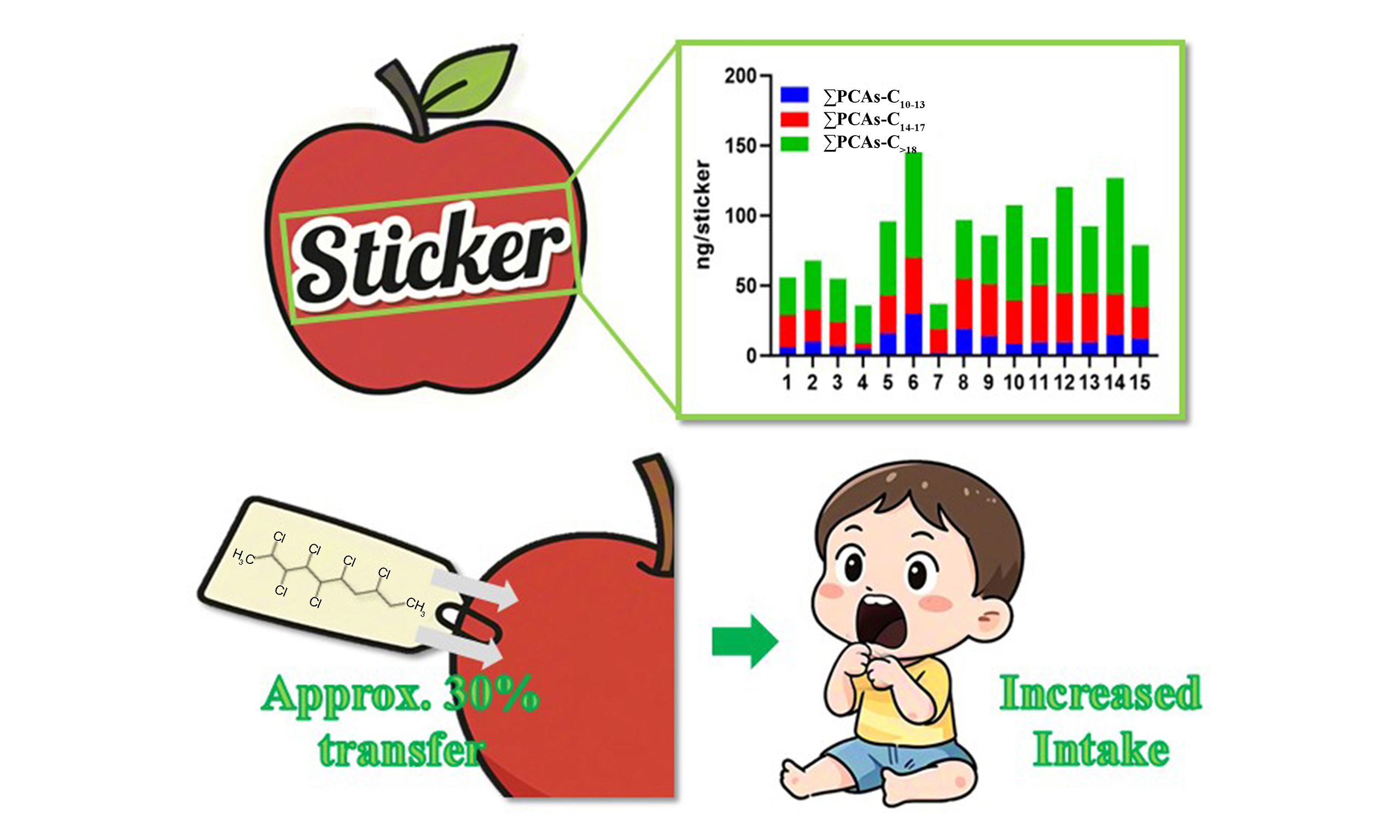
Polychlorinated alkanes (PCAs) are widely used in products as adhesives. While the environmental and human health risks of PCAs are increasingly recognized, little attention has been paid to their presence in food-contact materials such as fruit stickers. This study represents the first investigation into PCA contamination in fruit stickers and their potential contribution to human dietary exposure. The ∑PCAs-C10-21 concentrations ranged between 36 and 150 ng/sticker, with the highest contribution from PCAs-C18-21. Specifically, Cl1-2 congeners contributed most to ∑PCAs, resulting in low chlorine content in the fruit stickers, i.e. 33% ± 5%, 25% ± 3%, and 16% ± 2%, for PCAs-C10-13, PCAs-C14-17, and PCAs-C18-21, respectively, in contrast to technical PCA mixtures, which are typically dominated by Cl4-8 congeners. Preliminary tests suggested potential transfer of PCAs from stickers to fruits, with an estimated transfer rate of 23%-36% of ∑PCAs. The average human intake of PCAs via fruit sticker residues was estimated at 4.5 ng/day, with a worst-case scenario of 83 ng/day. The estimated daily intakes were 1-3 orders of magnitude lower than the exposure from other pathways, such as the ingestion of dust.
Keywords
INTRODUCTION
Adhesive plastic stickers, widely used in global fruit market for branding and traceability, are directly applied to the surface of fruit and remain until consumption. Those stickers allow long-term contact between adhesives and fruits, leading to a potential transfer of chemicals from the sticker to the fruits and associated exposure of consumers of the fruit[1]. However, there are currently no studies available on the identification of hazardous chemical additives in the fruit stickers, as well as the exposure risks through the contaminated food.
Polychlorinated alkanes (PCAs) are high production volume chemicals, with global annual production over 2 million tons[2-4]. They are widely used in adhesive products to increase their flexibility and adhesion performance[5,6]. Due to their persistence, bioaccumulation and long range atmospheric transport potential[7-9], PCAs-C10-13 (formally reported as short chain chlorinated paraffins, SCCPs) have been listed under the Stockholm Convention and are considered as persistent organic pollutants (POPs)[10]. PCAs-C14-17 (formally reported as medium chain chlorinated paraffins, MCCPs) have recently been proposed for inclusion in the Appendix A of the Stockholm Convention and are currently under review due to their similar characteristics[11]. In contrast, PCAs-C<10 and PCAs-C>17 (formally reported as long chain chlorinated paraffins, LCCPs) are less regulated worldwide, despite their detection in the environment and various products[12-14]. The hydrophobicity and stability of PCAs provide advantages on the application in various products, as evidenced by the detection on the glue samples[4], but also raise concerns on their health effects on humans.
PCAs have been widely detected in various food-contact material, raising concerns about their potential migration into food. Wang et al. reported mean concentrations of PCA-C10-13 of approximately 4.0 μg/g in polypropylene (PP) and 0.15 μg/g in polyethylene (PE) packaging[15]. Subsequent migration studies confirmed that PCAs can transfer from packaging into food simulants. For example, Wang et al. demonstrated that SCCPs migrate more efficiently (12.2%) than MCCPs (1.5%) into fatty simulants, with shorter-chain and less chlorinated congeners exhibiting higher mobility[16]. More recently, Wu et al. quantified SCCPs in takeout packaging at median levels of 9.8 μg/g in PP containers, 2.8 μg/g in paper, and 2.1 μg/g in aluminum foil, with correlation analysis suggesting packaging as a source of food contamination[17]. Despite this evidence, no study has investigated PCAs in fruit sticker adhesives. The physicochemical property of PCAs also raises concerns on their potential migration into fruits, which remain unstudied. This may lead to an underestimate of human exposure of PCAs, bypassing conventional exposure assessments[16,18]. Yet, there are only limited studies on their occurrence and levels in the food-contact materials[17,19], and, to the best of the authors’ knowledge, no studies on the concentrations of PCAs in fruit sticker adhesives. Manufacturers are not required to disclose all the ingredients, and regulations for food-contact materials, such as those by the U.S. FDA or EU agencies[20,21], lack specific PCA thresholds for adhesives. Although phthalates and bisphenols have been detected in food-grade adhesives[1,14], PCAs remain unmonitored despite their intentional use in pressure-sensitive adhesives[22]. This gap reflects a broader assumption that “inert” food-contact materials pose negligible risks, even as evidence grows that chemical migration contributes to chronic, low-dose exposure.
Recently, PCAs-C10-17 were detected at high concentrations (up to 0.2 mg/g) in commercial adhesives[23], highlighting their potential as a significant source of human exposure. Fruit stickers are widely used in our life, which may result in direct contamination through the consumption for fruit even after washing. However, there is no information on whether PCAs are used in the fruit stickers, and if they would substantially pose significant threat to human health. This study mainly addresses a gap in understanding the role of fruit sticker adhesives as a source of PCA exposure. Specifically, we aim to: (1) assess the concentration of PCAs in fruit stickers; (2) estimate the potential transfer of PCAs between stickers and fruit; and (3) provide an estimate on the risks from PCA exposure via the consumption of contaminated fruit.
EXPERIMENTAL
Sampling area and sampling collection
Fifteen fruit sticker samples were collected from apples and pears purchased in Southeast Queensland, Australia, during July and September 2022. Three stickers from each type of fruit were collected. Typically, each fruit had one sticker labelled on it. The stickers were carefully removed using clean tweezers. For one variety of apples, stickers were double-labeled. Both the top and bottom labels were collected and analyzed separately.
Sample pre-treatment
Naturally dried stickers (three combined per sample) were fortified with 100 ng of 13C12-1,5,5,6,6,10-hexachlorodecane, and sonicated for 30 min using 4 mL of hexane:acetone (v:v, 1:1). The extracts were concentrated under N2 to approximately 3 mL, vortexed twice with H2SO4, and supernatants after centrifugation (4,000 rpm for 15 min) were concentrated to approximately 1 mL. A self-packed column based on acidified silica gel (44%) was used for further purification. Detailed information on the sample pre-treatment is provided in Supplementary Texts 1 and 2. After the concentration, samples were then directly injected, without using an analytical column, into a quadrupole time-of-flight mass spectrometer (QToF-HRMS, Triple TOF 5600 Sciex, Concord, Ontario, Canada), scanning m/z 250-1050 [Supplementary Text 2].
Quantification
The concentrations of PCAs were calculated using the algorithm based on response factors for individual PCA groups (all isomers)[24]. This method is based on the modelled response factors of PCA congeners using QToF-HRMS, and the calculated concentrations of each PCA congener group. For each PCA congener group, the internal-standard-corrected peak area was converted to concentration using the group-specific response factor. The individual response factor method outperforms the traditional deconvolution algorithm[25], because it does not require similarity to any standard patterns, offering good accuracy and precision.
Quality assurance and quality control
Procedure blank samples (n = 5) were prepared by extracting glass fiber filter using the analytical method described above. The levels detected in the blanks were, on average, 1.1 ± 0.3, 4.5 ± 1.4, and 4.6 ± 1.4 ng/sample for PCAs-C10-13, PCAs-C14-17, and PCAs-C>17, respectively. Blank correction was applied to all samples. Limits of detection (LODs) were defined as the average concentrations detected in the procedure blanks plus three times of the standard deviation. The calculated LODs were 2.0, 8.7, and 8.8 ng/sample. The recovery of internal standard (13C12-1,5,5,6,6,10-hexachlorodecane), calculated by comparing the internal standard detected in the real sample are those with a non-extracted standard sample, ranged from 72%-104% in the samples. Quality control (QC) spiked samples were prepared by spiking known amounts of PCAs standards into blanks (n = 3) and analyzed together with sticker samples. The differences between calculated results and assigned results of the QC spiked samples were < 20%. Duplicate samples were analyzed for five samples, with the differences < 15% for all the analytes. Average results of the duplicates were therefore used in this study.
Statistics
The PCA concentrations in this study were reported as ng/sticker. However, for comparison with other products, dry weight-based results (ng/g d.w.) were also estimated by dividing the ng/sticker by the mass of each sticker. Statistical analyses were carried out using SPSS 26.0 (Chicago, IL, USA). Data were log10 transformed prior to statistical analyses. Pearson correlation coefficients were used for the correlation between the concentrations of PCAs estimated from two different methods. Criteria for significance were set at P < 0.05.
Estimated daily intakes (EDIs, ng/day) of PCAs via fruit sticker consumption was calculated based on Equation (1)[26]
where DCi is the daily consumption of fruit (units/day), C is the concentration of PCA in fruit sticker (ng/sticker), and R is the transfer rate of PCAs from fruit stickers to the fruit.
Hazard quotients (HQ) were calculated using Equation (2)
where BW is the body weight for studied population, and TDI is the tolerable daily intake of PCAs
RESULTS AND DISCUSSION
Occurrence and concentrations of PCAs in fruit stickers
PCAs were detected in all 15 fruit sticker samples. A total of 202 PCA congener groups were investigated in this study, including 20 PCA-C<10, 42 PCA-C10-13, 62 PCAs-C14-17, and 78 PCAs-C18-21 congener groups. Among these, 11 (55%) PCA-C<10, 36 (86%) PCA-C10-13, 40 (65%) PCA-C14-17, and 33 (42%) PCA-C18-21 congeners were detected in at least one sticker sample. Detailed detection for each congener is presented in the Supplementary Table 1. Detection frequencies declined with the increase in the Cl number of the compounds. For example, Cl1-3 congeners were detected in 100% of these samples, decreasing to 50% for Cl10 congeners. This indicated the predominance of lower chlorinated congeners in the stickers.
The concentrations of ∑PCAs-C10-21 in the fruit stickers ranged from 36 to 150 ng/sticker [Figure 1 and Supplementary Table 2]. In addition, the results estimated based on their individual response factors were compared to those quantified by deconvolution, which decomposes the peak intensity of each PCA into a linear combination of patterns from several technical PCAs products. Although significant correlations were found between two sets of data for PCA-C10-13 (r = 0.722, P < 0.001) and PCAs-C14-17 (r = 0.631, P = 0.001), results from individual response were consistently lower for PCA-C10-13 (average, -105%), but higher for PCAs-C14-17 (43%) and PCAs-C18-21 (64%). In fact, the goodness of fit (R2) of the multiple regression model for deconvolution in this study was consistently below 0.5, indicating PCA patterns differed from the known standards. Notably, all PCA standard mixtures are dominated by Cl4-8 congeners, contrasting with the predominance of Cl1-3 in the fruit stickers observed in this study. Even when Cl1-2 congeners were removed, the R2 values were still below 0.5 for most samples, with the only exception of sticker #11 for PCA-C10-13 (R2 = 0.516). Those results indicated that the individual response factor method may be more reliable and accurate when the profile did not match the patterns in the standards, suggesting broader applications to a variety of samples with complex sources and matrix effects.
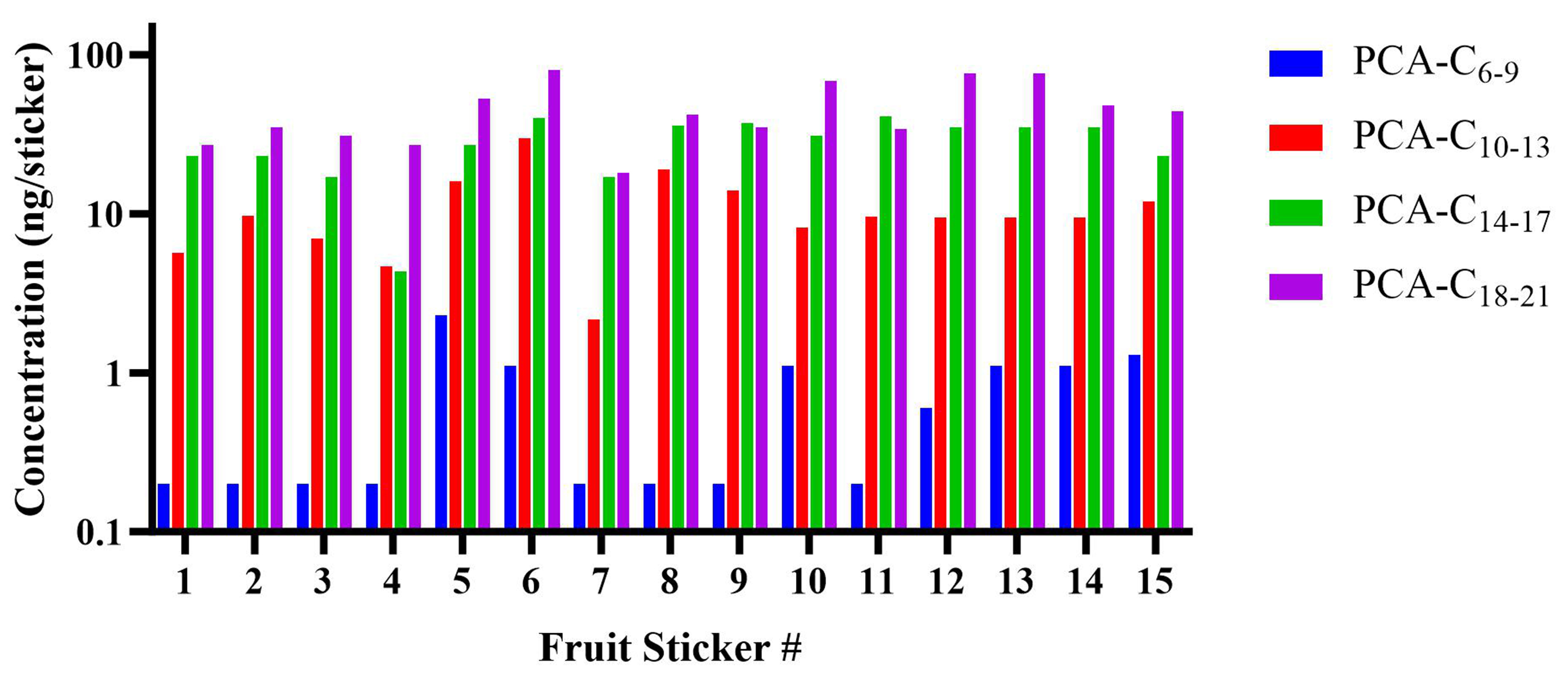
Figure 1. Concentrations of PCAs detected in the fruit stickers. PCAs: Polychlorinated alkanes.
The PCA concentrations measured in fruit stickers (0.72-3.0 μg/g) fall within the same order of magnitude as those reported for several established food-contact materials [Supplementary Table 3]. For comparison, PCA-C10-13 levels in paper packaging (2.8 μg/g) and aluminum foil (2.1 μg/g)[17], as well as in PP packaging (4.0 μg/g)[15], were similar to the concentrations detected in fruit stickers in our study. In contrast, fruit stickers showed substantially higher levels of PCAs than PE (0.15 μg/g) and polyethylene terephthalate (PET, 0.23 μg/g) food packaging[15]. There was no data available on the concentrations of LCCPs in food-contact materials. In addition, the PCA concentrations in the fruit stickers (0.72-3.0 μg/g) were 2-3 orders of magnitude lower than those detected in glue samples (up to 10%) collected in China[4,23], and other household products (0.2%-50%)[15,28,29], possibly because of the regulations on food-contact materials. However, these results were higher than the PCA concentrations in fruit, including those collected in Belgium (PCA-C10-13,
PCAs-C18-21 were the predominant PCAs group in the fruit stickers, contributing 40% (Sticker #11) - 70% (Sticker #4) to ∑PCAs-C10-21 concentrations [Figure 2]. This is distinct from most known matrices. Due to their physicochemical properties, PCAs-C18-21 have lower vapor pressures[32], and higher viscosities[33]. Therefore, the application of PCAs-C18-21 in the products, including fruit stickers, could enhance their stickiness. More specifically, C21 congeners had the highest average contribution (24%) to ∑PCAs-C18-21, followed by C20 (14%), C19 (12%). It’s important to note that recent studies identified C21-30 congeners[34,35], therefore, we further investigated the detection of PCAs-C21-30 congeners. Overall, 186 congener groups were examined, of which 78 were detected. Among these, congeners with Cl number of 1, 2, and 3 were detected in 74%, 92% and 72% of the samples, respectively, whereas detection frequencies for all other congener groups were all below 40%. Due to the lack of the quantification method (i.e., response factors for QToF), we were unable to estimate their concentrations. Given the high contributions of C19-21 congeners, the concentrations of PCAs-C18-21, and therefore ∑PCAs-C10-21, could be underestimated due to the potential presence of C>21 congeners.
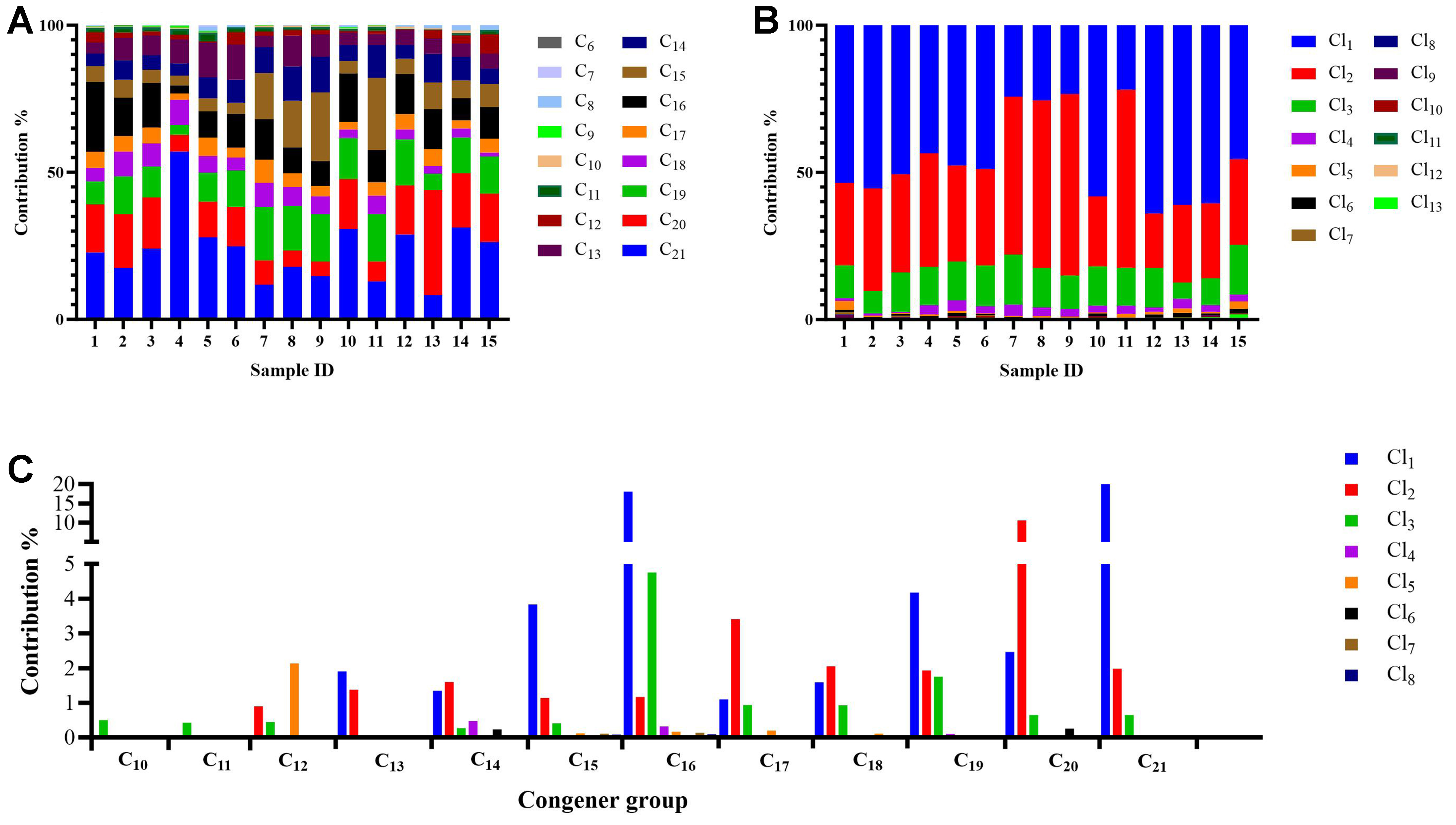
Figure 2. Profile of PCAs in fruit stickers. Relative concentrations of congener groups of different carbon chain length (A), chlorine number (B) and congeners (C). PCAs: Polychlorinated alkanes.
In terms of Cl numbers, Cl1 and Cl2 congeners contributed 46%, and 37% to ∑PCAs-C10-21, respectively. The Cl content of PCA-C10-13, PCAs-C14-17, and PCAs-C18-21 measured in the fruit stickers were 33% ± 5%, 25% ± 3%, and 16% ± 2%, respectively, which were lower than all the known PCA technical mixtures (36%-63%). The distinct profiles detected in the fruit stickers suggested the use of a specific but unknown mixture of PCAs used in their manufacture (i.e., hard paraffins and microcrystalline waxes[36]), though other factors such as potential degradation or contamination during processing could also contribute to these profiles[37]. Alternatively, the high contribution of Cl1 and Cl2 congeners may also be caused by the breakdown of C–Cl bond during the manufacturing, i.e. thermal degradation, photodegradation, or mechanical stress, though further investigation is needed to confirm the mechanism[38].
Given the high abundance of long-chain (C>18) and low chlorine (Cl1-3) PCAs in the fruit stickers, their potential toxicity needed to be carefully evaluated. To assess this, the 96h LC50 values for Pimephales promelas were estimated from Toxicity Estimation Software Tool (TEST) from US EPA[39]. Despite the variation among isomers, the overall toxicity increased with both the carbon chain length and chlorine number. For example, the average LC50 of C21H43Cl was similar to that of C20H39Cl3 and C19H35Cl5. Thus, the long-chain, low-chlorinated PCAs predominant in fruit stickers were not necessarily less toxic than the more chlorinated PCAs.
Potential transfer from sticker to fruits
To evaluate the potential transfer, a preliminary test was conducted by comparing the concentrations of PCA between a double layer sticker, where the top sticker was placed on the bottom sticker, and the bottom sticker was directly applied on the fruit. The bottom stickers (in contact with the fruit surface) and corresponding top stickers were carefully separated and analyzed individually. The top sticker was assumed to represent the initial PCA concentration prior to any migration, as it remained unexposed to the fruit surface, whereas the bottom sticker was in direct contact with the fruit and thus susceptible to transfer to the fruits. The concentrations of PCAs in the top sticker were consistently higher than those in the bottom one, with the difference of 26%, 36%, and 23% for PCA-C10-13, PCAs-C14-17, and PCAs-C18-21, respectively [Supplementary Table 4]. These differences indicated that PCAs may have migrated from the bottom sticker to the fruit, while those in the top layer remained unchanged. However, it should be noted that the entire sticker (including both adhesive and non-adhesive layers) was analyzed without isolating the adhesive layer. Consequently, the observed concentration reduction in the bottom sticker could also partly result from transfer between the adhesive layer and the backing layer during the experiment. Despite the limited number of samples, this result was consistent with a previous study where PCAs migrated from six types of snack plastic food packaging materials into food simulants[16].
The relatively high transfer rate (29% on average) is worth noting. The migration of PCAs may result from the exchange between adhesives and fruit surface through micro abrasions during handling and/or storage. However, this mechanism requires further validation. Moreover, there is no study on the migration dynamics of PCAs under different temperatures or contact time. In addition, common consumer practices, such as washing or peeling fruit before consumption were not considered in the exposure assessment. These practices may remove a certain proportion of PCAs from the fruit skin, therefore reducing human intake of PCAs from contaminated fruits. To address these gaps, future research should utilize paired fruit samples with and without stickers to directly estimate the actual transfer rate under realistic consumption conditions.
Human exposure assessment
On average, Australian consumed 143 g/day fruit per day fruits[40], consisting 0.18 apples or pears per day[41]. Using the 0.18 apples or pears alone, the average ∑PCAs-C10-21 concentrations in the fruit stickers of 87 ng/sticker and transfer rate of 29% resulted in the EDI was 4.5 ng/day for Australians, consisting of 0.54 ng/day PCA-C10-13, 1.8 ng/day PCAs-C14-17, and 1.9 ng/day PCAs-C18-21 [Table 1]. Furthermore, when the intake of 143 g/day of fruit consisted entirely of apples or pears, this would be equivalent to approximately one apple or pear per person per day. In the worst scenario, assuming a 100% transfer rate from the fruit sticker and one apple or pear per person per day, the maximum EDI of PCAs increased to 83 ng/day via the consumption of contaminated fruits. It should be noted that the concentrations of PCAs, as well as the associated exposure assessment, were based on quantification using technical mixtures. Although the individual-response model minimizes pattern mismatch, the high proportion of congeners with lower chlorine atoms and longer carbon chains introduced uncertainty due to the lack of certified reference materials and validated quantification methods for these unusual patterns. The EDIs via contaminated fruits were 1-3 order of magnitude lower than the exposure from other pathways, including inhalation[42], dietary[43], dust ingestion and dermal contact[44], indicating that the exposure resulting from fruit stickers were limited.
EDI of PCAs via fruit stickers
| Average | Maximum | |||
| EDI (ng/day) | HQ | EDI (ng/day) | HQ | |
| PCA-C10-13 | 0.54 | 6.9 × 10⁻⁸ | 11 | 1.4 × 10⁻⁶ |
| PCAs-C14-17 | 1.8 | 2.3 × 10⁻⁷ | 26 | 3.4 × 10⁻⁶ |
| PCAs-C18-21 | 1.9 | 2.5 × 10⁻⁷ | 44 | 5.7 × 10⁻⁶ |
| ∑PCAs-C10-21 | 4.5 | 5.8 × 10⁻⁷ | 83 | 1.1 × 10⁻⁵ |
Risk assessment using International Programme on Chemical Safety (IPCS) thresholds revealed negligible health concerns, where EDIs remained substantially below the tolerable daily intake (100 μg/kg body weight/day for all PCAs)[27], with the maximum HQ ranging from 1.4 × 10⁻⁶ to 5.7 × 10⁻⁶ for different PCAs. Current regulations, including EU No 10/2011[20] and U.S. FDA 21 CFR[45], do not provide specific limits for PCAs in food-contact adhesives. Despite their limited contributions to total EDIs, our results tentatively suggested a potential pathway of PCAs that may be worth considering by policymakers. Other labelling techniques, such as electrically branded fruit label, could be used as alternatives.
Limitation and future directions
This is a preliminary study on the occurrences and levels of PCAs in fruit stickers, with a few samples collected from apples and pears purchased in the markets. The limited number of samples could not reflect the full picture of the contamination status in the fruit stickers. Future research is required to further investigate the levels of PCAs in fruit stickers from more regions and countries. Nevertheless, the high frequency of PCAs in the samples raises concerns regarding their pervasive presence in these stickers.
Furthermore, we employed a newly developed algorithm for the quantification of PCAs, as deconvolution was found to be inaccurate in this study. While the former method passed all QAQC checks, we were unable to assess its accuracy for sticker samples due to their distinct congener patterns.
Additionally, the potential transfer of PCAs between the stickers and fruit was only investigated for a single type of sticker, using double-labelled stickers on the same fruit. We were unable to investigate the migration kinetics at different temperatures and contacting time. A more comprehensive lab scale study would deepen our understanding of the potential risks to human health.
CONCLUSIONS
This study provided the first evidence of PCA concentrations in fruit stickers. Our findings demonstrated that PCAs could partially migrate from stickers to the fruit where the stickers were applied, eventually being consumed by humans and increasing body burden of PCAs. Although the estimated exposure risks from fruit stickers were limited, this conclusion must be interpreted with caution, considering the limited sample size and study areas. Cl1-2 congeners were predominant in the fruit stickers, which were significantly different to known commercially available mixtures. This difference may be caused by the different stability or application during the manufacturing. Those congeners with lower chlorine contents generally showed low concentrations in the environment and human samples, and were not typically monitored in routine programs. However, their high contribution detected in this study, and their exposure and health risks need to be further investigated. More importantly, in Australia, 5.6 billion stickers are used annually, which equates to about 500 g of PCAs. These used stickers, together with the hazardous chemical, would be released into landfill across Australia. Although the amount of PCAs is the stickers contributed only < 0.1% of the total PCA released to the Australian environment, the direct contact with fruit surfaces and potential for unintentional ingestion raises a concern on public health. Current regulations on PCAs mainly focused on their applications in industry, while those in the food-contact material remained unregulated. Given the low estimated exposure from stickers, a more constructive question is whether attaching adhesive stickers directly onto edible fruit surfaces remains an acceptable practice from a PCA exposure perspective. In summary, this study not only contributed foundational occurrence data on a previously unexamined food-contact material, but also provided a science-based rationale for regulatory reform. Our findings linked chemical monitoring to public health protection and supported a proactive approach to managing PCAs in all food-contact materials, including fruit stickers.
DECLARATIONS
Acknowledgments
The authors would like to thank T. Tietz from German Federal Institute for Risk Assessment (BfR) for valuable discussions.
Authors’ contributions
Writing - original draft, methodology, investigation, formal analysis, data curation: He, C.
Writing - review and editing, data curation, conceptualization: Zellmer, S.; Vetter, W.; An, T.
Writing - review and editing, visualization: Li, G.
Writing - review and editing, methodology, visualization: Thomas, K. V.
Writing - review and editing, supervision, funding acquisition, conceptualization: Mueller, J. F.
Availability of data and materials
The original contributions presented in this study are included in the article/Supplementary Materials. Further inquiries can be directed to the corresponding author.
AI and AI-assisted tools statement
During the preparation of this manuscript, the AI tool DeepSeek (v3, released 2024-12-26) was used solely for language editing. In addition, elements included in the graphical abstract were generated using an AI tool AI tool DALL·E (version 3, released in September 2023). The tools did not influence the study design, data collection, analysis, interpretation, or the scientific content of the work. All authors take full responsibility for the accuracy, integrity, and final content of the manuscript.
Financial support and sponsorship
This work was supported by the Introduction Innovative and Research Teams Project of the Guangdong Pearl River Talents Program (2023ZT10L102) and the Guangdong Basic and Applied Basic Research Foundation (2025B1515020047). The Queensland Alliance for Environmental Health Sciences (QAEHS), The University of Queensland (UQ), gratefully acknowledges the financial support of Queensland Health, Australia.
Conflicts of interest
He, C. is a Junior Editorial Board Member of the journal Journal of Environmental Exposure Assessment. Mueller, J. F. is an Editorial Board Member of the journal. They were not involved in any steps of editorial processing, notably including reviewers’ selection, manuscript handling and decision-making. The other authors declare that there are no conflicts of interest.
Ethical approval and consent to participate
Not applicable.
Consent for publication
Not applicable.
Copyright
© The Author(s) 2026.
Supplementary Materials
REFERENCES
1. Hou, H.; Min, Y.; Liu, X.; Wang, P.; Zhou, Z.; Liu, D. Occurrence and migration of phthalates in adhesive materials to fruits and vegetables. J. Hazard. Mater. 2021, 418, 126277.
2. Lassen, C.; Sørensen, G.; Crookes, M.; et al. Survey of Short-chain and medium chlorinated paraffins. Part of the LOUS-review. Environmental Project No. 1614, 2014. https://www2.mst.dk/Udgiv/publications/2014/11/978-87-93283-19-0.pdf. (accessed 2026-07-02).
3. Yu, X.; McPhedran, K. N.; Huang, R. Chlorinated paraffins: a review of sample preparation, instrumental analysis, and occurrence and distribution in food samples. Environ. Pollut. 2023, 318, 120875.
4. Chen, C.; Chen, A.; Li, L.; Peng, W.; Weber, R.; Liu, J. Distribution and emission estimation of short- and medium-chain chlorinated paraffins in Chinese products through detection-based mass balancing. Environ. Sci. Technol. 2021, 55, 7335-43.
5. Smirnova, Y. A.; Vasil’eva, I. V.; Persinen, A. A. Acryl compositions with chlorinated paraffin for electron beam–cured adhesives. High. Energy. Chem. 2004, 38, 425-7.
6. Vélez-Pagés, T.; Romero-Sánchez, M. D.; Pastor-Blas, M. M.; Martín-Martínez, J. M. MEK wiping prior to chlorination to improve the adhesion of vulcanized SBR rubber containing paraffin wax. J. Adhes. Sci. Technol. 2002, 16, 1765-80.
7. Guan, X.; Zhang, G.; Meng, L.; et al. Novel biomonitoring method for determining five classes of legacy and alternative flame retardants in human serum samples. J. Environ. Sci. 2023, 131, 111-22.
8. Sun, Q.; Xie, Q.; Liu, F.; et al. Accumulation of chlorinated paraffins in seafood from the Pearl River Estuary, China: implications for human and marine mammal health. J. Environ. Sci. 2026, 166, 511-9.
9. Darnerud, P. O. Chlorinated paraffin metabolism and its importance for understanding CP toxicity. J. Environ. Expo. Assess. 2024, 3, 2.
10. UNEP. UNEP/POPS/POPRC.12/11/Add.3. Risk management evaluation on short-chain chlorinated paraffins. Report of the persistent organic pollutants review committee on the work of its twelfth meeting. 2016. https://chm.pops.int/default.aspx?tabid=5171. (accessed 2026-07-02).
11. UNEP. UNEP/POPS/COP.12/32/Add.1. Decisions adopted by the Conference of the Parties to the Stockholm Convention on Persistent Organic Pollutants at its twelfth meeting. https://chm.pops.int/Convention/ConferenceofthePartiesCOP/COPDecisions/tabid/208/Default.aspx. (accessed 2026-07-02).
12. Zhao, N.; Fang, X.; Zhang, S.; Zhu, Y.; Ding, L.; Xu, C. Male renal functions are associated with serum short- and medium-chain chlorinated paraffins in residents from Jinan, China. Environ. Int. 2021, 153, 106514.
13. Huang, X.; Cui, Z.; Ding, C.; et al. Differential accumulation of short-, medium-, and long-chain chlorinated paraffin in free-range laying hens from an e-waste recycling area. J. Agric. Food. Chem. 2021, 69, 10329-37.
14. Tanzer, M.; Boissiere-O’Neill, T.; Sly, P. D.; Vilcins, D. Phthalates, bisphenols and per-and polyfluoroalkyl substances migration from food packaging into food: a systematic review. Rev. Environ. Health. 2025, 40, 616-25.
15. Wang, C.; Gao, W.; Liang, Y.; Wang, Y.; Jiang, G. Concentrations and congener profiles of chlorinated paraffins in domestic polymeric products in China. Environ. Pollut. 2018, 238, 326-35.
16. Wang, C.; Gao, W.; Liang, Y.; et al. Migration of chlorinated paraffins from plastic food packaging into food simulants: concentrations and differences in congener profiles. Chemosphere 2019, 225, 557-64.
17. Wu, X.; Zhang, S.; Cao, J.; et al. Chlorinated paraffins in takeout food and its packaging in Beijing, China and dietary exposure risk. Environ. Res. 2024, 252, 118768.
18. Zhou, Y.; Yang, X.; Zhang, Y.; Ouyang, J.; Xia, Y.; Yu, Y. Exposure to emerging contaminants and health effects: a stealthy health challenge. Glob. Environ. Sci. 2026, 2, 128-44.
19. Vetter, W.; Schulz, T.; Schweizer, S.; Zellmer, S. Chlorinated paraffins in food contact materials made of rubber from the German market. Emerg. Contam. 2023, 9, 100255.
20. European Union. Commission Regulation (EU) No 10/2011 of 14 January 2011 on plastic materials and articles intended to come into contact with food. 2011. https://eur-lex.europa.eu/eli/reg/2011/10/oj/eng. (accessed 2026-07-02).
21. U.S. Food & Drug Administration. Food packaging & other substances that come in contact with food - information for consumers. 2024. https://www.fda.gov/food/food-ingredients-packaging/food-packaging-other-substances-come-contact-food-information-consumers?trk=public_post_comment-text. (accessed 2026-07-02).
22. Guida, Y.; Capella, R.; Kajiwara, N.; Babayemi, J. O.; Torres, J. P. M.; Weber, R. Inventory approach for short-chain chlorinated paraffins for the Stockholm Convention implementation in Brazil. Chemosphere 2022, 287, 132344.
23. Xu, C.; Gao, L.; Zheng, M.; et al. Short- and medium-chain chlorinated paraffins in commercial rubber track products and raw materials. J. Hazard. Mater. 2019, 380, 120854.
24. He, C.; van Mourik, L.; Brandsma, S.; et al. Semiquantitative characterization of bromo-chloro paraffins and olefins in the Australian environment. Environ. Sci. Technol. 2022, 56, 12452-9.
25. Bogdal, C.; Alsberg, T.; Diefenbacher, P. S.; MacLeod, M.; Berger, U. Fast quantification of chlorinated paraffins in environmental samples by direct injection high-resolution mass spectrometry with pattern deconvolution. Anal. Chem. 2015, 87, 2852-60.
26. Dirtu, A. C.; Covaci, A. Estimation of daily intake of organohalogenated contaminants from food consumption and indoor dust ingestion in Romania. Environ. Sci. Technol. 2010, 44, 6297-304.
27. World Health Organization. Chlorinated paraffins. 1996. https://iris.who.int/handle/10665/41866. (accessed 2026-07-02).
28. Brandsma, S. H.; Brits, M.; de Boer, J.; Leonards, P. E. G. Chlorinated paraffins and tris (1-chloro-2-propyl) phosphate in spray polyurethane foams - a source for indoor exposure? J. Hazard. Mater. 2021, 416, 125758.
29. Kutarna, S.; Du, X.; Diamond, M. L.; Blum, A.; Peng, H. Widespread presence of chlorinated paraffins in consumer products. Environ. Sci. Processes. Impacts. 2023, 25, 893-900.
30. McGrath, T. J.; Limonier, F.; Poma, G.; et al. Concentrations and distribution of chlorinated paraffins in Belgian foods. Environ. Pollut. 2021, 291, 118236.
31. Li, H.; Gao, S.; Yang, M.; et al. Dietary exposure and risk assessment of short-chain chlorinated paraffins in supermarket fresh products in Jinan, China. Chemosphere 2020, 244, 125393.
32. Zhang, Z.; Geng, N.; Ning, C.; et al. Physicochemical properties dominating the behaviors of short/medium chain chlorinated paraffins in the atmosphere. J. Hazard. Mater. 2024, 477, 135335.
33. Canter, N. Status of medium-and long-chain chlorinated paraffins. Tribol. Lubr. Technol. 2016, 72, 34-44. https://www.researchgate.net/publication/299449458_Status_of_medium-_and_long-chain_Chlorinated_Paraffins. (accessed 2026-07-02).
34. Yuan, B.; Brüchert, V.; Sobek, A.; de Wit, C. A. Temporal trends of C8-C36 chlorinated paraffins in Swedish coastal sediment cores over the past 80 years. Environ. Sci. Technol. 2017, 51, 14199-208.
35. Yuan, B.; Mclachlan, M. S.; Roos, A. M.; Simon, M.; Strid, A.; de Wit, C. A. Long-chain chlorinated paraffins have reached the arctic. Environ. Sci. Technol. Lett. 2021, 8, 753-9.
36. BfR. XXV. Hard paraffins, microcrystalline waxes and mixtures of these with waxes, resins and plastics. 2019. https://www.bfr.bund.de/cm/349/XXV-Hard-Paraffins--Microcrystalline-Waxes-and-Mixtures-of-these-with-Waxes--Resins-and-Plastics.pdf. (accessed 2026-07-02).
37. Glüge, J.; Schinkel, L.; Hungerbühler, K.; Cariou, R.; Bogdal, C. Environmental risks of medium-chain chlorinated paraffins (MCCPs): a review. Environ. Sci. Technol. 2018, 52, 6743-60.
38. Xin, S.; Gao, W.; Wang, Y.; Jiang, G. Identification of the released and transformed products during the thermal decomposition of a highly chlorinated paraffin. Environ. Sci. Technol. 2018, 52, 10153-62.
39. US Environmental Protection Agency. Toxicity Estimation Software Tool (TEST). Ver 4.1. EPA/600/C-12/006. 2012. https://www.epa.gov/comptox-tools/toxicity-estimation-software-tool-test. (accessed 2026-07-02).
40. Australian Government, National Health and Medical Research Council. Australian guide to healthy eating. https://www.eatforhealth.gov.au/guidelines/australian-guide-healthy-eating. (accessed 2026-07-02).
41. Apple and Pear Australia Ltd. Support for Growth. https://apal.org.au/programs/industry-data/industry-stats/. (accessed 2026-07-02).
42. Yuan, B.; Tay, J. H.; Padilla-Sánchez, J. A.; Papadopoulou, E.; Haug, L. S.; de Wit, C. A. Human exposure to chlorinated paraffins via inhalation and dust ingestion in a Norwegian cohort. Environ. Sci. Technol. 2021, 55, 1145-54.
43. Cui, L.; Gao, L.; Zheng, M.; et al. Short- and medium-chain chlorinated paraffins in foods from the sixth Chinese total diet study: occurrences and estimates of dietary intakes in South China. J. Agric. Food. Chem. 2020, 68, 9043-51.
44. Wang, P.; Zhao, N.; Cui, Y.; et al. Short-chain chlorinated paraffin (SCCP) pollution from a CP production plant in China: dispersion, congener patterns and health risk assessment. Chemosphere 2018, 211, 456-64.
Cite This Article
 Open Access
How to Cite
Download Citation
Export Citation File:
Type of Import
Tips on Downloading Citation
Citation Manager File Format
Type of Import
Direct Import: When the Direct Import option is selected (the default state), a dialogue box will give you the option to Save or Open the downloaded citation data. Choosing Open will either launch your citation manager or give you a choice of applications with which to use the metadata. The Save option saves the file locally for later use.
Indirect Import: When the Indirect Import option is selected, the metadata is displayed and may be copied and pasted as needed.
About This Article
Copyright

Data & Comments
Data
0







Comments
Comments must be written in English. Spam, offensive content, impersonation, and private information will not be permitted. If any comment is reported and identified as inappropriate content by OAE staff, the comment will be removed without notice. If you have any queries or need any help, please contact us at support@oaepublish.com.