


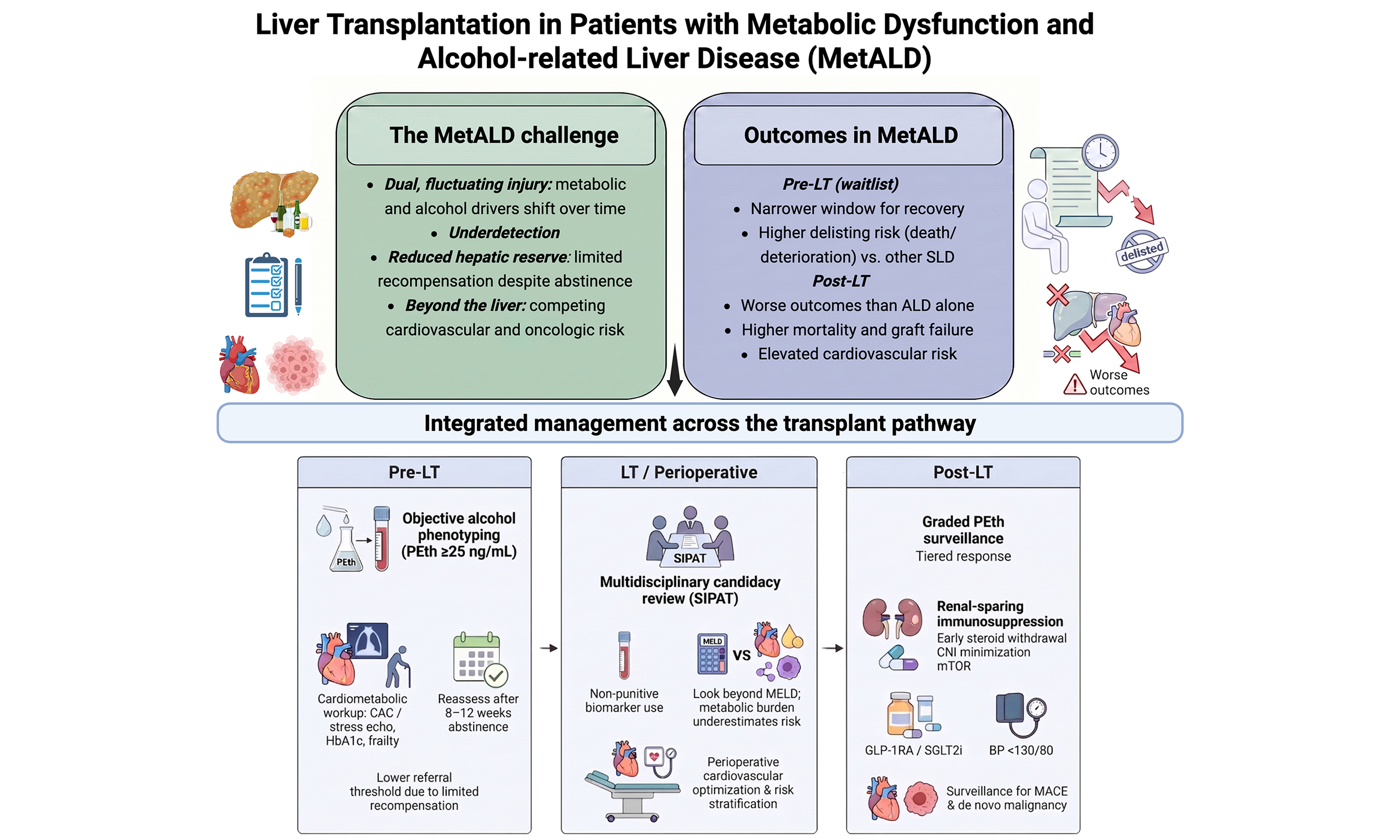
Liver transplantation in patients with metabolic dysfunction and alcohol-related liver disease (MetALD)
 0
0 
Abstract
Metabolic dysfunction and alcohol-related liver disease (MetALD) represents an increasingly recognized and clinically relevant phenotype within the steatotic liver disease (SLD) spectrum, although underreporting of alcohol intake leads to misclassification and underestimation of its true prevalence. In the liver transplantation (LT) setting, MetALD has become the third leading etiology among individuals waitlisted and undergoing transplant in the United States. This review examines the clinical implications of MetALD from candidate evaluation through post-liver transplantation (post-LT) follow-up. In the pre-liver transplantation (pre-LT), candidates with MetALD exhibit a narrower window for clinical recovery after decompensation. This translates into a higher adjusted risk of delisting due to death or clinical deterioration compared with other etiologies of SLD. After transplantation, MetALD is associated with worse outcomes than ALD alone, including higher all-cause mortality and graft failure, reflecting the synergistic hepatic injury driven by combined metabolic and alcohol-related mechanisms. Beyond liver-related events, the metabolic substrate of MetALD poses a high cardiovascular risk, highlighting the importance of integrated pre-LT and post-LT management that combines rigorous cardiometabolic assessment, objective alcohol-use monitoring, and targeted surveillance strategies specific to this population.
Keywords
INTRODUCTION
In the last decade, the causes of chronic liver disease (CLD) have undergone an important conceptual transition driven by the increasing evidence of metabolic dysfunction as a growing etiology of CLD. Currently, metabolic dysfunction, together with alcohol use, represents the leading cause of CLD globally. In particular, both metabolic dysfunction and alcohol use can interact, promoting hepatic steatosis and the progression to liver fibrosis and cirrhosis[1]. In 2023, the steatotic liver disease (SLD) nomenclature proposed subcategories under the SLD umbrella, including metabolic dysfunction-associated steatotic liver disease (MASLD), alcohol-related liver disease (ALD), and the overlap between MASLD and ALD, known as metabolic dysfunction and alcohol-related liver disease (MetALD)[2]. Thus, MetALD is defined by the presence of hepatic steatosis, at least one cardiometabolic risk factor, and weekly alcohol consumption within the range of 140-350 g for women and 210-420 g for men[2]. This definition explains a variable clinical course; the metabolic and alcohol-related factors may fluctuate in dominance, yet their interaction may worsen disease progression.
Meanwhile, this redefinition was unfolding against a growing global burden of CLD. In 2021, an estimated 58.4 million incident cases of cirrhosis and other CLD were reported, resulting in 1.42 million deaths and 46.4 million disability-adjusted life years (DALYs) worldwide[3]. Although age-standardized mortality rates have trended downward, the age-standardized incidence increased between 2010 and 2021. This rise was largely attributable to cirrhosis due to metabolic dysfunction-associated steatohepatitis (MASH), the main etiology whose age-standardized incidence went up during this period[3]. MetALD, in turn, is probably more prevalent than reported, since patients routinely underreport their alcohol use.
In the United States, MetALD ranks third among etiologies for both waitlisting and LT, and outcomes tend to be worse than in ALD, both in pre-liver transplantation (pre-LT) and post-liver transplantation (post-LT) settings[4]. Moreover, a French study shows that 29.7% of intensive care unit (ICU) admissions for SLD-related cirrhosis are due to MetALD[5]. As MetALD becomes an increasingly central driver of advanced liver disease, this review examines its clinical implications through each phase of the transplant process and reflects on the broader public health and policy questions it raises. To address these objectives, we conducted a search on PubMed/MEDLINE, Embase, and the Cochrane Library for literature published between January 2014 and February 2026, combining the terms “MetALD”, “metabolic dysfunction and alcohol-related liver disease”, “phosphatidylethanol”, “steatotic liver disease”, “MASLD”, “alcohol-related liver disease”, “liver transplantation”. We prioritized population-based cohorts, multicenter studies, registry analyses, systematic reviews, and society guidelines or position statements. Since MetALD was formally defined in the 2023 SLD nomenclature, much of the transplant-relevant evidence was published before the term was defined and relies on the retrospective reclassification of MASLD, non-alcoholic fatty liver disease (NAFLD), or ALD cohorts using alcohol-intake thresholds and cardiometabolic criteria. Therefore, this evidence is interpreted with caution throughout the review, as this approach is vulnerable to misclassification bias and likely underestimates the true burden of MetALD.
EPIDEMIOLOGY AND PUBLIC HEALTH BURDEN OF METALD
In the U.S., SLD affects approximately one in three adults, with MASLD accounting for the majority of cases (31.3%-32.45%), followed by MetALD (2%-2.56%) and ALD (0.7%-1.17%), representing an estimated 90 million individuals[6,7]. However, these estimations depend on how steatosis is defined and measured. Using the National Health and Nutrition Examination Survey (NHANES) 2017-2020 with vibration-controlled transient elastography (VCTE), the age-adjusted prevalence of MetALD ranged from 2.6% under a stricter controlled attenuation parameter (CAP) threshold to 3.6% with a more sensitive threshold, in a context where about 86.5% of U.S. adults had at least one cardiometabolic risk factor[7]. In population-based studies with high cardiometabolic burden, MetALD is associated with greater all-cause mortality, a risk that compounds when advanced fibrosis is detected by noninvasive scores[8-10]. In addition, a systematic review of 24 cohort studies (11,575,558 individuals) demonstrates that MetALD carries significantly higher risk than MASLD across three domains: liver-related events [hazard ratio (HR) 1.62, 95% confidence interval (CI): 1.16-2.25; P = 0.0086], hepatocellular carcinoma (HCC) (HR 1.33, 95%CI: 1.00-1.77; P = 0.048), and extrahepatic cancers (HR 1.03, 95%CI: 1.01-1.06; P < 0.0001)[11]. Long-term data from a Finnish population-based cohort further support these findings, showing that MetALD and ALD carry a significantly higher risk of severe hepatic outcomes than MASLD (adjusted HR 3.83 and 7.9, respectively), with 10-year cumulative incidences of 2.2% and 4.4% vs. 0.5% for MASLD[12].
Prevalence aside, the public health burden of MetALD stems partly from the size of the undiagnosed pool with clinically significant fibrosis (≥ F2). In a community-based cohort selected for metabolic and/or alcohol risk, 70% met criteria for SLD, 10% had a liver stiffness measurement on VCTE ≥ 8 kPa, and 2% had biopsy-confirmed advanced fibrosis (≥ F3)[13]. Alcohol exposure can elevate risk even below traditional intake threshold. In population-based cohorts with VCTE available, moderate alcohol intake in MASLD was independently associated with significant fibrosis, and alcohol showed a dose-dependent supra-additive interaction with the number of cardiometabolic risk factors[14]. This silent fibrotic burden represents a large pool of patients who will likely progress to decompensation, many of whom remain outside current screening efforts.
Disparities in SLD prevalence and outcomes vary by subtype and are still poorly understood, particularly for MetALD. U.S. national data show clear differences in subtype distribution by race and ethnicity; Mexican and Hispanic adults have the highest MASLD burden, whereas MetALD and ALD predominate among non-Hispanic white males[15]. Socioeconomic factors also differ by SLD subtype. For MASLD, food insecurity and limited healthcare largely explain the higher burden in Hispanic populations[16]. For ALD and MetALD, a lack of health insurance is an independent risk factor for higher prevalence, consistent with the greater alcohol-related harm seen in lower socioeconomic groups[17]. Furthermore, ethnic-specific outcomes profiles also diverge within the SLD spectrum. For instance, Asian and Native Hawaiian and Pacific Islanders adults show distinct trajectories for cirrhosis, HCC, and chronic kidney disease (CKD), differences tied to genetic susceptibility and body mass index (BMI) threshold misclassification[18]. Whether these patterns persist within the MetALD subset remains unknown. Current MetALD cohorts are skewed toward younger, higher-income men with greater educational attainment, a profile that reflects sampling rather than actual disease distribution[15,19]. The transplant setting deepens these inequities further, where socioeconomic barriers, distance to transplant centers, and inconsistent listing criteria deepen the existing disadvantages that patients with MetALD may face. Yet this remains one of the least studied aspects of MetALD.
Therefore, these epidemiological and disparity trends land on transplant systems. According to the United Network for Organ Sharing (UNOS) registry (2002-2022), waitlist additions and transplants for MetALD increased 2.9- and 3.3-fold, respectively. In adjusted analyses, MetALD was associated with greater waitlist dropout from death or clinical deterioration, along with higher post-LT mortality and graft failure rates than ALD[4]. These epidemiological trends translate into clinical challenges during transplantation assessment since current transplant frameworks were built around single-etiology disease and may not be well-suited for a condition as heterogeneous as MetALD.
Furthermore, current evidence on MetALD in the transplant setting derives almost entirely from Western registries, mainly the UNOS dataset. Data from Eastern populations remain scarce, focusing primarily on prevalence and extrahepatic outcomes rather than transplant endpoints. For instance, a large Taiwanese prospective cohort (n = 303,589) reported a 2.5% MetALD prevalence and an association with increased cardiovascular risk (adjusted relative risk (aRR) 1.38, 95%CI: 1.34-1.42)[20], while Korean population data have outlined distinct clinical characteristics of the disease[19]. However, dedicated analyses of waitlist and post-LT outcomes in these regions are still lacking. Because drinking patterns, BMI thresholds for metabolic risk, and genetic susceptibility differ between Eastern and Western populations, prospective studies in Asia and other non-Western transplant cohorts are needed to validate the Western findings summarized here before generalizing them globally.
PRE-TRANSPLANT EVALUATION IN METALD: NAVIGATING THE “DOUBLE HIT” CHALLENGE
The role of alcohol intake in advanced CLD
In MetALD, the coexistence of alcohol consumption and metabolic dysfunction creates a pattern of liver injury that outpaces what either factor would cause independently[21]. Both conditions share key mechanisms, including lipid dysregulation, oxidative stress, and disrupted gut-liver signaling[21]. Their combined effect becomes clinically relevant once advanced chronic liver disease (aCLD) is established. At that stage, alcohol is not a static etiologic label but an ongoing contributor to disease trajectory. This ongoing contribution is relevant for transplant candidates, where alcohol exposure continues to influence outcomes after the diagnosis of aCLD. Intake of ≥ 280 g per week has been independently associated with higher mortality (HR 1.98) and hepatic decompensation (HR 1.62)[22], suggesting that ongoing drinking directly worsens outcomes in the short and medium term. Notably, the prognostic impact extends beyond the liver; a systematic review of over 50,000 individuals with ALD found a 2.4-fold higher risk of cardiovascular death [relative risk (RR) 2.4, 95%CI: 1.6-3.8] and 8.2 higher risk of extrahepatic cancer (RR 8.2, 95%CI: 4.7-14.3) compared to controls, with the highest rates in those with cirrhosis and decompensated disease[23]. For MetALD candidates, alcohol use carries prognostic weight that extends beyond disease classification. This shapes referral timing and whether transplant evaluation is pressing.
The underlying metabolic dysfunction also lowers the threshold at which alcohol becomes harmful. Population-based studies suggest that individuals with metabolic risk are more vulnerable to alcohol-related liver injury than those without it. In a long-term cohort of individuals with hepatic steatosis, the combination of metabolic syndrome and excessive alcohol consumption was associated with a significantly increased risk of all-cause mortality (HR 3.35), suggesting that metabolic dysfunction lowers the alcohol-related risk curve toward lower levels of consumption[24,25]. While these data come from largely non-cirrhotic populations, they are still relevant to pre-LT evaluation, even moderate alcohol intake may have greater risk when metabolic dysfunction is already present.
Beyond cumulative volume, the pattern of alcohol intake also appears to influence disease severity. For instance, persistent binge drinking independently increases the risk of advanced fibrosis [adjusted odds ratio (aOR) 2.23] and all-cause mortality (aHR 1.48), even when controlling for average daily intake[26]. As such, the pre-LT evaluation of patients with MetALD must evolve beyond simple alcohol quantification to encompass a more nuanced, multidimensional characterization of exposure, including intensity, temporal patterns, prior hazardous use, and duration of abstinence. This approach is aligned with the expert recommendation of the National Institute on Alcohol Abuse and Alcoholism (NIAAA) expert consensus, which advocates evaluating drinking topography rather than relying exclusively on weekly averages[27].
Moreover, among patients with aCLD and decompensated cirrhosis, alcohol exposure may also reduce the probability of clinical recovery. In a single-center cohort of patients with decompensated cirrhosis, those with MetALD achieved a 12-month recompensation rate of only 3.4%, compared to 18.5% in the ALD group[28]. Although these findings require external validation, they suggest that the metabolic component of MetALD may limit hepatic recovery even when alcohol consumption is addressed. The latter interpretation is also consistent with national registry data showing that MetALD candidates face a higher risk of waitlist removal due to death or clinical deterioration than ALD candidates[10]. This contrast becomes even more striking in light of recent multicenter data showing that sustained abstinence enables recompensation in approximately one-third of patients with decompensated ALD cirrhosis, with early abstinence (within the first month of index decompensation) more than doubling the probability of achieving recompensation, and with none of the recompensated patients who maintained abstinence dying from liver-related causes[29]. The fact that MetALD shows lower recompensation rates than ALD, despite the shared alcohol-related component, points to the metabolic burden as an independent constraint on hepatic reserve.
This evidence has practical consequences for pre-LT evaluation. In established aCLD, alcohol does not simply define the diagnosis; it continues to influence outcomes, and how much a patient is drinking at any given point should inform how closely they are monitored, when to escalate intervention, and whether transplantation evaluation is pressing.
Alcohol use biomarkers for patients on the transplant waiting list
Because alcohol exposure after the onset of aCLD is frequently underreported and continues to impact clinical trajectory, objective alcohol-use assessment becomes essential during transplant evaluation. Self-reported alcohol intake is vulnerable to underestimation in this setting, where stigma and concern about candidacy may limit disclosure. For this reason, objective biomarkers serve a critical role in suspected MetALD, in whom accurate alcohol phenotyping has direct implications for diagnosis and for risk stratification and management.
Among currently available alcohol biomarkers, phosphatidylethanol (PEth) offers the most specific readout of recent alcohol exposure, covering the previous 2-4 weeks with interpretative cutoffs that facilitate the detection of harmful drinking[30]. In SLD, PEth-based exposure assessment has also been associated with prognostic discrimination for hepatic decompensation and death[31,32], highlighting its relevance not only as a confirmatory biomarker but also as a measure of ongoing risk.
PEth may also refine disease classification. In a large PEth cohort, about one in five individuals labeled as MASLD had PEth levels consistent with MetALD, with an additional subset meeting ALD-range exposure[33]. This high rate of reclassification highlights the limitations of relying solely on self-reporting, which often masks significant alcohol intake and leads to phenotyping errors. This problem is also reflected in real-world clinical cohorts. In a Swedish national registry of 15,107 patients initially coded as MASLD, 12% had a pre-existing diagnosis of ALD or alcohol use disorder (AUD), with a further 5.2% identified during the follow-up[34]. Such misclassification is a critical concern during pre-LT evaluation, as it potentially delays both addiction-focused interventions and accurate candidacy assessment.
In addition, a prospective cohort of suspected MetALD cases combining cardiometabolic criteria with either self-reported alcohol consumption within the MetALD range or a PEth level ≥ 25 ng/mL found that the majority of cases were identified through PEth testing, and a subsequent diagnostic pathway of Fibrosis-4 index (FIB-4) followed by VCTE demonstrated a low false-negative rate of detecting significant fibrosis in this population[35]. Together, these data support the incorporation of PEth into pre-LT algorithms for patients in whom alcohol consumption is uncertain, minimized, or clinically discordant with the apparent phenotype.
From an implementation standpoint, PEth also appears attractive in the waitlist setting. A cost-effectiveness analysis demonstrates that monthly serum PEth testing is the most accurate and cost-effective strategy for detecting alcohol use in LT candidates with ALD compared with other alcohol biomarkers[36]. Although more data are needed for MetALD candidates, the relatively low cost of PEth in the context of LT makes it a reasonable strategy to extend to all patients being evaluated for transplantation [Figure 1]. Objective monitoring is also relevant because abstinence cannot be assumed once a patient is listed. In a multicenter cohort of ALD-listed patients, documented alcohol consumption during waitlisting was documented in 9.6% of patients at a median of 6.2 months after listing. Furthermore, alcohol use on the waiting list was strongly associated with post-LT alcohol use [odds ratio (OR) 6.36] despite no observed difference in 5-year post-LT survival[37].
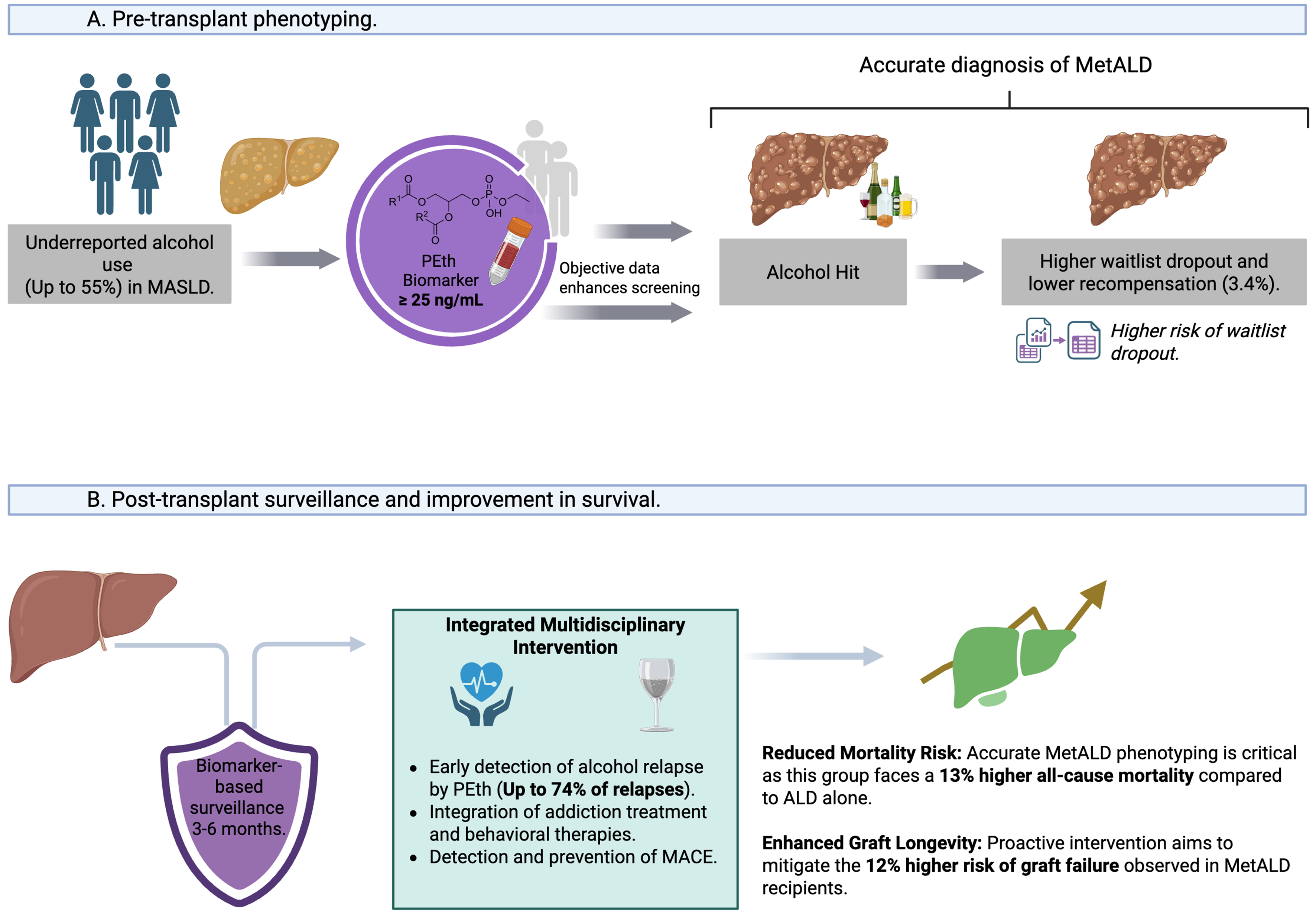
Figure 1. Improving phenotypic precision in MetALD liver transplantation: the role of PEth in pre-transplant evaluation and post-transplant outcomes. (A) Pre-LT phase: alcohol use is underreported in up to 55% of patients with SLD, and objective PEth testing (≥ 25 ng/mL) improves its detection[32], identifying the MetALD “double hit” phenotype, which is associated with a lower recompensation rate (3.4%)[28]; (B) Post-LT phase: biomarker-based surveillance with PEth every 3-6 months improves detection of alcohol relapse; among detected relapses, up to 74% were identified by PEth alone rather than by self-report[50]. These objective data guide integrated multidisciplinary interventions to mitigate the 13% higher mortality and 12% higher risk of graft failure observed in MetALD recipients[4]. Created in BioRender. Coronel, C. (2026) https://BioRender.com/ujjbb7o. ALD: Alcohol-associated liver disease; LT: liver transplantation; MACE: major adverse cardiovascular events; MASLD: metabolic dysfunction-associated steatotic liver disease; MetALD: metabolic dysfunction and alcohol-related liver disease; PEth: phosphatidylethanol; SLD: steatotic liver disease.
Yet, there are important considerations when using PEth. Because the biomarker reflects cumulative exposure over the previous two to four weeks, an isolated binge may yield variable or low concentrations depending on the timing and amount consumed, reducing sensitivity for sporadic heavy drinking. Results can also be falsely negative with low-level intake or falsely positive following exposure to non-beverage ethanol. Accurate interpretation depends on established cut-offs, approximately 25 ng/mL for recent exposure and near 210 ng/mL for sustained ALD-range intake, and requires high-quality assays, with whole-blood liquid chromatography-tandem mass spectrometry (LC-MS/MS) remaining the standard over current serum-based enzyme-linked immunosorbent assays (ELISAs)[30].
Routine monitoring is typically recommended monthly during waitlisting and every three to six months after transplantation, individualized to baseline risk; however, implementation is frequently constrained by regional costs and assay availability. Critically, a positive or rising PEth value should be a signal to initiate intensified, non-stigmatizing multidisciplinary addiction support rather than as a punitive mechanism for waitlist removal.
At the same time, biomarker results should not be interpreted in isolation. Because alcohol use may precipitate or exacerbate components of metabolic dysfunction, such as hypertension or hypertriglyceridemia, current clinical recommendations suggest re-evaluating metabolic criteria after an 8-12-week period of abstinence[38]. Liver injury should only be classified as “metabolic” if it persists beyond this window, thereby preventing phenotypic mischaracterization of the metabolic axis in candidates with recent alcohol intake[38]. With that in mind, PEth is viewed as a complement to careful clinical history, longitudinal assessment and multidisciplinary addiction care integrated from the earliest stages[39].
Summarizing the evidence, the use of biomarkers, especially PEth, is clinically useful for detecting alcohol use in LT candidates with suspected MetALD. Its value lies not only in identifying recent alcohol use, but also in improving phenotypic classification, supporting risk assessment, and enabling more reliable surveillance during the waitlist period. In this context, objective biomarker-based monitoring should be incorporated into LT evaluation frameworks while remaining embedded within a non-stigmatizing, multidisciplinary approach.
Psychosocial assessment and clinical vulnerability in MetALD candidates for LT
Beyond accurate phenotyping and biomarker-based monitoring, successful LT candidacy in MetALD depends on addressing behavioral and psychosocial barriers that limit access to transplantation[40]. Among candidates with presumed MASLD, the Stanford Integrated Psychosocial Assessment for Transplantation (SIPAT) was associated with a lower probability of being listed for transplant (OR 0.82 per 5-point increment, with a threshold of ≥ 12 providing optimal discrimination)[41]. If psychosocial barriers already reduce the likelihood of listing in candidates with metabolic disease, the negative effect may be even more critical in MetALD, where alcohol-related stigma and the dual burden of addiction and metabolic risk compound the psychosocial complexity. Therefore, psychosocial assessment must be specifically calibrated for MetALD candidates. Emerging data from integrated multidisciplinary ALD clinics suggest that combining hepatology and addiction care can yield significant improvement in liver function with a median Model for End-stage Liver Disease (MELD) reduction from 16 to 12, alcohol exposure (median PEth from 263 to 0 ng/mL), and remission of severe AUD (from 85% to 52%), along with reduced emergency department admission[42]. Patients who declined referral to the integrated clinic had higher social vulnerability indices and more advanced cirrhosis, reinforcing that the populations in need of multidisciplinary intervention are also those facing the greatest barriers to accessing it.
Based on these observations, a MetALD-specific evaluation framework should move beyond single-etiology protocols to simultaneously address three domains: cardiometabolic risk, alcohol use profile, and psychosocial complexity. While integrated hepatology-addiction care models offer a promising delivery platform for this approach[42], the field still lacks a validated prognostic tool that synthesizes these dimensions into a unified, patient-level risk estimate. Development of such a tool, potentially incorporating PEth-based alcohol characterization, metabolic phenotyping, and recompensation predictors into a composite score, would represent a tangible advance toward individualized pre-LT decision-making in MetALD, particularly given the absence of cardiometabolic risk calculators specifically designed for the SLD spectrum. Until then, the convergence of limited recompensation capacity, competing extrahepatic mortality, and psychosocial barriers in this population argues for a lower threshold for early transplant referral. Importantly, these same vulnerabilities also shape post-LT trajectories, as discussed in the following section.
POST-TRANSPLANT CLINICAL TRAJECTORIES AND PATIENT SURVIVAL IN METALD
Throughout the following section, we distinguish direct MetALD evidence from extrapolated evidence. At present, MetALD-specific transplant data are essentially limited to registry-level reclassification analyses and a small number of single-center cohorts; recommendations regarding cardiovascular surveillance, diabetes and obesity management, and immunosuppression selection are extrapolated from MASLD, ALD, or general LT populations and are identified as such where they appear.
Post-LT outcomes and phenotypic stratification in MetALD
Because the MetALD definition was formally defined in the 2023 SLD nomenclature, most existing transplant registries lack explicit diagnostic labeling for this entity. As a result, the available evidence on post-LT outcomes derives largely from retrospective reclassification using alcohol intake threshold and cardiometabolic criteria, an approach that introduces misclassification bias and likely underestimates the true burden of MetALD among LT recipients. Despite these limitations, early registry-level data already indicate that MetALD carries a distinct post-LT risk profile compared with ALD alone.
In a retrospective cohort study using UNOS patient-level data, LT recipients reclassified as MetALD exhibited a 13% higher risk of all-cause mortality and 12% higher risk of graft failure when compared to those transplanted for ALD[4]. While these findings establish that MetALD carries a distinct post-LT risk profile, they do not identify which component of metabolic dysfunction leads to these outcomes. A single-center analysis of patients with decompensated cirrhosis referred for LT evaluation provides more insight, when MetALD was decomposed into its individual metabolic components, hypertension (HR 0.38, 95%CI: 0.16-0.89) and increasing BMI (HR 0.91 per unit, 95%CI: 0.84-0.99), rather than diabetes or dyslipidemia, emerged as independent predictors of failed recompensation[28]. Of note, patients with MetALD in this cohort also had significantly higher baseline prevalence of CKD than those with ALD (31.6% vs. 17.0%, P = 0.025), a finding with direct implications for post-LT immunosuppression management given the nephrotoxic potential of calcineurin inhibitors (CNIs). The latter evidence suggests that post-LT care in MetALD should not rely on generic metabolic risk reduction but should instead prioritize blood pressure control, weight management, and renal-sparing immunosuppression strategies as the interventions most likely to influence long-term graft and patient survival.
Another important consideration is the temporal horizon over which post-LT risk unfolds. Long-term data from the UNOS registry (2002-2016) indicate that 5-year survival after LT for ALD is comparable to non-ALD indications (79% vs. 80%), but 10-year survival diverges significantly (63% vs. 68%, P = 0.006) with malignancy and infections as the leading etiologies of late mortality[43]. Given this trend in ALD, MetALD recipients, who carry the additional burden of metabolic alterations, may face an even greater long-term risk. Although prospective validation is required, these findings suggest that post-LT surveillance should extend beyond the conventional 5-year window and support an extended follow-up protocol for this population.
In this context, the primary drivers of late mortality following transplantation are predominantly non-hepatic. A population-based cohort of 10,213 recipients indicates that while cardiovascular death accounts for only 1.4% of first-year mortality, major adverse cardiovascular events (MACE) occur in 2.6% of patients in this period[44]. Nevertheless, non-fatal MACE during the first year independently correlated with diminished long-term survival (HR 1.37; 95%CI: 1.05-1.79). Beyond the first year, cardiovascular and infection-related mortality rates are substantially higher in patients with early MACE (16.7% and 23.3%) compared to those without (7.9% and 13.3%). Competing models identify older age, diabetes, and comorbidity burden as independent predictors of MACE, features inherent to the MetALD phenotype. Furthermore, recipients transplanted for ALD-related cirrhosis exhibit higher MACE rates than those with other indications (32.1% vs. 24.8%). While these data lack specific MetALD stratification, they provide a quantitative framework suggesting that MetALD recipients, burdened by both alcohol-related vascular injury and metabolic risk, represent a high-risk subgroup within the post-LT cardiovascular landscape. These observations carry two implications: follow-up of MetALD recipients should address biomarker-based alcohol surveillance after LT, and active monitoring for cardiometabolic complications.
Alcohol relapse surveillance and prevention after LT
Alcohol relapse following LT occurs in 15%-50% of recipients, varying by definition and follow-up duration; notably, heavy relapse is consistently linked to graft injury, allograft loss, and increased mortality[45]. A clinically relevant stratification divides post-LT consumption into three cohorts: occasional slips, continuous drinking within recommended limits, and sustained heavy use. Of these, only sustained heavy use has been consistently associated with significant graft and patient mortality, whereas isolated slips do not appear to compromise outcomes[46]. This distinction is central in MetALD, where the metabolic substrate may lower the threshold for alcohol-induced damage. This combined effect, already documented in pre-cirrhotic populations[24], likely persists as immunosuppression-related metabolic derangements exacerbate pre-existing risk factors.
Mortality following LT for ALD is rarely driven by recurrent cirrhosis. Large-scale cohorts show that recurrent ALD accounts for only 1%-3% of deaths; aerodigestive malignancies and cardiovascular disease emerge as the principal causes[47,48]. In the MetALD population, this change in mortality has clinical relevance since even moderate post-LT consumption may act alongside the metabolic substrate to amplify both oncologic and cardiovascular risk rather than producing overt hepatic decompensation. Waiting for liver-related signs before intervening would therefore miss the primary mechanism through which alcohol harms this population after transplantation.
Current surveillance practices are poorly equipped to detect relapse in time. A national survey of transplant providers found that while 84% of programs endorse abstinence as the default post-LT goal, verbal screening frequency ranged from every clinic visit to symptom-triggered discussion only, with variable assignment of responsibility for addressing craving and alcohol use[49]. This heterogeneity creates gaps in detection that biomarkers-based monitoring can narrow. In a single-center study using PEth among LT recipients with ALD, approximately 17% had detectable alcohol consumption within 3 years, and 74% of these relapses were identified by PEth alone rather than by self-report[50]. The cost-effectiveness of monthly PEth testing has been demonstrated in LT candidates with ALD[36], and its adoption in the post-LT setting is a logical extension, particularly for MetALD recipients in whom the clinical consequences of undetected drinking may be worsened by concurrent metabolic disease. On this basis, systematic PEth monitoring is recommended from the first year after LT for all MetALD recipients, with the frequency tailored to the individual risk profile assessed during pre-LT evaluation [Figure 1].
A positive result is only useful if the response to it is defined in advance. The same scheme applies on the waitlist and after transplantation. A low or isolated value, just above 25 ng/mL, warrants a non-judgmental discussion with the patient, a repeat test in two to four weeks, and referral to addiction support. A sustained or rising value, particularly in the ALD range around 210 ng/mL, calls for formal addiction-medicine review, pharmacotherapy and behavioral treatment, and discussion of the case by the multidisciplinary team. These cut-offs are a practical protocol that still needs prospective validation before being established as a standard recommendation.
Detection alone, however, is insufficient without a treatment infrastructure capable of responding to positive results. The integration of addiction medicine in the transplant programs has shown measurable benefit. In a single-center observational study, post-LT relapse decreased from 35.1% to 16.4% after addiction specialists were incorporated into the transplant teams[51]. Preliminary evidence from integrated care models combining hepatology and addiction medicine has shown early improvement in alcohol use, liver function, and healthcare utilization in populations that include post-LT recipients[42]. An additional consideration is that pharmacotherapy for AUD is feasible in this population.
Additionally, acamprosate, gabapentin, and baclofen have no relevant interaction with CNI, mechanistic target of rapamycin (mTOR) inhibitors, or antimetabolites; naltrexone can be considered after LT with liver enzyme monitoring given its favorable once-daily compliance profile[45]. The availability of these agents, combined with behavioral therapies such as cognitive-behavioral therapy and motivational enhancement, supports a multimodal approach in routine post-LT follow-up from the outset.
Cardiometabolic burden and long-term complications after LT
The metabolic consequences of LT do not resolve with transplantation, they intensify. Post-LT metabolic syndrome affects more than half of all recipients regardless of etiology[52], and its components: diabetes, hypertension, dyslipidemia, obesity, and CKD, are exacerbated by CNI-based immunosuppression, corticosteroid exposure, and the sedentary recovery period that follows surgery.
New-onset diabetes mellitus after liver transplantation (NODALT) illustrates the trajectory of metabolic risk inherent to LT. Data from a Brazilian LT cohort showed that NODALT developed in 35.5% of recipients and was independently associated with high BMI, older age, longer follow-up, and post-LT MASLD. In fact, post-LT MASLD itself occurred in 26% of recipients and was linked to both NODALT (OR 2.00, 95%CI: 1.13-7.92) and hypertriglyceridemia (OR 2.80, 95%CI: 1.22-6.43), with the greatest weight gain concentrated in the first three years after transplantation[53]. This evidence, derived from a Latin American population with high baseline metabolic burden, reveals a self-reinforcing cycle: graft steatosis promotes insulin resistance, which promotes diabetes, which in turn worsens steatosis and cardiovascular risk. In addition, dual-etiology post-LT cohorts have demonstrated higher rates of metabolic syndrome and fatty liver graft disease compared with ALD alone[54], reinforcing that, in MetALD recipients, the metabolic axis does not attenuate after transplantation but is instead transferred to the graft.
Therefore, cardiovascular risk in this population requires a structured approach. Existing multidisciplinary practice-based recommendations for cardiac disease management in LT recipients provide a concrete framework: screening for diabetes, hypertension and dyslipidemia in all recipients; sodium/glucose cotransporter 2 (SGLT2) inhibitors or glucagon-like peptide-1 (GLP-1) agonists as first-line antidiabetic agents in those with established cardiac disease; blood pressure target below 130/80 mmHg for recipients with multiple cardiac risk factors; and echocardiographic surveillance at defined intervals for those with pre-existing cardiac dysfunction[52]. At a Spanish transplant center, introducing a post-LT multidisciplinary team (hepatologist, endocrinologist, and advanced-practice nurses) reduced cardiovascular events from 14% to
Immunosuppression choice also influences metabolic risk. CNIs increase blood pressure through renal vasoconstriction, worsen insulin resistance (especially tacrolimus over cyclosporine), and accelerate CKD, while corticosteroids add weight gain, glucose intolerance, and dyslipidemia in the early months, when metabolic vulnerability is highest. For obese, hypertensive MetALD recipients, this argues for early steroid withdrawal, minimal CNI exposure, and consideration of an mTOR inhibitor such as everolimus, which causes less weight gain and spares renal function, although it can cause dyslipidemia and proteinuria, which must be monitored and treated. None of these strategies has been tested in a MetALD-defined population; the evidence is extrapolated from ALD, MASLD, and general transplant cohorts. Where no single regimen fits, the decision should be made on a case-by-case basis[52,56]. Finally, Table 1 summarizes the principal clinical challenges identified in each phase of transplant evaluation, alongside the supporting evidence and proposed strategies to address each challenge.
Summary of evidence for clinical challenges in MetALD liver transplantation
| Clinical challenge | Key findings | Potential solutions |
| Diagnosis and screening[4,33,34] | Objective alcohol ascertainment frequently reclassifies presumed MASLD into MetALD, indicating clinically relevant phenotype misclassification. Biomarkers such as PEth may improve early diagnosis of MetALD | - Adopt an alcohol ascertainment bundle at referral and listing - Use predefined PEth interpretation thresholds in center protocol avoiding ad hoc interpretation - Add a dynamic phenotype label allowing for bidirectional transitions between MASLD and MetALD diagnoses |
| Cardiovascular and metabolic risk[8,9,10] | MetALD is associated with higher long-term mortality risk compared with MASLD; advanced fibrosis identifies a particularly high-risk phenotype | - Scale cardiovascular testing intensity based on age and cumulative risk-factor burden - Do not rely solely on MELD scores - Use anatomic coronary assessment in higher-risk candidates - Implement a cardiometabolic optimization pathway with targets before listing and again at 3 months post-LT |
| Fibrosis progression and adverse liver outcomes[10,14,25,33,34] | A metabolic-alcohol “dual hit” is linked to higher risk of major adverse liver outcomes | - Do not consider low-moderate intake as neutral in MASLD; counsel that modest intake can still be associated with fibrosis risk - Risk-stratify around fibrosis stage using VCTE/FIB-4 - Reassess metabolic criteria after abstinence window when recent alcohol may be confounding metabolic features |
| Pre-LT phase and waitlist outcomes[4,5,28] | During LT evaluation, MetALD shows a low likelihood of recompensation; on the waitlist, MetALD has higher risk of death/delisting for clinical deterioration than MASLD and ALD | - Conduct parallel tracks early by medical optimization and addiction care - Standardize re-testing on the waitlist (e.g., PEth at fixed intervals at clinical turning points) - Define time sensitive evaluation triggers (recurrent admissions, AKI, frailty progression) that prioritize listing determinations for patients with lower likelihood of recompensation |
| Post-LT alcohol use /relapse[50,54] | PEth-based surveillance detection of post-LT alcohol use, and many relapses are identified only through biomarker monitoring | - Implement a center-level relapse-monitoring plan with a predefined, graduated response to PEth results - Plan monitoring with treatment access and offering medications for alcohol use disorder when appropriate, plus counseling - Use shared definitions (slips vs. sustained relapse) |
| Post-LT graft outcomes and survival[54] | Registry analyses show modestly worse post-LT patient and graft outcomes for MetALD compared to ALD; dual-etiology cohorts show higher post-LT metabolic burden and fatty graft disease | - Implement a MetALD post-LT management protocol at discharge that includes early metabolic clinic follow-up plus relapse surveillance and rapid referral pathways - Tailor immunosuppression to the cardiometabolic phenotype (early steroid withdrawal, CNI minimization, consider mTOR inhibitors) |
Accordingly, we suggest that all MetALD recipients undergo formal cardiometabolic stratification within the first three months after LT, including specific NODALT screening, adherence to the current recommendations for oral glucose tolerance test at 3 and 12 months, blood pressure optimization, lipid management according to individual atherosclerotic cardiovascular risk and structured weight management including consideration of GLP-1 receptor agonist or bariatric referral when appropriate [Figure 2]. These interventions should run in parallel with the alcohol surveillance strategies outlined above and be managed through an integrated care model that bridges hepatology, addiction medicine, endocrinology and cardiology. Yet, delivering this level of coordinated care remains limited by allocation systems that were designed before the growing recognition of patients with MetALD.
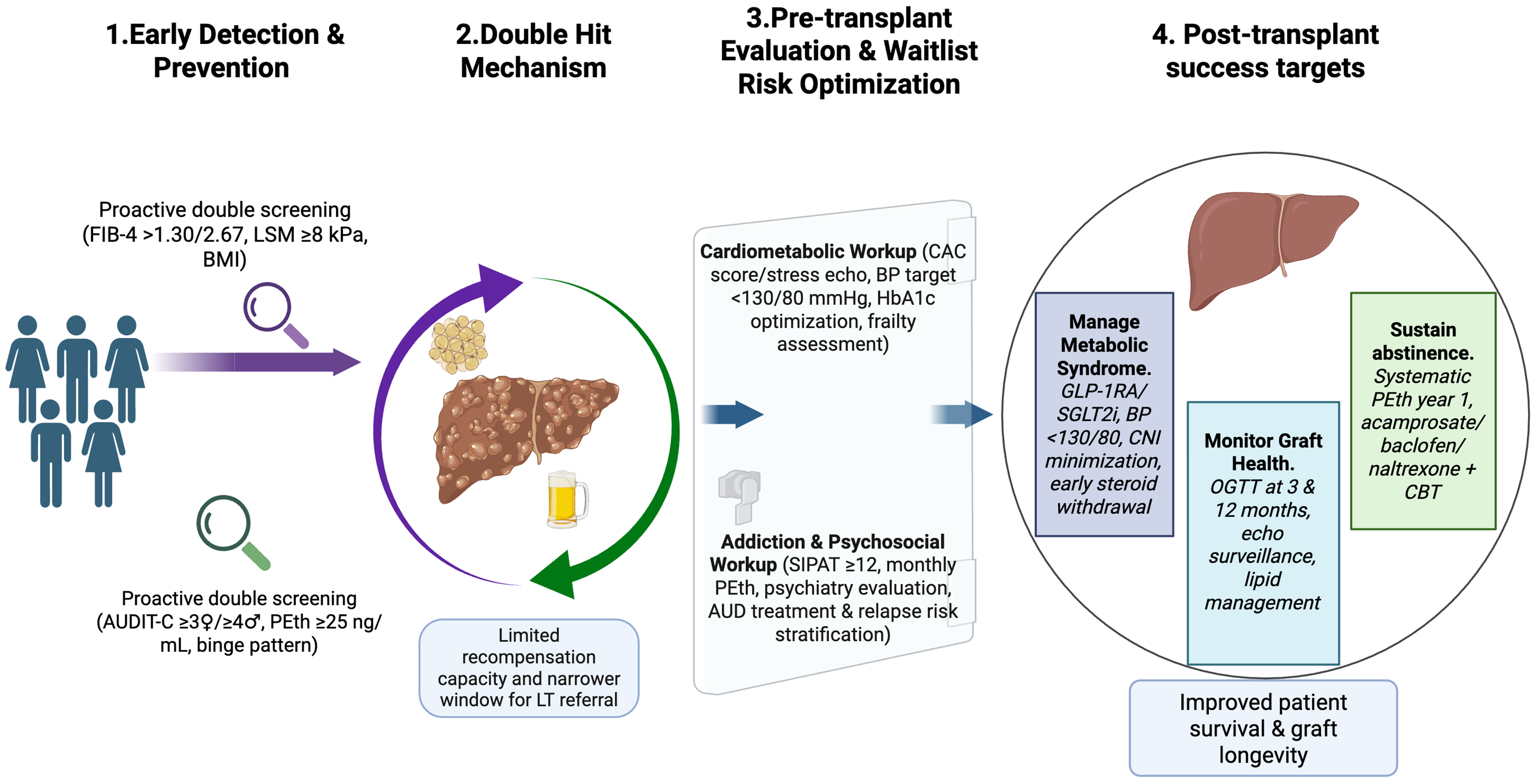
Figure 2. Integrated Pathway Approach to Liver Transplantation in MetALD. This four-stage clinical model spans the transplant trajectory. (1) Early detection and prevention with proactive dual screening for metabolic risk (FIB-4 > 1.30/2.67, LSM ≥ 8 kPa) and alcohol use (AUDIT-C ≥ 3 in women/≥ 4 in men, PEth ≥ 25 ng/mL)[35]; (2) Double-hit mechanism of metabolic dysfunction and alcohol injury accelerates fibrosis and narrows the window for LT referral; (3) Pre-LT evaluation and waitlist optimization with cardiometabolic workup (CAC score/stress echo, BP target < 130/80 mmHg, HbA1c optimization, frailty assessment) and addiction/psychosocial workup (SIPAT ≥ 12, monthly PEth, AUD treatment)[41]; (4) Post-LT targets address the three pillars: management of cardiovascular-kidney-metabolic syndrome (GLP-1RA/SGLT2i, early steroid withdrawal), graft monitoring (OGTT at 3 and 12 months, echocardiographic surveillance), and sustained abstinence (systematic PEth, AUD pharmacotherapy plus CBT)[52]. Created in BioRender. Coronel, C. (2026) https://BioRender.com/z0exxi9. AUD: Alcohol use disorder; AUDIT-C: Alcohol Use Disorders Identification Test-Consumption; BP: blood pressure; CAC: coronary artery calcium; CBT: cognitive behavioral therapy; FIB-4: Fibrosis-4 index; GLP-1RA: glucagon-like peptide-1 receptor agonist; HbA1c: glycated hemoglobin; LSM: liver stiffness measurement; LT: liver transplantation; MetALD: metabolic dysfunction and alcohol-related liver disease; OGTT: oral glucose tolerance test; PEth: phosphatidylethanol; SIPAT: Stanford Integrated Psychosocial Assessment for Transplantation; SGLT2i: sodium-glucose cotransporter-2 inhibitor.
PUBLIC HEALTH IMPLICATIONS AND ORGAN ALLOCATION POLICY IN THE METALD ERA
The growth of MetALD as a transplant indication creates direct pressure on allocation systems that currently do not account for this phenotype. Data from the Italian Liver Transplant Registry illustrate a structural tension already visible at MASLD level where candidates without HCC face a higher risk of waitlist death (HR 1.62) and paradoxically lower probability of receiving a transplant compared with other candidates, yet derive a greater 5-year survival benefit when transplantation occurs[57]. If this phenomenon extends to MetALD, where UNOS registry data already document higher waitlist dropout compared with ALD, it suggests that current MELD-based prioritization may systematically underestimate the urgency of metabolic disease candidates before decompensation becomes irreversible.
This mismatch reflects distinct pathophysiological pathways. While the MELD score quantifies hepatic dysfunction through biochemical parameters, it fails to capture the systemic cardiometabolic burden that influences waitlist mortality in MetALD. Hypertension and progressive obesity, established predictors of failed recompensation, remain unaccounted for in current allocation algorithms, meaning candidates may undergo clinical decline through metabolic complications that, despite their prognostic significance, do not translate into increased priority for organ allocation. Simulation data suggest that a shift toward purely survival-benefit-based systems would not substantially improve population-level life-years gained, as sickest-first models already approximate these outcomes through acuity-based selection criteria[58]. However, that conclusion depends on adequate waitlist representation of at-risk candidates. For MetALD, where recompensation rates are significantly lower than in ALD with a lower clinical recovery opportunity, the case for earlier listing before MELD reaches the threshold that gives patients access to transplantation warrants prospective evaluation as a population-specific strategy. This concern is reinforced by long-term UNOS data showing that ALD recipients already experience a significantly lower 10-year survival than non-ALD recipients (63% vs. 68%, P = 0.006), a survival gap where the concurrent metabolic burden of MetALD may be even higher[43].
Regarding equity concerns, within the MetALD population, women may face disadvantages such as differences in the laboratory components, like in MELDNa, which systematically underestimate disease severity in female candidates, who reach transplantation with higher decompensation burdens despite lower scores[59]. Gender-adjusted scoring systems like MELD 3.0, gender-adjusted MELDNa, and Gender-Equity Model for liver Allocation corrected by serum sodium (GEMA-Na) demonstrate improved discriminatory ability for waitlist dropout prediction, with GEMA-Na potentially preventing one in nine dropout events in the general population and one in three among women[60]. Whether these corrections adequately capture gender-specific trajectories of combined metabolic and alcohol-related injury in MetALD remains unclear, but given that standard adjustment comes from a population without explicit alcohol-metabolic overlap, their performance in this phenotype cannot be assumed.
Another important matter in inequity is geographic access. Analysis of U.S. transplant listing before and after the 2020 acuity circle policy found that broader organ sharing did not equalize transplant access across socioeconomic groups[61]. Racial and ethnic minorities, Medicaid-insured patients, and those in high-deprivation neighborhoods remained significantly less likely to travel for care, with disparities unchanged or strengthened after implementation. This matter affects the MetALD population, since those who face the greatest combined metabolic and alcohol-related risk are often less prepared to navigate a system that is still influenced by mobility and private insurance.
Standardizing evaluation models represents the most actionable near-term policy. Emerging Organ Procurement and Transplantation Network (OPTN)-aligned recommendations frame multidisciplinary candidacy not as a gatekeeping tool but as a mechanism for equitable access, ensuring decisions rest on clinically validated ground rather than center-specific convention[62]. For MetALD, this means that PEth-based alcohol surveillance, cardiovascular risk stratification, and metabolic phenotyping must be integrated into the candidacy evaluation as an integrated model. The field also needs allocation-relevant data infrastructure; for instance, current transplant registries lack explicit MetALD coding, which limits the detection of outcome disparities and the evidence base needed to advocate for priority adjustments.
In settings with limited transplant infrastructure, restricted access to PEth testing and episodic drinking patterns, both MetALD phenotype characterization and the predictive performance of existing allocation tools look very different from what high-income registry data show. Context-adapted protocols are not optional in these scenarios, they are what equitable care for MetALD requires, given that most current models were built on data that exclude populations now carrying the greatest burden.
CONCLUSIONS AND FUTURE DIRECTIONS
MetALD is not simply the sum of its two components; it is an entity with diminished recovery capacity after decompensation and a post-LT risk profile that exceeds what either metabolic dysfunction or alcohol exposure would predict alone. The evidence discussed here reveals three practical conclusions. First, MetALD candidates face higher pre-LT mortality and lower clinical recovery rates than those with ALD alone, making the timing of transplant referral a determinant of outcome that does not apply equally to other SLD subtypes. Second, after LT, MetALD recipients have a cardiometabolic and alcohol-related risk that persists into the graft and intensifies under immunosuppression, arguing for surveillance strategies that are broader in scope and longer in duration than those currently applied to ALD. Third, existing transplant models do not consider MetALD and are structurally inadequate to capture its full clinical burden.
Therefore, it is a priority to research a validated, integrated risk instrument that simultaneously evaluates metabolic phenotype, alcohol exposure patterns, recompensation potential, and psychosocial complexity [Figure 2]. Integrating these existing components into a validated MetALD-specific prognostic framework remains as an actionable unmet research priority. Until then, the clinical response should reflect what the evidence already supports: earlier referral, integrated addiction and cardiometabolic care, and protocols built around the dual nature of MetALD.
DECLARATIONS
Acknowledgments
The Graphical Abstract was created with BioRender.com [Coronel, C. (2026). https://BioRender.com/k1u1o0a].
Authors’ contributions
Conception or design of the work: Diaz LA, Coronel-Castillo CE
Writing-original draft: Parraga X, Sierra L, Coronel-Castillo CE, Diaz LA
Data curation: Diaz LA, Parraga X, Sierra L, Coronel-Castillo CE
Figures conceptualization and design: Coronel-Castillo CE, Parraga X
Supervision: Arrese M, Arab JP
Writing-review & editing: Arrese M, Arab JP, Diaz LA
Availability of data and materials
Not applicable.
AI and AI-assisted tools statement
During the preparation of this manuscript, BioRender, including its AI-assisted design features (web-based platform), was used solely for AI-assisted figure assembly and visualization in the creation of the graphical abstract. The tool did not influence the study design, data collection, analysis, interpretation, or the scientific content of the work. All authors take full responsibility for the accuracy, integrity, and final content of the manuscript.
Financial support and sponsorship
None.
Conflicts of interest
Arab JP is an Associate Editor and Diaz LA is a Youth Editorial Board Member of Metabolism and Target Organ Damage. Arab JP and Diaz LA were not involved in any steps of editorial processing, notably including reviewers’ selection, manuscript handling and decision making. The other authors declare that there are no conflicts of interest.
Ethical approval and consent to participate
Not applicable.
Consent for publication
Not applicable.
Copyright
© The Author(s) 2026.
REFERENCES
1. Díaz LA, Arab JP, Louvet A, Bataller R, Arrese M. The intersection between alcohol-related liver disease and nonalcoholic fatty liver disease. Nat Rev Gastroenterol Hepatol. 2023;20:764-83.
2. Rinella ME, Lazarus JV, Ratziu V, et al. ; NAFLD Nomenclature consensus group. A multisociety Delphi consensus statement on new fatty liver disease nomenclature. Hepatology. 2023;78:1966-86.
3. Tham EKJ, Tan DJH, Danpanichkul P, et al. The global burden of cirrhosis and other chronic liver diseases in 2021. Liver Int. 2025;45:e70001.
4. Ochoa-Allemant P, Serper M, Wang RX, et al. Waitlisting and liver transplantation for MetALD in the United States: an analysis of the UNOS national registry. Hepatology. 2025;81:532-45.
5. Sultanik P, Lherault G, Bouzbib C, et al. Prevalence and prognosis of patients with MASLD-related cirrhosis after an ICU hospitalization in France: a single-centre prospective study. Aliment Pharmacol Ther. 2024;60:796-810.
6. Lee BP, Dodge JL, Terrault NA. National prevalence estimates for steatotic liver disease and subclassifications using consensus nomenclature. Hepatology. 2024;79:666-73.
7. Kalligeros M, Vassilopoulos A, Vassilopoulos S, Victor DW, Mylonakis E, Noureddin M. Prevalence of steatotic liver disease (MASLD, MetALD, and ALD) in the United States: NHANES 2017-2020. Clin Gastroenterol Hepatol. 2024;22:1330-2.e4.
8. Kwak M, Kim HS, Jiang ZG, et al. MASLD/MetALD and mortality in individuals with any cardio-metabolic risk factor: a population-based study with 26.7 years of follow-up. Hepatology. 2025;81:228-37.
9. Han E, Lee BW, Kang ES, et al. Mortality in metabolic dysfunction-associated steatotic liver disease: a nationwide population-based cohort study. Metabolism. 2024;152:155789.
10. Ochoa-Allemant P, Hubbard RA, Kaplan DE, Serper M. Adverse liver outcomes, cardiovascular events, and mortality in steatotic liver disease. JAMA Intern Med. 2025;185:986-95.
11. Celsa C, Pennisi G, Tulone A, et al. Risk of hepatic and extrahepatic outcomes associated with metabolic dysfunction-associated steatotic liver disease and metabolic dysfunction and alcohol-associated steatotic liver disease: a systematic review and meta-analysis. Lancet Gastroenterol Hepatol. 2025;10:998-1012.
12. Männistö V, Salomaa V, Jula A, et al. ALT levels, alcohol use, and metabolic risk factors have prognostic relevance for liver-related outcomes in the general population. JHEP Rep. 2024;6:101172.
13. Peng HY, Lu CL, Zhao M, et al. Clinical characteristics of MASLD/MetALD/MAFLD/NAFLD and the relative risk analysis on metabolic disorders. BMC Gastroenterol. 2025;25:372.
14. Marti-Aguado D, Calleja JL, Vilar-Gomez E, et al. Low-to-moderate alcohol consumption is associated with increased fibrosis in individuals with metabolic dysfunction-associated steatotic liver disease. J Hepatol. 2024;81:930-40.
15. Paik JM, Hobbs K, Gupta A, Alkalbani RJ, Reyes MA, Younossi ZM. Prevalence of MASLD, Met-ALD, and ALD and associated fibrosis among US adults: insights from NHANES 2017 to 2023. J Clin Gastroenterol. 2025;Epub ahead of print.
16. Tesfai K, Pace J, El-Newihi N, Martinez ME, Tincopa MA, Loomba R. Disparities for hispanic adults with metabolic dysfunction-associated steatotic liver disease in the United States: a systematic review and meta-analysis. Clin Gastroenterol Hepatol. 2025;23:236-49.
17. Ochoa-Allemant P, Marrero JA, Serper M. Racial and ethnic differences and the role of unfavorable social determinants of health across steatotic liver disease subtypes in the United States. Hepatol Commun. 2023;7:e0324.
18. Miyatani Y, Ogawa A, Sempokuya T, et al. Ethnic disparities in metabolic dysfunction-associated steatotic liver disease and clinical outcomes. Front Endocrinol. 2025;16:1739137.
19. Yoon EL, Park H, Hong HP, et al. Distinct characteristics of MetALD (metabolic dysfunction-associated steatotic liver disease with greater alcohol consumption) in the general population. Hepatol Res. 2025;55:410-21.
20. Yin SC, Chen YT, Chang WT, et al. Attributable burden of steatotic liver disease on cardiovascular outcomes in Asia. JHEP Rep. 2025;7:101479.
21. Gratacós-Ginès J, Ariño S, Sancho-Bru P, Bataller R, Pose E. MetALD: clinical aspects, pathophysiology and treatment. JHEP Rep. 2025;7:101250.
22. Louvet A, Bourcier V, Archambeaud I, et al. ; CIRRAL group. Low alcohol consumption influences outcomes in individuals with alcohol-related compensated cirrhosis in a French multicenter cohort. J Hepatol. 2023;78:501-12.
23. Theodoreson MD, Aithal GP, Allison M, et al. Extra-hepatic morbidity and mortality in alcohol-related liver disease: systematic review and meta-analysis. Liver Int. 2023;43:763-72.
24. Younossi ZM, Stepanova M, Ong J, et al. ; Global NASH Council. Effects of alcohol consumption and metabolic syndrome on mortality in patients with nonalcoholic and alcohol-related fatty liver disease. Clin Gastroenterol Hepatol. 2019;17:1625-33.e1.
25. Åberg F, Helenius-Hietala J, Puukka P, Färkkilä M, Jula A. Interaction between alcohol consumption and metabolic syndrome in predicting severe liver disease in the general population. Hepatology. 2018;67:2141-9.
26. Xiong ZK, Lin RT, Chen BW, et al. Persistent binge drinking history associated with advanced liver fibrosis and all-cause mortality in MetALD. Aliment Pharmacol Ther. 2025;62:1100-7.
27. Lee BP, Witkiewitz K, Mellinger J, et al. Designing clinical trials to address alcohol use and alcohol-associated liver disease: an expert panel Consensus Statement. Nat Rev Gastroenterol Hepatol. 2024;21:626-45.
28. Ibrahim MA, Ramadan N, Mohamed IB, et al. Clinical outcomes in MetALD compared with ALD in patients referred for liver transplant evaluation. Hepatol Commun. 2026;10:e0892.
29. Hofer BS, Tonon M, Buttler L, et al. ; a study by the Baveno Cooperation: an EASL consortium. Incidence and implications of abstinence-induced recompensation in alcohol-related cirrhosis. J Hepatol. 2026;84:1077-88.
30. Torp N, Israelsen M, Thiele M, Rinella ME, Krag A. Phosphatidylethanol in steatotic liver disease. J Hepatol. 2025;83:1189-203.
31. Hansen ED, Torp N, Johansen S, et al. ; GALAXY and MicrobLiver consortia. Quantification of alcohol intake in patients with steatotic liver disease and excessive alcohol intake. JHEP Rep. 2025;7:101200.
32. Krag A, Torp N, Younossi ZM, Israelsen M. Reporting discrepancy of alcohol intake affecting estimated prevalence of MetALD and ALD. Lancet Gastroenterol Hepatol. 2025;10:282-4.
33. Vaz J, Nasr P, Helander A, et al. Phosphatidylethanol levels distinguish steatotic liver disease subgroups and are associated with risk of major liver outcomes. J Hepatol. 2025;83:1011-22.
34. Nasr P, Wester A, Ekstedt M, et al. Misclassified alcohol-related liver disease is common in presumed metabolic dysfunction-associated steatotic liver disease and highly increases risk for future cirrhosis. Clin Gastroenterol Hepatol. 2024;22:1048-57.e2.
35. Díaz LA, Tavaglione F, Mittal N, et al. Noninvasive pathway for stratifying fibrosis in suspected metabolic dysfunction and alcohol-associated liver disease (MetALD). Hepatol Commun. 2025;9:e0718.
36. Congly SE, Lee BP, Im GY, Simonetto DA, Diaz LA, Arab JP. Phosphatidylethanol is cost-effective to accurately detect periodic alcohol use in patients with alcohol-associated liver disease. Clin Gastroenterol Hepatol. 2026;24:569-71.
37. Abrial L, Erard D, Tron L, et al. Alcohol consumption after listing for liver transplantation is associated with increased risk of alcohol consumption after transplantation. Int J Hepatol. 2025;2025:3221011.
38. Arab JP, Díaz LA, Rehm J, et al. Metabolic dysfunction and alcohol-related liver disease (MetALD): position statement by an expert panel on alcohol-related liver disease. J Hepatol. 2025;82:744-56.
39. European Association for the Study of the Liver. EASL Clinical Practice Guidelines on liver transplantation. J Hepatol. 2024;81:1040-86.
40. Lohoff FW. Targeting unmet clinical needs in the treatment of alcohol use disorder. Front Psychiatry. 2022;13:767506.
41. Patel S, Patel S, Zhang W, Singal AK, Cheung R, Wong RJ. A comprehensive assessment of liver transplant trends and outcomes among adults with steatotic liver disease in the U.S. Gastro Hep Adv. 2025;4:100609.
42. Sengupta S, Anand A, Yang Q, et al. The impact of integrated care on clinical outcomes in patients with alcohol-associated liver disease: early outcomes from a multidisciplinary clinic. Hepatol Commun. 2025;9:e0603.
43. Lee BP, Vittinghoff E, Dodge JL, Cullaro G, Terrault NA. National trends and long-term outcomes of liver transplant for alcohol-associated liver disease in the United States. JAMA Intern Med. 2019;179:340-8.
44. Evison F, Gallier S, Malik F, et al. Major adverse cardiovascular events after liver transplantation: a population cohort analysis of English transplant centres. EClinicalMedicine. 2026;91:103734.
45. Arab JP, Izzy M, Leggio L, Bataller R, Shah VH. Management of alcohol use disorder in patients with cirrhosis in the setting of liver transplantation. Nat Rev Gastroenterol Hepatol. 2022;19:45-59.
46. Pfitzmann R, Schwenzer J, Rayes N, Seehofer D, Neuhaus R, Nüssler NC. Long-term survival and predictors of relapse after orthotopic liver transplantation for alcoholic liver disease. Liver Transpl. 2007;13:197-205.
47. Jauhar S, Talwalkar JA, Schneekloth T, Jowsey S, Wiesner RH, Menon KV. Analysis of factors that predict alcohol relapse following liver transplantation. Liver Transpl. 2004;10:408-11.
48. Dumortier J, Guillaud O, Adham M, et al. Negative impact of de novo malignancies rather than alcohol relapse on survival after liver transplantation for alcoholic cirrhosis: a retrospective analysis of 305 patients in a single center. Am J Gastroenterol. 2007;102:1032-41.
49. Cote MP, Cloonan D, Li S, et al. Liver transplant provider perspectives on posttransplant management of alcohol use disorder. Transplant Direct. 2025;11:e1766.
50. De La Torre SA, Ibrahim B, Meneses K, Saab S, Shetty A. Impact of phosphatidylethanol in the surveillance for alcohol use in post-liver transplant population: a retrospective study. Alcohol Clin Exp Res. 2024;48:2404-11.
51. Addolorato G, Mirijello A, Leggio L, et al. ; Gemelli OLT Group. Liver transplantation in alcoholic patients: impact of an alcohol addiction unit within a liver transplant center. Alcohol Clin Exp Res. 2013;37:1601-8.
52. Izzy M, Fortune BE, Serper M, et al. Management of cardiac diseases in liver transplant recipients: comprehensive review and multidisciplinary practice-based recommendations. Am J Transplant. 2022;22:2740-58.
53. Araujo MA, Nardelli MJ, Mendes RPF, et al. Metabolic dysfunction-associated steatotic liver disease and new onset diabetes mellitus after liver transplantation. Clinics. 2025;80:100806.
54. Erard D, Villeret F, Chouik Y, et al. Dual alcohol and metabolic-related liver disease: results from a population of liver transplant patients. Liver Int. 2024;44:422-32.
55. Sastre L, García R, Viñals C, et al. Results of a multidisciplinary strategy to improve the management of cardiovascular risk factors after liver transplantation. Liver Transpl. 2022;28:1332-44.
56. Battistella S, D'Arcangelo F, Grasso M, et al. Liver transplantation for non-alcoholic fatty liver disease: indications and post-transplant management. Clin Mol Hepatol. 2023;29:S286-301.
57. Vitale A, Trapani S, Russo FP, et al. ; Associazione Italiana per lo Studio del Fegato (AISF), Società Italiana Trapianti d’Organo (SITO), Centro Nazionale Trapianti (CNT). Waiting list mortality and 5-year transplant survival benefit of patients with MASLD: An Italian liver transplant registry study. JHEP Rep. 2024;6:101147.
58. Goldberg D, Blandon C, Delgado C, et al. Simulating the impact of survival benefit-based liver transplant organ allocation. Hepatology. 2026;83:552-60.
59. Sealock JM, Ziogas IA, Zhao Z, et al. Proposing a sex-adjusted sodium-adjusted MELD score for liver transplant allocation. JAMA Surg. 2022;157:618-26.
60. Marrone G, Giannelli V, Agnes S, et al. Superiority of the new sex-adjusted models to remove the female disadvantage restoring equity in liver transplant allocation. Liver Int. 2024;44:103-12.
61. Ross-Driscoll K, Kubal C, Ayuk-Arrey AT, Fridell J, Axelrod D. Association of a liver allocation policy change with domestic travel for liver transplantation. Transplant Direct. 2025;11:e1749.
Cite This Article
 Open Access
How to Cite
Download Citation
Export Citation File:
Type of Import
Tips on Downloading Citation
Citation Manager File Format
Type of Import
Direct Import: When the Direct Import option is selected (the default state), a dialogue box will give you the option to Save or Open the downloaded citation data. Choosing Open will either launch your citation manager or give you a choice of applications with which to use the metadata. The Save option saves the file locally for later use.
Indirect Import: When the Indirect Import option is selected, the metadata is displayed and may be copied and pasted as needed.
About This Article
Special Topic
Copyright

Data & Comments
Data
0







Comments
Comments must be written in English. Spam, offensive content, impersonation, and private information will not be permitted. If any comment is reported and identified as inappropriate content by OAE staff, the comment will be removed without notice. If you have any queries or need any help, please contact us at support@oaepublish.com.