

Spotlight on Prof. Maria Helena Braga: Insights from the Corresponding Author of Energy Materials Volume 5, Issue 8 Cover Article
Energy Materials (EM) recently spoke with Prof. Maria Helena Braga from the University of Porto, Portugal, the corresponding author of the cover article titled "All-solid-state lithium batteries with NMC955cathodes: PVDF-free formulation with SBR and capacity recovery insights." An animated overview of this article is available here: High-Performing Cathodes for Lithium-Ion Batteries.
In the interview, Prof. Braga discussed her latest research on all-solid-state batteries, focusing on the development of safe, sustainable, and cost-effective solid electrolytes and advanced cathode designs. She highlighted strategies to enhance capacity retention and cycle life, including optimized cycling protocols and the use of poly(vinylidene fluoride) (PVDF)-free styrene-butadiene rubber (SBR) binders, as well as the design of structural and anode-less batteries for practical applications. Prof. Braga emphasized the importance of combining computational simulation and experimental feedback to understand chemical potentials and interface behavior in solid-state systems. She also noted that her earlier collaboration with Nobel laureate Prof. John Goodenough significantly influenced her approach to experimentation and scientific discussion.
Watch the following video for expert insights from Prof. Maria Helena Braga:
Interview Questions:
1. Could you please introduce your recent research directions and the focus of your team?
2. Your article "All-solid-state lithium batteries with NMC955cathodes: PVDF-free formulation with SBR and capacity recovery insights," demonstrates key innovations in using a PVDF-free SBR binder and optimized cycling protocols, which significantly enhance capacity retention and self-recovery in NMC955 cathodes while supporting sustainability. Could you discuss the broader significance of this innovative approach for developing high-performance and sustainable solid-state battery systems?
3. What motivated you to explore this particular strategy, and what convinced you it could improve the performance of solid-state lithium batteries?
4. Looking ahead, what do you see as the major scientific and technical challenges in advancing all-solid-state battery technology? Which areas do you plan to focus on to further improve performance, scalability, and practical applications?
5. Many researchers draw inspiration from experiences outside the lab. Have any hobbies, personal routines, or experiences unexpectedly influenced your scientific thinking or creativity in your battery research?
About the Interviewee:
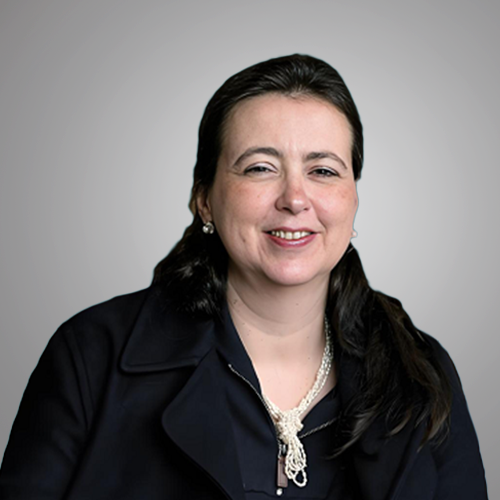
Prof. Maria Helena Braga is a materials scientist specializing in solid-state batteries and energy storage materials. She completed a research fellowship at the University of Texas at Austin, United States, where she collaborated with Prof. John B. Goodenough, Nobel Laureate in Chemistry (2019). She also held a long-term visiting position at Los Alamos National Laboratory, New Mexico, United States. Her research focuses on the experimental and theoretical characterization of solid-state materials and devices, including ferroelectrics, electrolytes, metal hydrides, and innovative battery architectures. Recognized among the World’s Top 2% Scientists (2023-2024), Prof. Braga has received multiple awards, including the 2024 Faculty of Engineering, University of Porto (FEUP) Scientific Excellence Award and the Portuguese Materials Society (SPM) Maria Manuela Oliveira Award.
Editor: Judy Zhang
Language Editor: Catherine Yang
Production Editor: Ting Xu
Respectfully Submitted by the Editorial Office of Energy Materials