



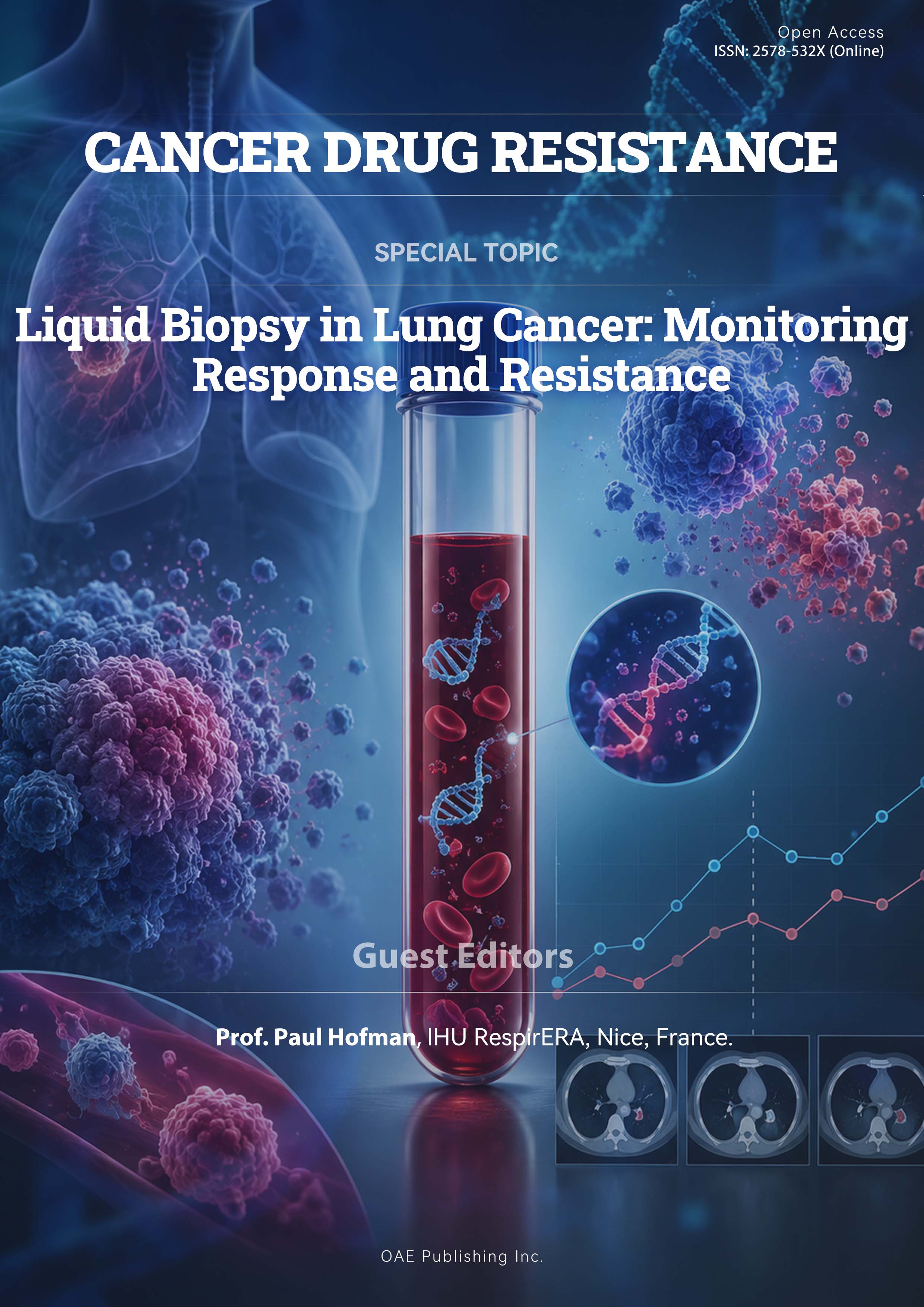
Topic: Liquid Biopsy in Lung Cancer: Monitoring Response and Resistance
Guest Editor
Special Topic Introduction
Liquid biopsy has evolved from a minimally invasive diagnostic approach into an increasingly embedded component of clinical decision-making in non-small cell lung cancer (NSCLC). Beyond its established role in molecular profiling, its current value lies in the longitudinal assessment of treatment response and the real-time tracking of tumor evolution under therapeutic pressure. In particular, circulating tumor DNA (ctDNA) and minimal residual disease (MRD) analyses are now being actively explored to refine response evaluation, detect early molecular progression, and support adaptive treatment strategies in both targeted therapy and immunotherapy settings.
Importantly, in NSCLC, liquid biopsy enables the dissection of key resistance-associated biological processes, including subclonal evolution, dynamic shifts in mutant allele frequencies, and therapy-driven phenotypic or histologic transformation. These mechanistic insights provide a direct rationale for clinically actionable strategies such as early treatment switching, rational combination therapies, or optimization of treatment discontinuation timing within lung cancer management.
Recent discussions and emerging themes presented at major international oncology meetings, including ESMO 2025, AACR 2026, and ASCO 2026, further underscore the accelerating clinical integration of liquid biopsy in NSCLC and its expanding role in real-world therapeutic decision-making.
Despite rapid methodological advances, the clinical integration of liquid biopsy in NSCLC remains heterogeneous. Key challenges include assay standardization, variability in sampling timing, interpretation of low-level ctDNA signals, and the lack of universally accepted thresholds for treatment modification. In addition, the biological complexity of resistance evolution—particularly under combined targeted and immune-based therapies—continues to limit straightforward clinical translation.
This Special Topic aims to highlight clinically oriented advances in liquid biopsy in NSCLC, with emphasis on resistance mechanisms, practical implementation in treatment monitoring, resistance-guided therapeutic adjustment, MRD-driven intervention strategies, and emerging frameworks for integrating liquid biopsy into routine oncologic decision-making.
Topics of interest include, but are not limited to:
● ctDNA-guided monitoring of therapy response in lung cancer;
● Mechanisms of resistance revealed by liquid biopsy;
● Minimal residual disease (MRD) in thoracic malignancies;
● Liquid biopsy in immunotherapy resistance;
● Multi-omics (incuding proteomic, transcriptomic, metabolomics), new technologies-fragmentomic and methylomic, and emerging analytes (CTCs, EVs);
● Translational implementation and clinical decision-making frameworks.
● etc.
Keywords
Lung cancer, circulating tumor DNA (ctDNA), minimal residual disease (MRD), therapy resistance evolution, longitudinal treatment monitoring
Submission Deadline
Submission Information
For Author Instructions, please refer to https://www.oaepublish.com/cdr/author_instructions
For Online Submission, please login at https://www.oaecenter.com/login?JournalId=cdr&IssueId=cdr26060810491
Submission Deadline: 30 Jun 2027
Contacts: Lori, Assistant Editor, Lori@cancerdrugresist.com