

Volume 6, Issue 5 (2026) – 10 articles
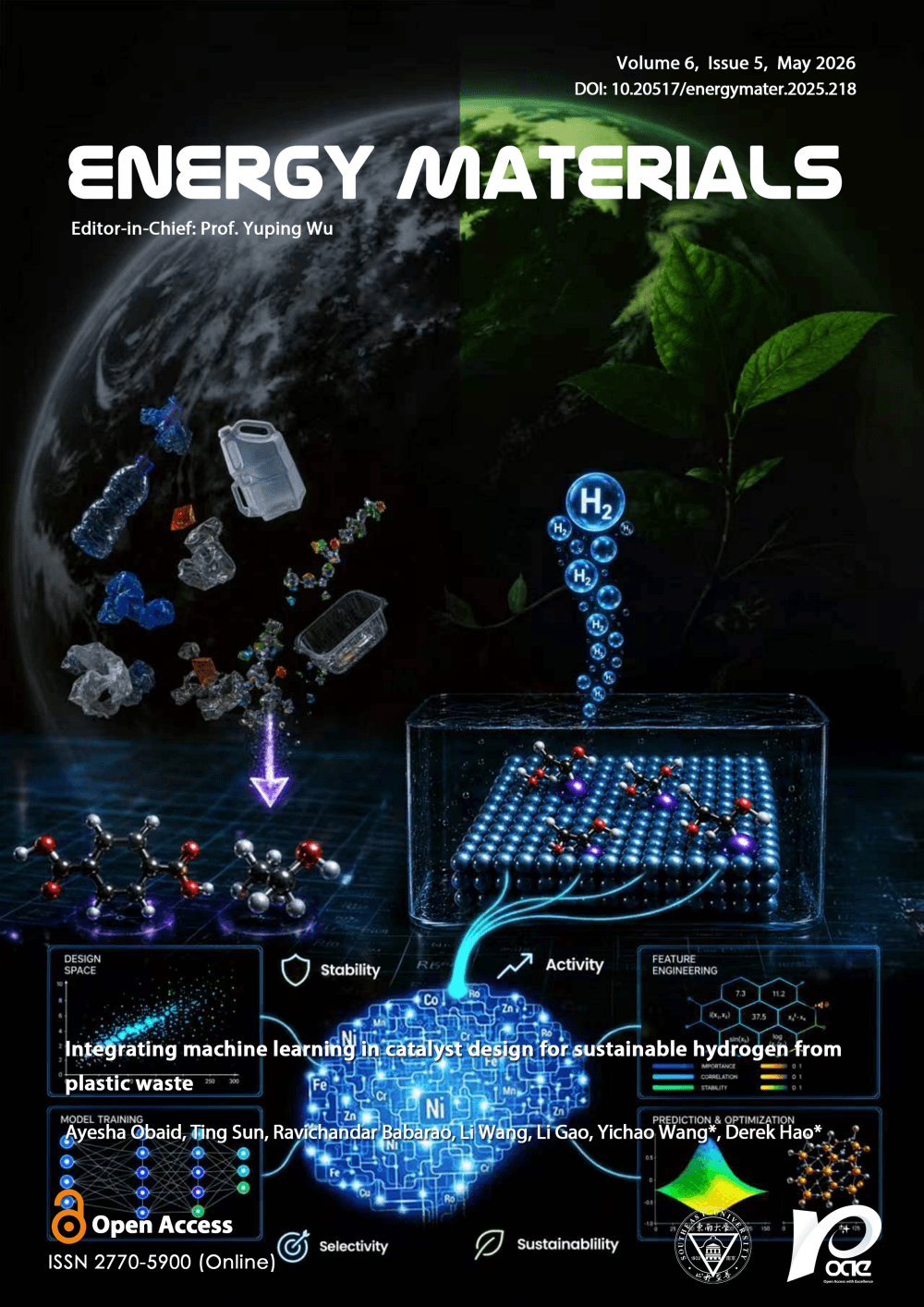
Cover Picture: The escalating plastic waste crisis has heightened the need for sustainable, scalable valorization strategies. Catalytic conversion of plastic waste into hydrogen offers dual benefits: waste mitigation and clean fuel generation. However, the variability of plastic feedstock and the complexity of reaction conditions pose significant challenges for designing efficient catalysts. Recent advances in artificial intelligence (AI) and machine learning (ML) are increasingly being employed to optimize process conditions for hydrogen production via electrolysis and traditional thermochemical pathways. ML models, such as neural networks and ensemble methods, have demonstrated high accuracy in predicting hydrogen yields and optimizing parameters for the gasification and pyrolysis of plastic waste. ML is also opening new avenues for accelerating catalyst discovery by enabling rapid prediction of catalyst performance, reaction pathways, and surface interactions. Computational tools and data-driven descriptors are being used to interpret complex catalytic systems and guide the design of more effective catalysts. However, their application to plastic-derived intermediates remains limited. Despite progress, significant gaps persist in applying ML to the unique challenges of plastic waste conversion, including catalyst discovery and the handling of heterogeneous feedstocks. Key limitations include the need for larger, high-quality datasets, improved model interpretability and the integration of domain-specific knowledge with advanced simulation techniques. In this review we critically summarized the current landscape of AI-driven catalyst design focusing on hydrogen production from plastic waste. It identified methodological and practical limitations and proposed a roadmap for integrating AI, domain-specific data, and catalysis simulations to unlock new catalysts for sustainable hydrogen production.
view this paper 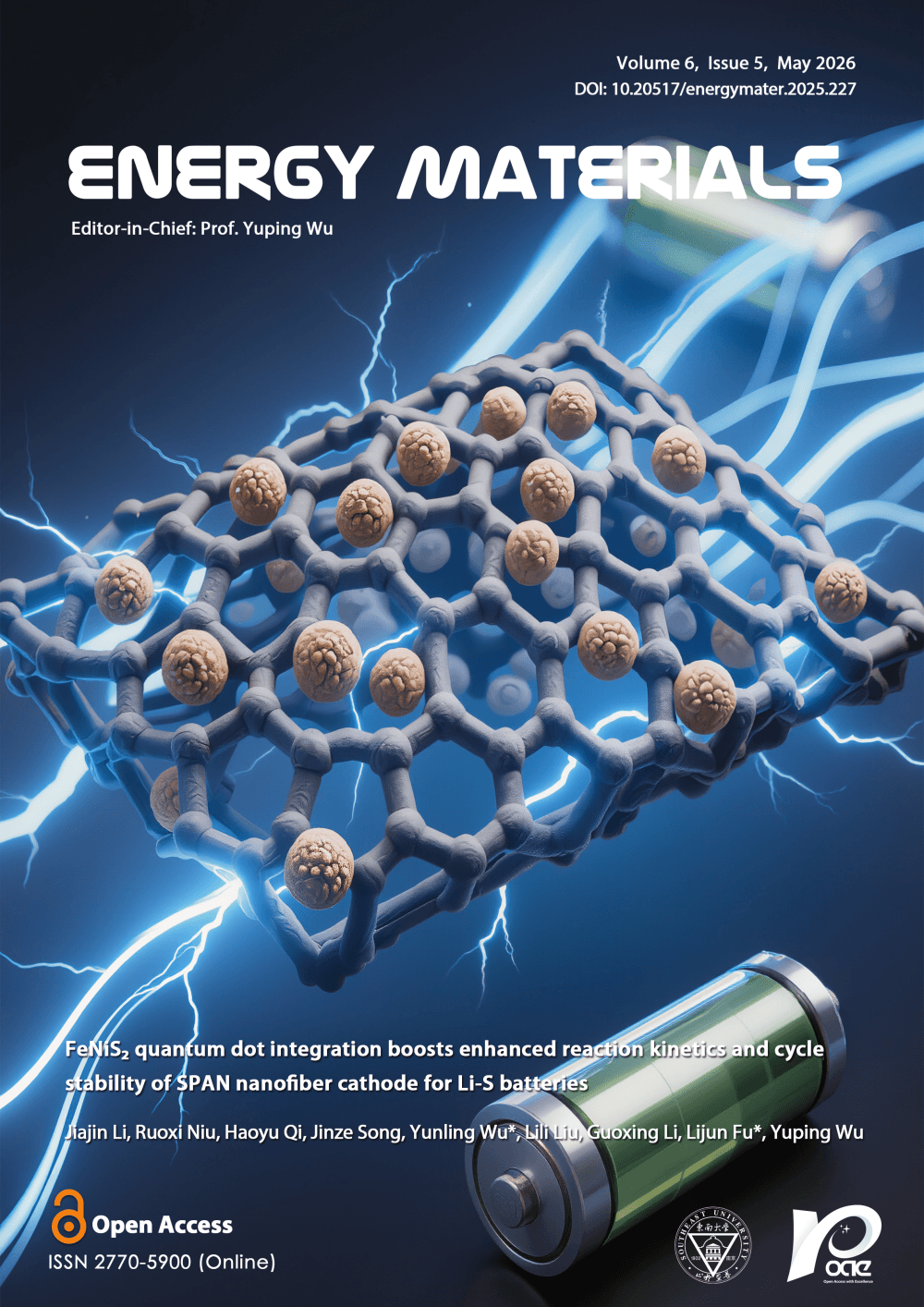
Back Cover Picture: Sulfurized polyacrylonitrile (SPAN) has been regarded as one of the most competitive cathode candidates for lithium-sulfur (Li-S) batteries, owing to its outstanding theoretical energy density, excellent structural durability, and minor self-discharge. Nevertheless, the intrinsically slow reaction kinetics of SPAN results in insufficient active sulfur utilization at high current rates, which severely restricts its rate performance and long-cycle stability. This study introduces FeNiS2 Quantum Dots (QDs) as catalyst embedding in SPAN nanofibers (FeNiS2 QDs@SPAN). Taking advantages of the ultra-small size, superior dispersibility and abundant catalytic sites of FeNiS2 QDs, the redox kinetics and cycle performance of SPAN are significantly enhanced. Kinetic analyses and theoretical calculation demonstrate the uniformly dispersed FeNiS2 QDs effectively reduce charge transfer resistance and facilitate conversion reaction. FeNiS2 QDs@SPAN material exhibits high reversible capacity of 1,213 mAh g-1 and an ultralow capacity decay of 0.034% per cycle over 1,000 cycles at 1 C. Remarkably, even at high rate of 5 C (8.37 A g-1), it delivers a stable long-cycle capacity of 720 mAh g-1 and demonstrates excellent cycling capability with a low fade rate of 0.029% per cycle over 450 cycles. FeNiS2 QDs@SPAN material maintains good performance even under lean electrolyte conditions and a wide temperature range. This work underscores the significant potential of FeNiS2 QDs as catalyst for achieving high performance sulfur cathode and advanced Li-S batteries.
view this paper