
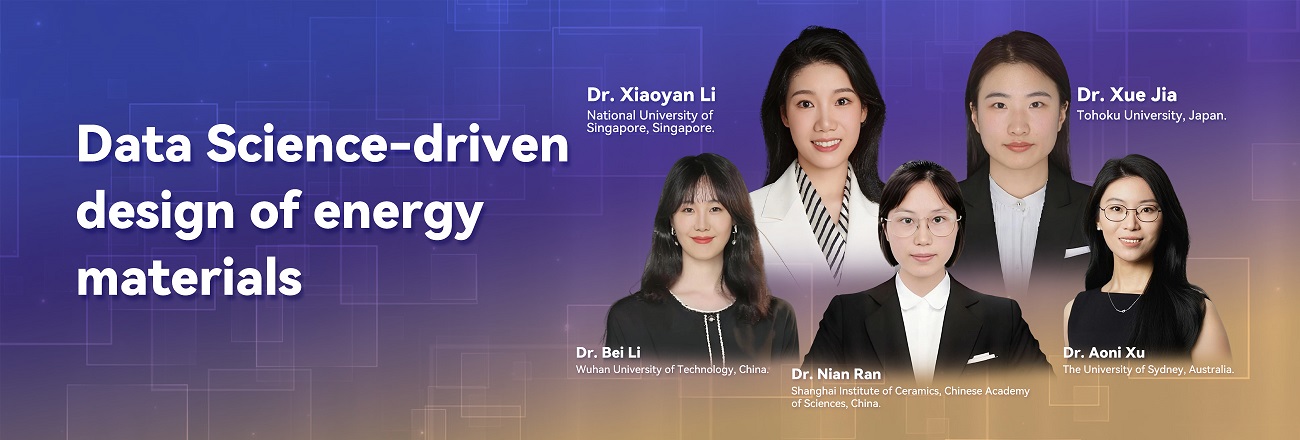
Data Science-driven design of energy materials
Contents
Chair
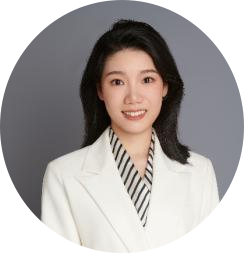
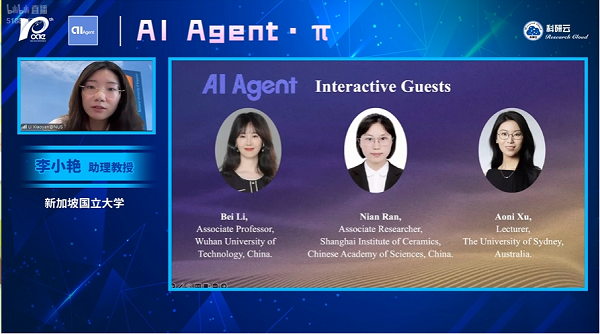
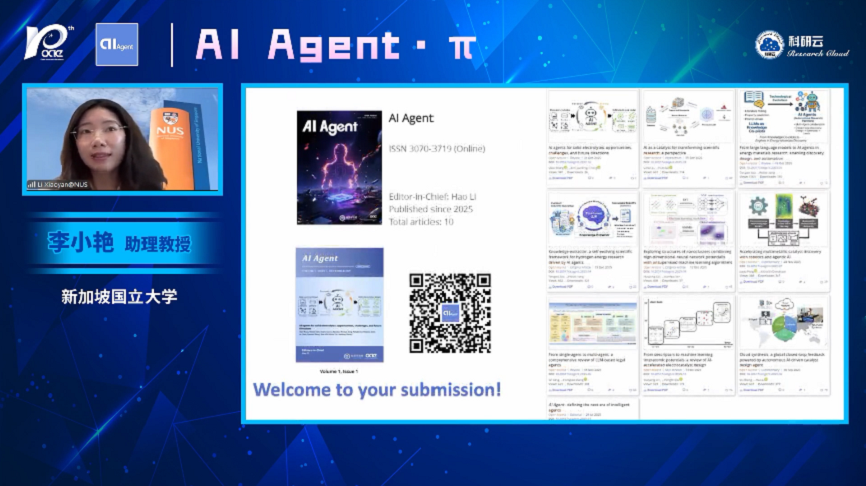
Xiaoyan Li
Assistant Professor, National University of Singapore, Singapore.
Dr. Xiaoyan Li earned her Ph.D. in Particle Physics and Nuclear Physics under the mentorships of Prof. Yi Gao & Prof. Beien Zhu at SIANP. She subsequently conducted postdoctoral research at the University of Toronto (Canada) and Northwestern University (USA) with the supervision of Prof. Edward H. Sargent. Her research focuses on the development and integration of advanced computational methods—including density functional theory (DFT), Monte Carlo (MC), ab initio and force field-based molecular dynamics (MD), and machine learning (ML)—to address challenges at the intersection of chemistry, physics, materials science, and sustainable energy. She is particularly interested in the dynamic interplay between catalytic materials and heterogeneous catalysis/ electrochemical reactions, with a focus on CO2 capture and reduction, the oxygen evolution reaction (OER), and multi-carbon coupling processes for value-added chemical production. Dr. LI has authored more than 50 peer-reviewed publications in top-tier journals, including Science, Nature Catalysis, Nature Nanotechnology, Nature Energy, and Nature Communications and others. She continues to drive innovation in computational catalysis and electrochemical energy conversion through the development and application of cutting-edge AI and machine learning techniques.
Guest(s)
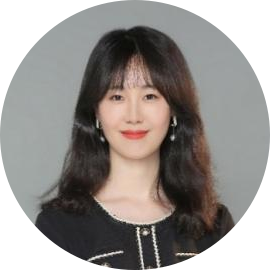
Bei Li
Associate Professor, Wuhan University of Technology, China.
Bei Li received her Ph.D. degree from the School of Mechanical and Aerospace Engineering at Nanyang Technological University, Singapore, in 2015. Currently, she works as an associate professor in the School of Materials Science and Engineering and State Key Laboratory of Advanced Technology for Materials Synthesis and Processing, at Wuhan University of Technology, China. Her research focuses on understanding and predicting nanostructures and mechanical, thermal, catalytic, and electrical properties of advanced structural and functional materials through using multiscale, multiphysics computational simulations and machine learning methods. Dr. Li has published over 50 SCI-indexed papers as the first or corresponding author in prestigious journals, including Nature Communications, Advanced Materials, and Advanced Functional Materials. She has led or participated in more than 10 research projects funded by the National Natural Science Foundation of China. Furthermore, she serves as a Youth Editorial Board Member for several international journals, including Microstructures, AI for Science, Materials, and Computers, Materials & Continua.
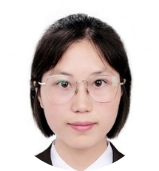
Nian Ran
Associate Researcher, Shanghai Institute of Ceramics, Chinese Academy of Sciences, China.
Nian Ran is an Associate Researcher at the Shanghai Institute of Ceramics, Chinese Academy of Sciences. Her research focuses on the intelligent design of novel energy materials and autonomous experimentation. Leveraging ScienceOne and MatMind, she has developed the S1-MatAgent multi-agent system and the MatSyn25 two-dimensional materials synthesis process database. She has published more than 30 SCI-indexed papers in leading journals such as Journal of the American Chemical Society, Energy & Environmental Science, and Angewandte Chemie International Edition. She has led over 10 competitive research projects, including the National Natural Science Foundation of China (Youth Program) and the Shanghai Rising-Star (Yangfan) Program. She currently serves as a Junior Editorial Board Member of AI Agent, MGE Advances, and the Journal of Materials Informatics.
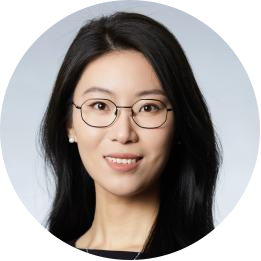
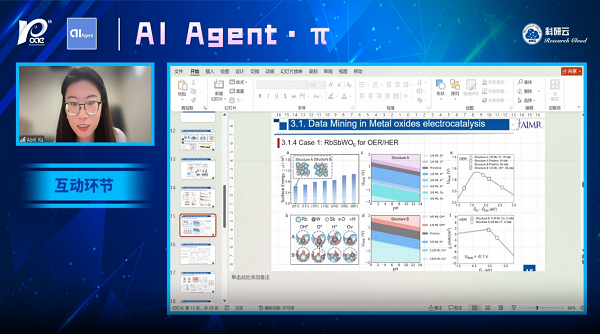
Aoni Xu
Lecturer, The University of Sydney, Australia.
Dr. Aoni Xu is a Lecturer and Sydney Horizon Fellow at the School of Chemical and Biomolecular Engineering, The University of Sydney. She obtained her Ph.D. in Materials Science from the University of Science and Technology, Beijing. During her doctoral studies, she completed extended research appointments as a visiting scholar at the University of California, Berkeley, and the University of Toronto. Following her Ph.D., she was a Postdoctoral Fellow at the Technical University of Denmark. In 2024, she joined The University of Sydney, where her research group integrates data-driven modelling with operando experimentation to tackle challenges in climate-relevant electrochemistry. Dr. Xu's work has been recognized with awards such as the Sydney Horizon Fellowship, the DSI Ignite Grant, and the PerkinElmer Outstanding Young Researcher Award.
Speaker
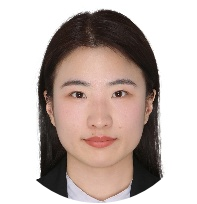
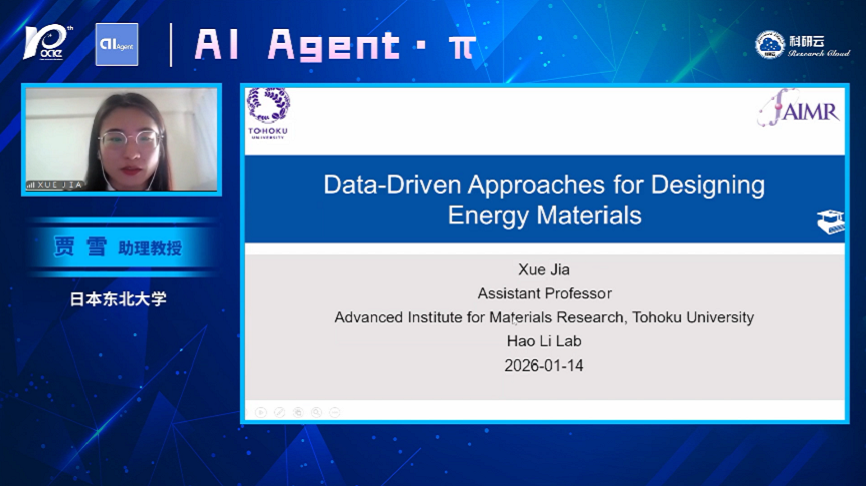
Xue Jia
Assistant Professor,Tohoku University, Japan.
Dr. Xue Jia is currently an Assistant Professor at the Advanced Institute for Materials Research (WPI-AIMR), Tohoku University, Japan (2022.08–present). She received her Ph.D. degree in materials science from the Harbin Institute of Technology, Shenzhen, China (2018.08–2022.07). She has a research background in materials informatics that spans more than seven years. In 2024, she was awarded the title of Prominent Research Fellow at Tohoku University and received the 2024 Outstanding Contribution Award as an Academic Assistant Editor of the Journal of Materials Informatics. Dr. Xue Jia has published 32 peer-reviewed articles and provides review services for journals such as InfoMat, Appl. Catal. B-Environ., and ACS Appl. Mater. Interfaces.
Moments
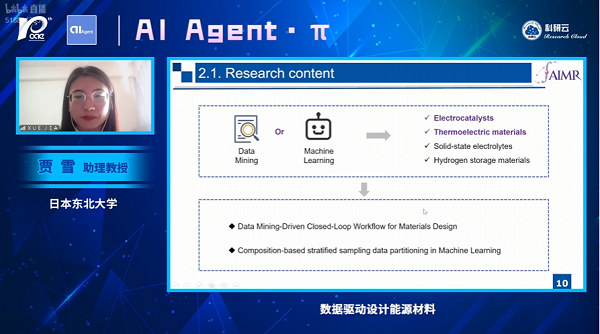
Presentation
NaN
NaN
NaN