

Host
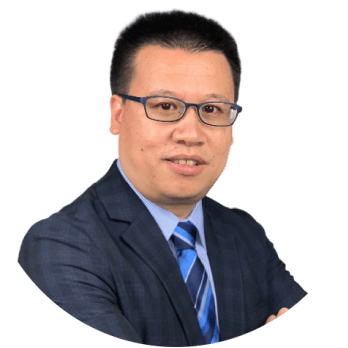
Prof. Xusheng Yang
Department of Industrial and Systems Engineering, The Hong Kong Polytechnic University, Hong Kong, China.
Professor Xusheng Yang is currently an Associate Professor in the Department of Industrial and Systems Engineering at The Hong Kong Polytechnic University and Associate Director of the COMAC-PolyU Research Institute for Large Aircraft. He received his B.Eng. and M.Eng. degrees from South China University of Technology and Ph.D. degree in Mechanical Engineering from The Hong Kong University of Science and Technology. His research focuses on high-performance hetero-nanostructured metals and alloys, atomic-scale processing–microstructure–property relationships, in situ characterization, laser processing and additive manufacturing, and ultra-precision machining. He has published more than 150 papers and served as PI for numerous externally funded research projects, while also serving on the editorial boards of several journals.
Speaker
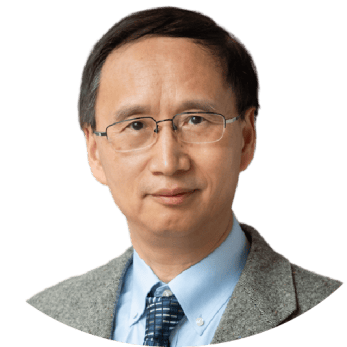
Prof. Yuntian Zhu
Department of Materials Science and Engineering, City University of Hong Kong, Hong Kong, China.
Professor Yuntian Zhu joined the City University of Hong Kong as a Chair Professor in 2020, after serving as a Distinguished Professor at North Carolina State University from 2007 to 2020 and working at Los Alamos National Laboratory from 1994 to 2007. His current research focuses on heterostructured materials, nano/ultrafine-grained materials, and their deformation mechanisms. He has received numerous prestigious awards, including the Robert Franklin Mehl Award, ASM Albert Sauveur Award, IUMRS Sômiya Award, and the 2025 State Natural Science Award (Second Class) of China. He is a member or Fellow of several leading academic societies, including Academia Europaea, European Academy of Sciences, TMS, MRS, APS, ASM, AAAS, and the National Academy of Inventors.
Abstract
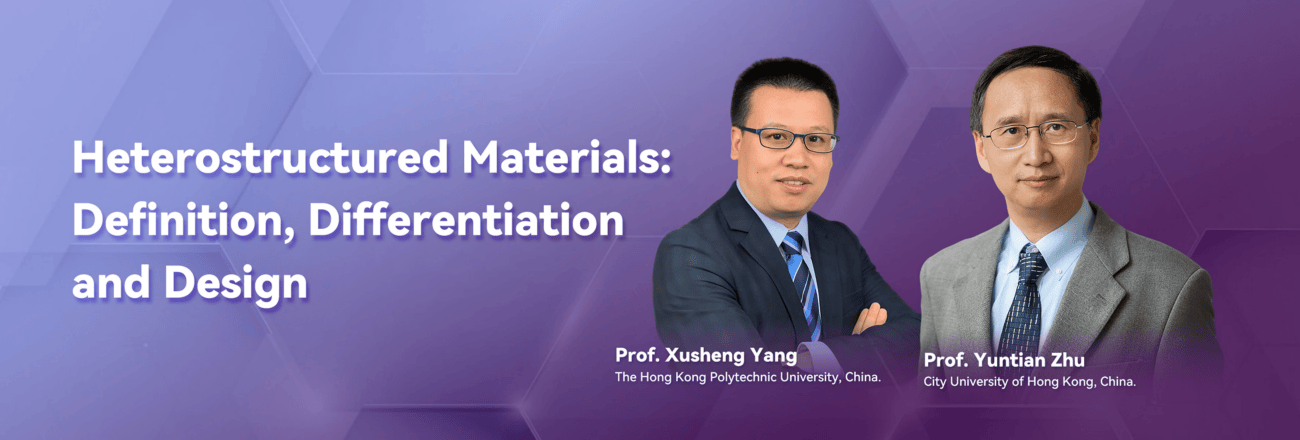
Strong and tough materials are desired for energy-efficient applications such as electric cars and aerospace applications. Recently, heterostructures are found to produce unprecedented strength and ductility that are considered impossible from our textbook knowledge and materials history. Heterostructured materials (HSMs) comprise domains with markedly different properties whose interactive coupling produces synergistic effects beyond the rule of mixtures. Importantly, HS materials can be produced by current industrial facilities at large scale and low cost. HSMs is quickly becoming a hot research field with multiple international conferences/workshops organized in different countries. There have been some confusions in the research community on the definition of HSMs as well as how to differentiate them from conventional engineering alloys and composites. It should be noted that not all HSMs produce superior mechanical and/or physical properties. They must be intelligently designed to produce remarkable heterostructure effect. These issues will be addressed in this talk.
Keywords: Heterostructure, back stress, forward stress, HDI stress, interactive coupling, interface affected zone (IAZ)
Keywords: Heterostructure, back stress, forward stress, HDI stress, interactive coupling, interface affected zone (IAZ)