

fig11
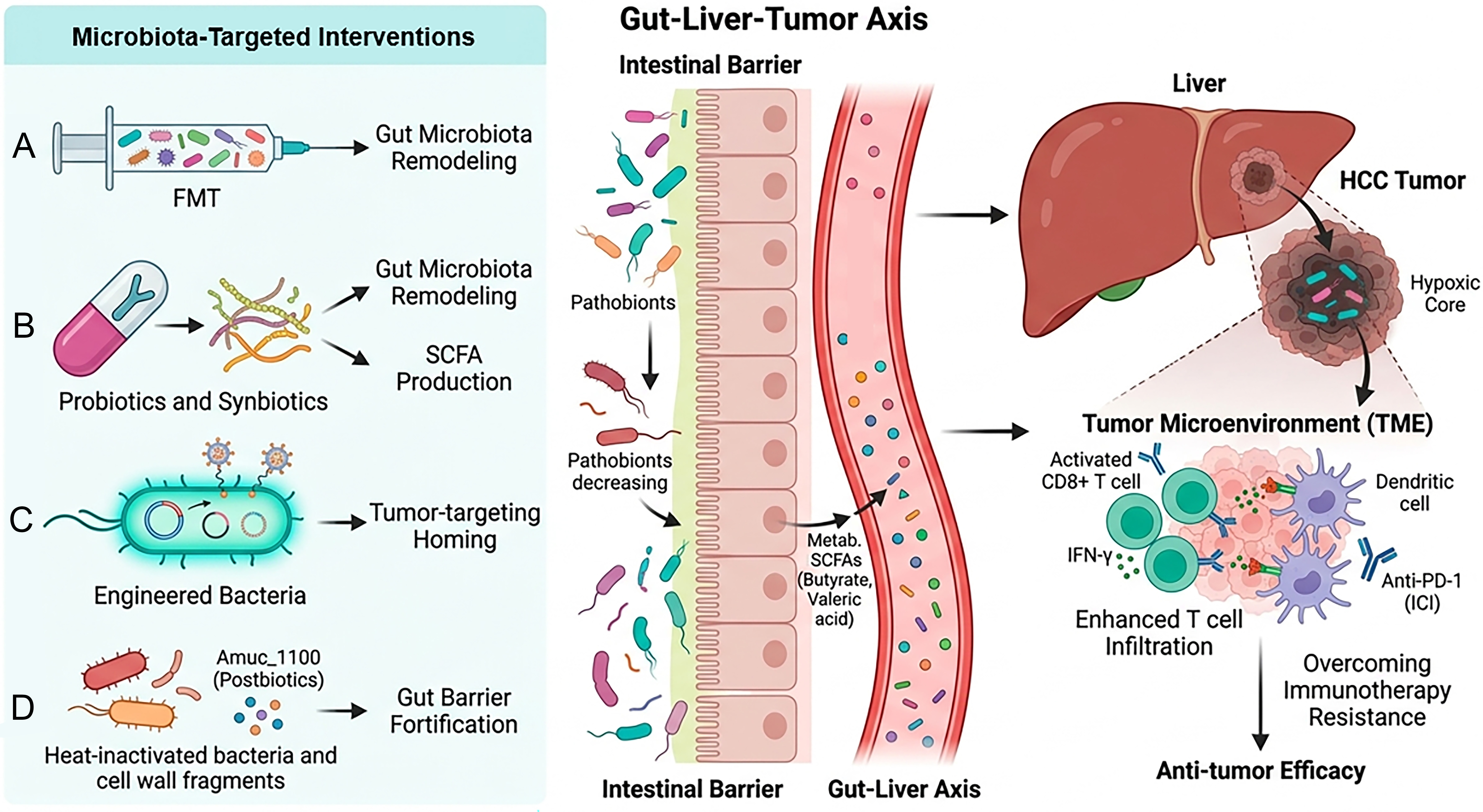
Figure 11. Translational microbiota-targeted interventions and their systemic mechanisms in HCC. The schematic outlines four primary clinical strategies: (A) FMT; (B) probiotics/synbiotics; (C) engineered bacteria; and (D) postbiotics. Black arrows indicate the sequential biological impact of these interventions, from remodeling the gut microbiota and fortifying the intestinal barrier (left) to the systemic delivery of metabolites (e.g., SCFAs) and tumor-homing bacteria via the gut-liver axis (middle). (Right) In the liver tumor microenvironment, these interventions synergistically reverse immunosuppression, enhancing dendritic cell activation, CD8+ T cell infiltration, and IFN-γ production, thereby overcoming resistance to immune checkpoint inhibitors (e.g., anti-PD-1). Specific strain functions and clinical translation progress are detailed in the corresponding text. HCC: Hepatocellular carcinoma; FMT: fecal microbiota transplantation; SCFAs: short-chain fatty acids; ICI: immune checkpoint inhibitor; TME: tumor microenvironment; CD8+: cluster of differentiation 8 positive; IFN-γ: interferon gamma; PD-1: programmed cell death protein 1.