


fig5
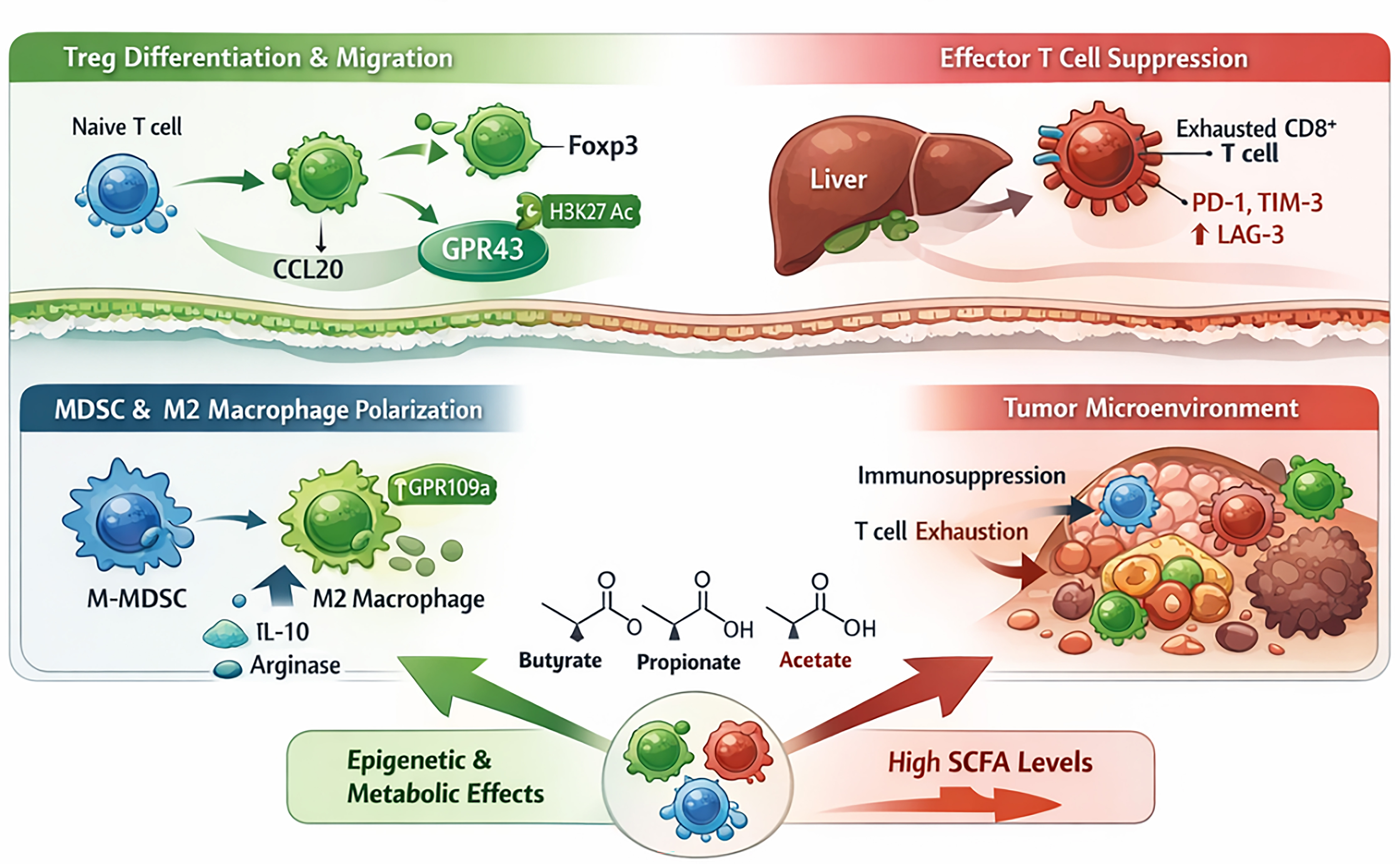
Figure 5. The immunosuppressive “edge” of the SCFA double-edged sword in the HCC microenvironment. While SCFAs exhibit context-dependent anti-tumor properties (discussed in the text), this schematic illustrates their primary pathways driving immune tolerance. Green arrows indicate differentiation towards suppressive phenotypes (Tregs and M2 macrophages); red arrows indicate pathways leading to effector CD8+ T cell exhaustion; red up-arrows (↑) denote the upregulation of specific exhaustion markers (PD-1, TIM-3, LAG-3). Detailed receptor-mediated signaling (GPR43, GPR109a) and epigenetic regulations are explicitly discussed in the corresponding text. HCC: Hepatocellular carcinoma; SCFA: short-chain fatty acid; Tregs: regulatory T cells; CD8+: cluster of differentiation 8 positive; PD-1: programmed cell death protein 1; TIM-3: T-cell immunoglobulin and mucin-domain containing-3; LAG-3: lymphocyte-activation gene 3; CCL20: C-C motif chemokine ligand 20; GPR43: G protein-coupled receptor 43; H3K27 Ac: histone H3 lysine 27 acetylation; MDSC: myeloid-derived suppressor cell; GPR109a: G protein-coupled receptor 109A.