


fig9
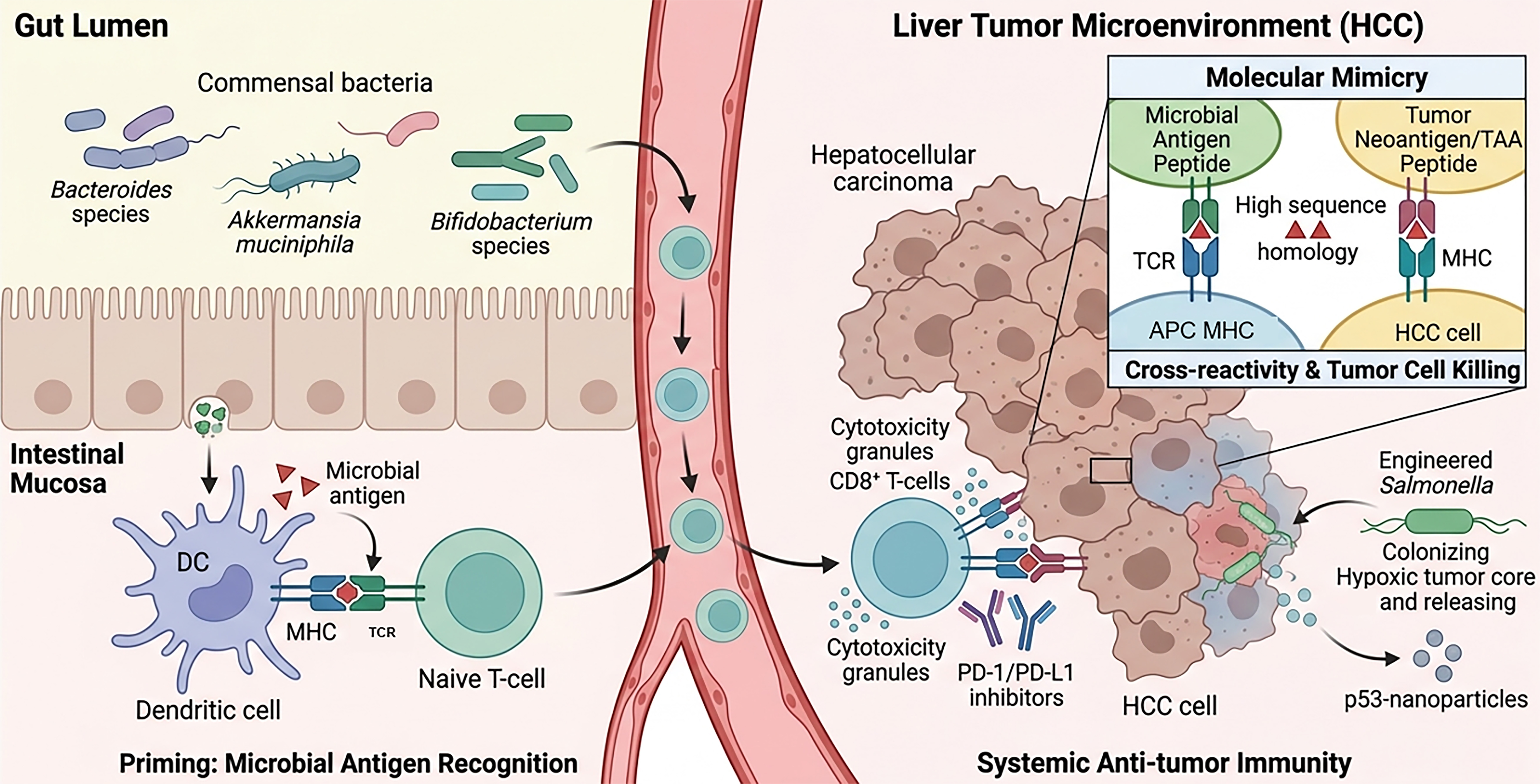
Figure 9. Mechanisms of microbiota-mediated antigen cross-reactivity and synergistic engineered immunotherapy. The schematic illustrates two critical pathways. (Left and Top Right) Molecular Mimicry: Commensal bacteria (e.g., Akkermansia, Bacteroides) provide microbial peptides with high sequence homology to tumor neoantigens/TAAs. DCs present these peptides via MHC to naive T cells (priming), which then migrate to the liver TME to cross-react with and kill HCC cells. (Bottom Right) Engineered Synergy: Attenuated Salmonella colonizes the hypoxic tumor core to release p53-nanoparticles, functioning in tandem with PD-1/PD-L1 inhibitors to restore systemic anti-tumor immunity. Specific cellular interactions and molecular homologies are detailed in the corresponding text. TAA: Tumor-associated antigen; TME: tumor microenvironment; HCC: hepatocellular carcinoma; TCR: T-cell receptor; DC: dendritic cell; MHC: major histocompatibility complex; PD-1: programmed cell death protein 1; PD-L1: programmed death-ligand 1; APC: antigen-presenting cell; CD8+: cluster of differentiation 8 positive.