

fig1
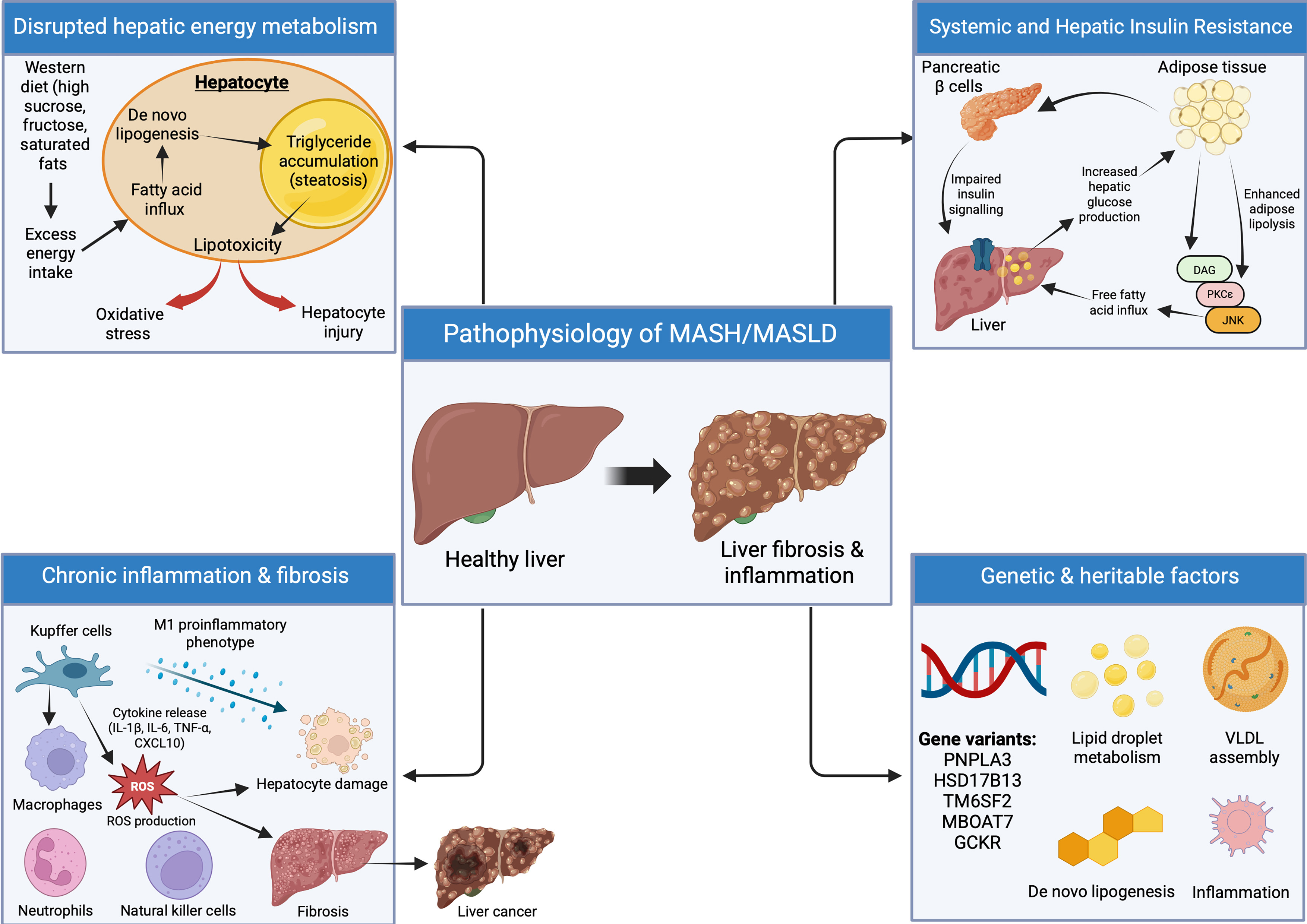
Figure 1. Pathophysiology of MASH/MASLD. The key pathophysiologic mechanisms involved in MASH/MASLD, including nutrient-driven hepatic lipid accumulation, insulin resistance mediated increases in fatty acid flux, and activation of inflammatory and fibrogenic pathways. Oxidative stress, cytokine signalling, and immune cell activation promote hepatocellular injury and fibrosis. Genetic variants (PNPLA3, TM6SF2, MBOAT7, HSD17B13, GCKR) modulate disease susceptibility through effects on lipid metabolism and inflammation. These combined mechanisms contribute to progression from steatosis to steatohepatitis and fibrosis, with GLP-1 receptor agonism highlighted as a potential therapeutic target. Created in BioRender. Elangovan, S. (2026) https://app.biorender.com/illustrations/697b672051a9c9e287df5dab. MASH: Metabolic dysfunction-associated steatohepatitis; MASLD: metabolic dysfunction-associated steatotic liver disease; GLP-1: glucagon-like peptide-1; VLDL: very-low-density lipoprotein; DAG: diacylglycerol; PKCε: protein kinase C epsilon; JNK: Jun N-terminal kinase; ROS: reactive oxygen species; PNPLA3: patatin-like phospholipase domain-containing protein 3; TM6SF2: transmembrane 6 superfamily member 2; MBOAT7: membrane-bound O-acyltransferase domain-containing 7; HSD17B13: hydroxysteroid 17-beta dehydrogenase 13; GCKR: glucokinase regulatory protein; IL-1β: interleukin-1 beta; IL-6: interleukin-6; TNF-α: tumor necrosis factor-alpha; CXCL10: C-X-C motif chemokine ligand 10.