

fig3
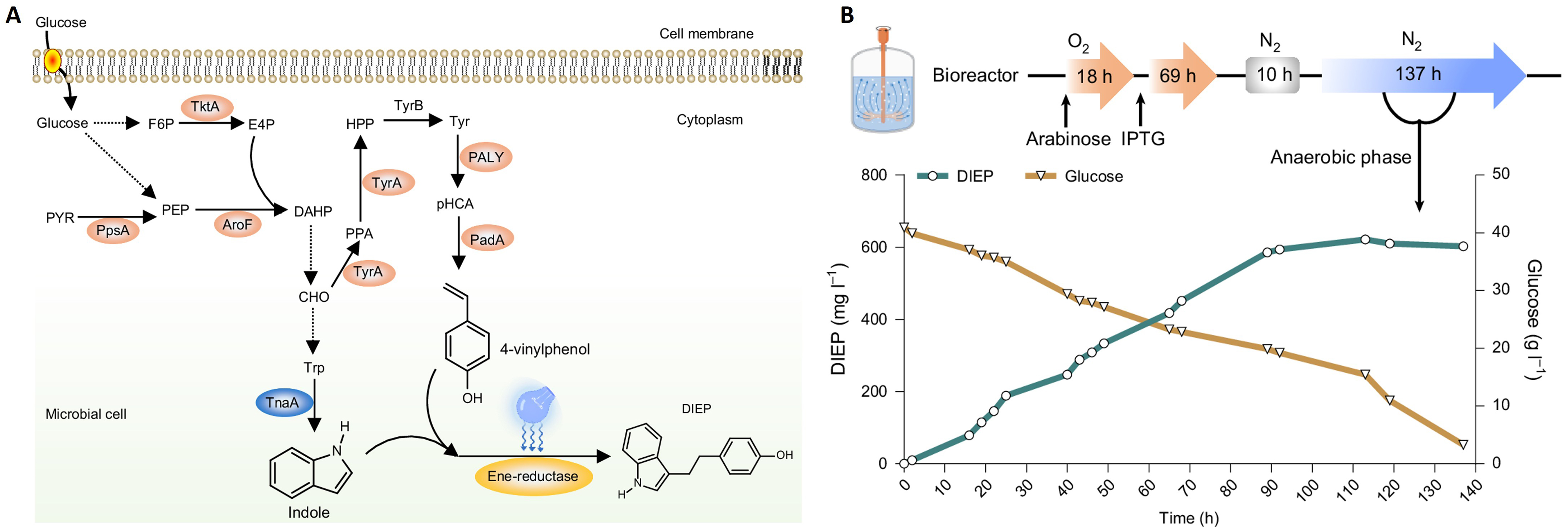
Figure 3. Fully integrated photobiosynthesis and fermentation-enabled production of DIEP. (A) Intracellular generation of the olefin substrate, radical precursor, and photoenzyme enables de novo photobiosynthesis; (B) Fed-batch fermentation supports sustained, light-driven production through separation of metabolic and catalytic processes. Adapted with permission from[1], Copyright 2026, Springer Nature. DIEP: 4-(2-(3a,7a-dihydro-1H-indol-3-yl)ethyl)phenol; F6P: fructose 6-phosphate; E4P: erythrose 4-phosphate; TktA: transketolase; PYR: pyruvate; PpsA: phosphoenolpyruvate synthase; PEP: phosphoenolpyruvate; AroF: 3-deoxy-D-arabino-heptulosonate-7-phosphate (DAHP) synthetase; CHO: chorismate; Trp: tryptophan; TnaA: tryptophanase; Tyr: tyrosine; TyrA: tyrosine synthase; TyrB: tyrosine aminotransferase; PPA: prephenate; HPP: 4-hydroxyphenylacetone; PALY: phenylalanine ammonia lyase (from R. toruloides); PadA: decarboxylase (from L. plantarum); pHCA: p-hydroxy-cinnamic acid.