

Exsolved nickel sites for methane decomposition to hydrogen and carbon
 0
0 
Graphical Abstract
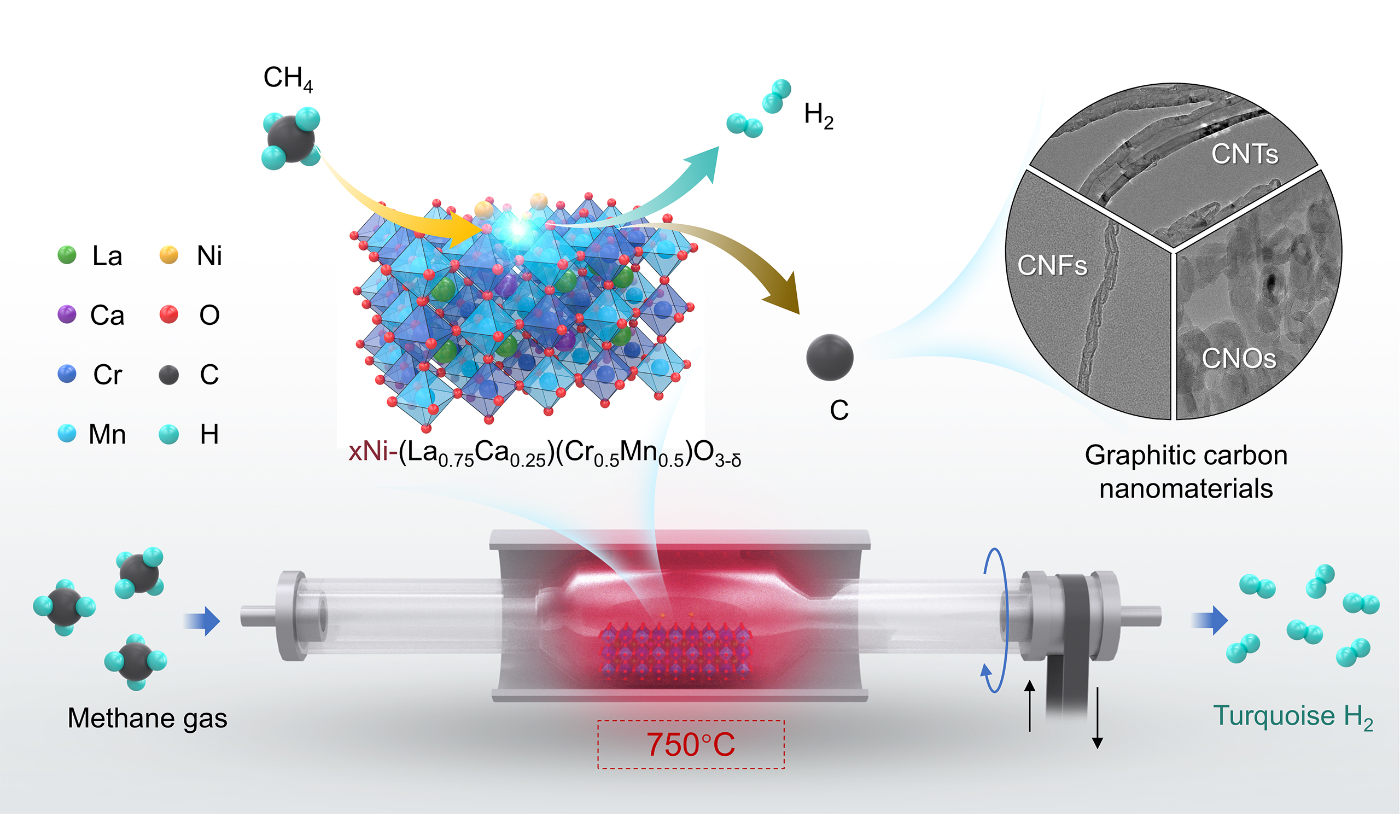
Abstract
Hydrogen production via catalytic decomposition of methane (CDM) offers a CO2-free route for simultaneous hydrogen and solid carbon generation. However, practical implementation remains limited by catalyst deactivation, metal contamination in the carbon product, and inefficient post-reaction purification. In this work, Ni-promoted (La0.75Ca0.25)(Cr0.5Mn0.5)O3-δ (Ni-LCCM) perovskite catalysts prepared via a nitrate-based route were evaluated for CDM. Under thermal CDM at 750 °C without pre-reduction, 050Ni-LCCM achieved a Ni-normalized carbon productivity of up to 11.53 gC·gNi-1. A non-monotonic dependence of intrinsic carbon productivity on Ni loading was observed, with local maxima for 050Ni-LCCM and 150Ni-LCCM. These two experimental compositions were represented by the 2Ni-LCCM and 6Ni-LCCM models in the density functional theory (DFT) calculations. The 2Ni-LCCM and 6Ni-LCCM models showed lower relative rate-limiting activation barriers than those of neighboring configurations. Together with structural characterization, these results suggest that methane decomposition activity is strongly influenced by local Ni configuration, Ni reducibility, and site accessibility rather than by total Ni loading alone. Carbon characterization showed the formation of predominantly nanocrystalline graphitic carbon, including mixed carbon nanostructures such as carbon nanotubes, carbon nanofibers, and carbon nano-onions. Post-reaction purification using 5 M HNO3 reduced the residual inorganic content to 4.20% and 1.41% for carbon products from 050Ni-LCCM and 150Ni-LCCM, respectively, corresponding to thermogravimetric analysis (TGA)-based carbon contents of approximately 95.8% and 98.6%. Overall, the results demonstrate that Ni-LCCM is an effective catalyst system for CDM, in which composition-dependent Ni configurations influence intrinsic carbon productivity while enabling recovery of high-carbon-content solid products after mild acid treatment.
Keywords


 Download PDF
INTRODUCTION
Hydrogen is an essential feedstock for chemical manufacturing, refining, and fuel-cell technologies, and is increasingly regarded as a key energy carrier for deep decarbonization[1,2]. Depending on the production route and associated carbon footprint, hydrogen is commonly classified as grey, blue, green, or turquoise hydrogen[3]. Grey hydrogen, mainly produced by steam methane reforming (SMR), is accompanied by substantial CO2 emissions, whereas blue hydrogen relies on carbon capture and storage (CCS) to reduce emissions. However, CCS increases process complexity, energy consumption, and cost[4,5]. Green hydrogen from renewable-powered water electrolysis offers a low-carbon route, but its large-scale deployment is still constrained by electricity cost, electrolyzer durability, and renewable power availability. In this context, CDM has emerged as an attractive complementary route for turquoise hydrogen production, because methane can be directly converted into hydrogen and solid carbon without direct CO2 formation[6]. The solid carbon co-product also provides an opportunity to improve process economics if it can be recovered with sufficient purity and structural quality.
Catalytic performance and the practical feasibility of CDM are strongly affected by catalyst composition, active-site structure, and carbon management. Ni-based catalysts are among the widely studied systems because of their high activity and relatively low cost[7]. In this work, Ni was selected as the modifying element because Ni is effective for C-H bond activation and can promote the formation of graphitic carbon during methane decomposition. Moreover, Ni species can interact with perovskite oxide frameworks and generate surface-enriched or exsolution-related active sites under reducing conditions and during methane decomposition.
Other transition metals, such as Fe and Co, may also affect methane decomposition, but they are not expected to behave identically to Ni because their reducibility, metal-support interaction, carbon solubility, and carbon-growth behavior can differ substantially. Therefore, this study focuses on Ni-modified LCCM as a representative system to establish the relationship between Ni loading, active-site evolution, and carbon productivity. Future work will include a systematic comparison with Fe- and Co-modified LCCM catalysts.
Nevertheless, conventional supported Ni catalysts often suffer from sintering, carbon-induced deactivation[8,9], and the incorporation of metal or support residues into the carbon product[10,11]. These issues not only shorten catalyst lifetime but also complicate the purification and downstream utilization of the produced carbon. Strategies such as bimetallic catalyst design[7,11], support modification[12,13], and reactor engineering using fluidized-bed[14] or molten-media systems[15] have been investigated to improve activity and carbon removal. However, achieving stable hydrogen production while recovering low-residue carbon products remains challenging, especially when oxide supports or residual metal species are difficult to remove after reaction[10,16].
Perovskite-derived catalysts provide a useful platform for addressing these challenges because reducible metal species can be incorporated into the oxide lattice and subsequently exsolved as anchored nanoparticles under reducing or reaction conditions[17,18]. Compared with conventionally impregnated metal particles, exsolved nanoparticles are often partially embedded in the oxide surface, forming socketed metal-support interfaces that improve thermal stability and sintering resistance[17]. Ni-substituted La-Sr-Cr-Mn-based perovskites, (La0.75Sr0.25)(Cr0.5Mn0.5-xNix)O3-δ and (La0.75Sr0.25)(Cr0.5-xNixMn0.5)O3-δ, have been extensively
Although Ni-promoted LCCM catalysts have shown promise for turquoise hydrogen and carbon nanomaterial co-production, the role of composition-tuned exsolved Ni sites in determining intrinsic activity remains insufficiently understood. In many CDM studies, catalyst performance is primarily evaluated by methane conversion, hydrogen formation rate, or total carbon yield. These metrics are important but do not fully distinguish whether additional Ni contributes to more efficient active sites or merely increases the total metal amount. Ni-normalized carbon productivity therefore provides a more direct measure of intrinsic Ni utilization. In this work, the intrinsic carbon productivity on Ni-LCCM was found to depend non-monotonically on Ni loading, indicating that catalytic performance is governed not simply by the total Ni content but by the local configuration and accessibility of exsolved Ni sites.
Herein, a series of Ni-promoted LCCM perovskite catalysts was prepared through a nitrate-based gel-casting route and evaluated for CDM under rotary-bed operation without external pre-reduction. The relationship between Ni loading, exsolved Ni configuration, intrinsic carbon productivity, and carbon product purity was systematically examined. Density functional theory (DFT) calculations were further used to rationalize how different Ni configurations influence the rate-limiting barriers for methane dehydrogenation. In addition, post-reaction mild acid treatment was applied to assess the removability of catalyst-derived residues and the potential for producing high-carbon-content solid products. This study links composition-tuned exsolved Ni sites with intrinsic methane decomposition activity and carbon purification, providing a materials-design strategy for the co-production of turquoise hydrogen and high-carbon-content solid products.
EXPERIMENTAL
Chemicals
The following chemicals were used as received from Sigma Aldrich: calcium nitrate tetrahydrate [Ca(NO3)2·4H2O, 99%], chromium nitrate nonahydrate [Cr(NO3)3·9H2O, 99%], manganese nitrate tetrahydrate [Mn(NO3)2·4H2O, ≥ 97.0%], and nickel nitrate hexahydrate [Ni(NO3)2·6H2O, 99.9%]. Acrylamide (AM, C2H3CONH2, 99.9%), N,N’-methylenebisacrylamide (MBAM, C2H3CONHCH2NHCOC2H3, 99.9%), ammonium persulfate [APS, (NH4)2S2O8, 99.9%], and N,N,N’,N’-Tetramethyl ethylenediamine (TEMED, 99.9%) were also used for gel-casting. Lanthanum nitrate hexahydrate [La(NO3)3·6H2O, 99.9%] was used as received from Alfa Aesar. Milli-Q deionized water (18.2 MΩ·cm) was used during all experimental procedures.
Synthesis of xNi-LCCM catalysts
The xNi-LCCM catalyst series was synthesized by a water-based gel-casting method adapted from a previous report[24]. Hydrated metal nitrates were used as precursor salts instead of the oxide- and carbonate-based precursors used in earlier procedures. The catalysts were denoted according to the nominal molar amount of Ni introduced into the fixed LCCM composition; for example, 050Ni-LCCM has a nominal Ni:La:Ca:Cr:Mn molar ratio of 0.50:0.75:0.25:0.50:0.50. The nominal molar compositions are listed in Table 1.
Nominal compositions of xNi-LCCM catalysts and the corresponding representative yNi-LCCM DFT models
| Sample (xNi-LCCM) | Representative DFT model (yNi-LCCM) | Ni | La | Ca | Cr | Mn |
| LCCM | LCCM | 0.00 | 0.75 | 0.25 | 0.50 | 0.50 |
| 025Ni-LCCM | 1Ni-LCCM | 0.25 | 0.75 | 0.25 | 0.50 | 0.50 |
| 050Ni-LCCM | 2Ni-LCCM | 0.50 | 0.75 | 0.25 | 0.50 | 0.50 |
| 075Ni-LCCM | 3Ni-LCCM | 0.75 | 0.75 | 0.25 | 0.50 | 0.50 |
| 100Ni-LCCM | 4Ni-LCCM | 1.00 | 0.75 | 0.25 | 0.50 | 0.50 |
| 125Ni-LCCM | 5Ni-LCCM | 1.25 | 0.75 | 0.25 | 0.50 | 0.50 |
| 150Ni-LCCM | 6Ni-LCCM | 1.50 | 0.75 | 0.25 | 0.50 | 0.50 |
| 175Ni-LCCM | 7Ni-LCCM | 1.75 | 0.75 | 0.25 | 0.50 | 0.50 |
| 200Ni-LCCM | 8Ni-LCCM | 2.00 | 0.75 | 0.25 | 0.50 | 0.50 |
A 50 wt% aqueous solution of each hydrated nitrate salt was prepared from La(NO3)3·6H2O, Ca(NO3)2·4H2O, Cr(NO3)3·9H2O, Mn(NO3)2·4H2O, and Ni(NO3)2·6H2O. To prepare 050Ni-LCCM, the corresponding nitrate solutions were mixed and stirred for 30 min, followed by the addition of 16.54 g acrylamide (AM) and 1.10 g MBAM. After stirring for another 15 min, polymerization was initiated by sequentially adding 16.54 g of 2 wt% APS solution and 16.54 g of 2 wt% TEMED solution.
Figure 1 illustrates the nitrate-based aqueous gel-casting synthesis procedure for the xNi-LCCM catalysts. The nitrate-based aqueous route avoids organic solvents such as ethanol and isopropanol and offers a simple, scalable approach for preparing composition-tuned Ni-LCCM catalysts.
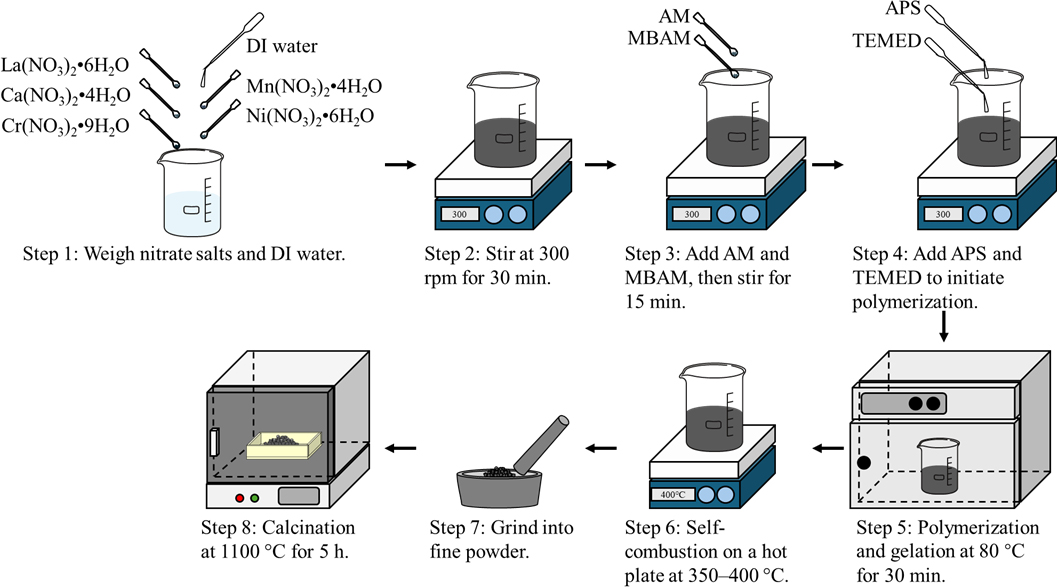
Figure 1. Schematic illustration of the nitrate-based aqueous gel-casting synthesis procedure for xNi-LCCM catalysts. AM: Acrylamide; APS: ammonium persulfate; LCCM: (La0.75Ca0.25)(Cr0.5Mn0.5)O3-δ; MBAM: N,N’-methylenebisacrylamide; TEMED: N,N,N’,N’-tetramethyl ethylenediamine; DI: deionized water.
Materials characterization
The molar ratios of metal elements in the catalysts were determined by inductively coupled plasma optical emission spectroscopy (ICP-OES, Avio 200, PerkinElmer, USA). Calibration curves were established for Ca, Cr, La, Mn, and Ni. Calibration concentrations ranged from 1-100 ppm for Ca, Cr, La, and Ni, while Mn was calibrated over 1-20 ppm. Ni was measured using the axial viewing mode, whereas all other elements were analyzed in radial viewing mode. All calibration curves showed good linearity (R2 > 0.99). Phase structures of the catalysts and carbon products were analyzed by powder X-ray diffraction (XRD, Philips MPD 1880, PANalytical, Netherlands) using Cu Kα radiation (λ = 1.5406 Å) at room temperature, and the diffraction patterns were recorded over a 2θ range of 20°-80° at a scan rate of 4° min-1. Surface chemical states were examined by X-ray photoelectron spectroscopy (XPS, ESCALAB 250Xi, Thermo Fisher Scientific, USA) with an Al Kα source (hν = 1,486.6 eV), operating at an accelerating voltage of 15 kV and a filament current of
The morphology and microstructure of the catalysts and carbon products were characterized by field-emission scanning electron microscopy (FESEM, JEOL7600, JEOL, Japan), high-resolution transmission electron microscopy (HRTEM, Talos F200X, Thermo Fisher Scientific, USA), and high-angle annular dark-field scanning transmission electron microscopy (HAADF-STEM, Talos F200X, Thermo Fisher Scientific, USA) equipped with energy-dispersive X-ray spectroscopy (EDS). The FESEM observations were performed at an accelerating voltage of 5 kV, while the HRTEM and HAADF-STEM analyses were conducted at
H2 temperature-programmed reduction (H2-TPR) was carried out using an Autochem II 2920 analyzer (Micromeritics, USA). The samples were pretreated at 200 °C for 0.5 h to remove moisture, followed by heating from 50 °C to 900 °C at a ramp rate of 10 °C min-1 under a 10% H2/90% Ar flow. Thermogravimetric analysis (TGA, Q500, TA Instruments, USA) was used to investigate the thermal behavior of the produced carbon nanomaterials. Approximately 10-15 mg of carbon or carbon-catalyst mixture was placed in the sample pan. The analysis was conducted at a heating rate of 10 °C min-1 up to 900 °C under a mixed gas flow of 40 mL min-1 N2 and 60 mL min-1 air. Prior to analysis, the pan was pre-cleaned by heating to 900 °C at
Catalytic activity experiments
Catalytic decomposition of methane (CDM) experiments were carried out in a rotary-bed reactor. For each test, 2 g of catalyst was loaded at the center of a specially shaped quartz tube with an inner diameter of
Where
Where mt is the total mass of the carbon and catalyst mixture after reaction, mcat. is the initial catalyst mass, and mNi is the nominal mass of Ni in the catalyst.
Reproducibility of the catalytic tests was evaluated using independent experiments under identical reaction conditions. For the Ni-loading-dependent catalytic tests, each catalyst composition was evaluated using three independent experiments. Unless otherwise stated, the reported values represent the mean of the independent measurements, with error bars indicating the corresponding standard deviation.
Purification of carbon
The as-produced carbon was purified by nitric acid treatment to remove residual metal species. Briefly,
Density functional theory calculations
All calculations were performed based on DFT. The exchange-correlation functional was described using the generalized gradient approximation (GGA) with the Perdew-Burke-Ernzerhof (PBE), together with the DFT-D3 dispersion correction[25]. For geometry and lattice optimization, the plane-wave cutoff energy was set to 500 eV, and Brillouin zone integration was performed using a 4 × 4 × 1 Monkhorst-Pack k-point mesh[26]. The convergence criteria for ionic relaxation and electronic self-consistent calculations were set to
A 2 × 2 × 1 LCCM supercell exposing the (0-10) surface was constructed, with a 15 Å vacuum layer applied perpendicular to the surface. Different numbers of Ni atoms were introduced into the supercell to represent different relative Ni-loading levels and local Ni configurations. As summarized in Table 1, the yNi-LCCM models represent computational analogs of the experimental xNi-LCCM series, rather than the exact bulk stoichiometry of the catalysts. The pristine LCCM surface corresponds to y = 0. A pure Ni(111) slab with a comparable cell size was also constructed as a reference.
The adsorption energy was calculated as:
where Etot is the total energy of the adsorbate-substrate system, Esub is the energy of the bare substrate, and Ead is the energy of the isolated adsorbate.
The climbing-image nudged elastic band (CI-NEB) method was used to locate transition states[27,28]. Ten images were used between the initial and final states for each elementary C-H bond cleavage step. For configurations where the initial and final states differed significantly in energy, forward and reverse activation barriers were calculated as:
Where ETS, EI, and EF are the total energies of the transition state, initial state, and final state, respectively. Only the forward reaction was considered in this work; therefore, the activation energy was defined as:
RESULTS AND DISCUSSION
Synthesis and compositional verification of xNi-LCCM
ICP-OES analysis was used to verify the elemental compositions of the nitrate-derived xNi-LCCM catalysts. For the representative 050Ni-LCCM sample, the measured Ni:La:Ca:Cr:Mn molar ratio was close to the nominal composition, confirming that the nitrate-based gel-casting route effectively incorporated the metal precursors into the multicomponent catalyst system[29]. The measured composition of 050Ni-LCCM is provided in the note to Table 1, and the ICP-OES-derived molar ratios for individual batches and the normalization basis are provided in the Supplementary Materials [Supplementary Table 1].
XRD patterns of the calcined xNi-LCCM catalysts confirm the formation of the LCCM perovskite phase across all compositions [Figure 2A]. The diffraction peaks are consistent with previously reported LCCM structures[24], indicating that the nitrate-based gel-casting route successfully produces the targeted perovskite phase. In our previous work, xNi-LCCM catalysts were prepared using oxide and carbonate raw materials through a water-based gel-casting slurry route[24]. By contrast, the present synthesis uses hydrated metal nitrates to form a homogeneous aqueous precursor solution before polymerization and self-combustion. Despite this change in precursor chemistry and gel-casting medium from slurry to solution, the final calcined catalysts exhibit the same LCCM perovskite framework, suggesting that the nitrate-derived route does not adversely affect phase formation. With increasing Ni incorporation, the perovskite reflections show a slight shift toward higher 2q values [Figure 2B], suggesting lattice modification associated with metal incorporation and defect formation[19,29-31].
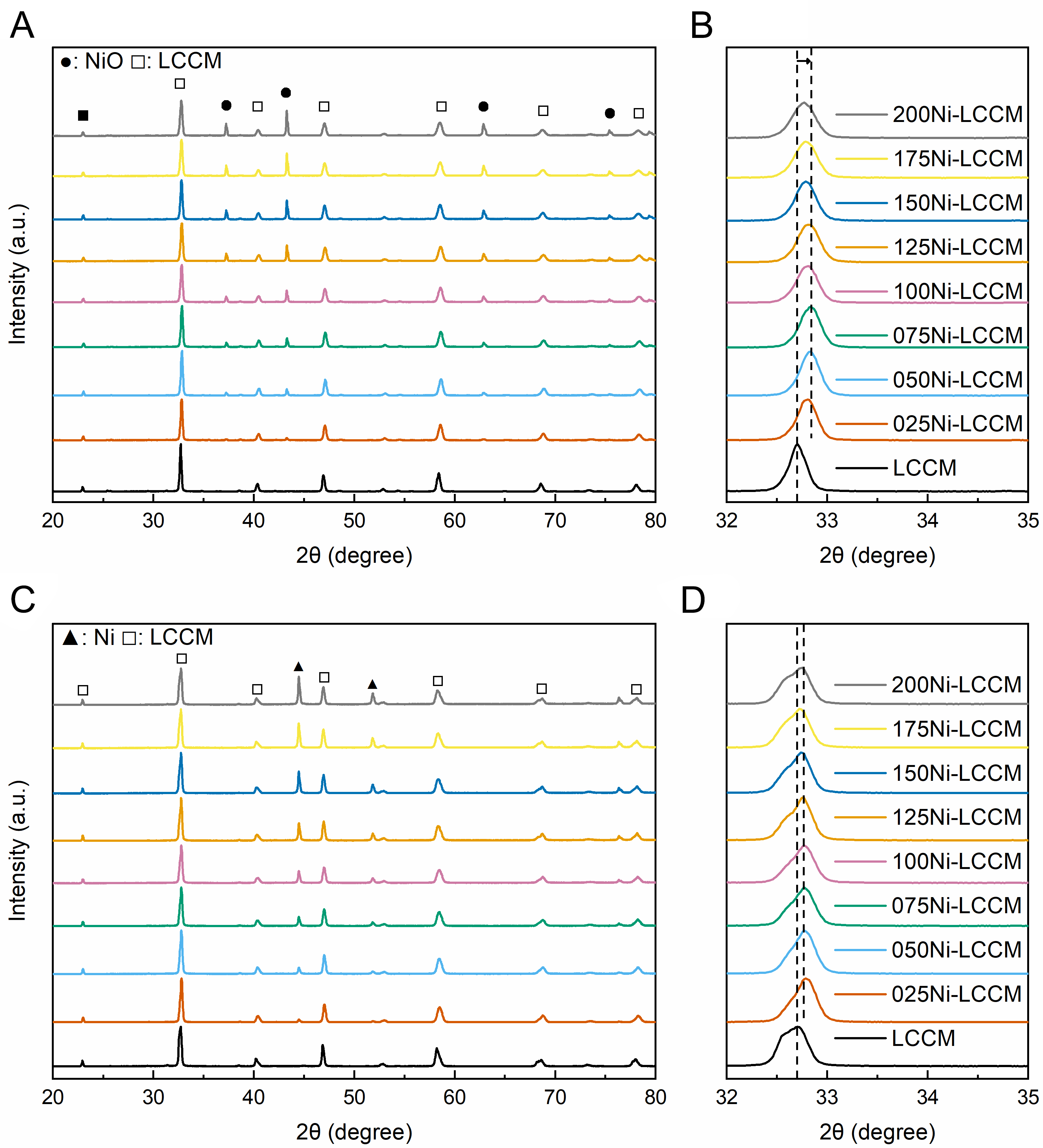
Figure 2. XRD patterns of xNi-LCCM catalysts with different Ni loadings: (A) catalysts calcined at 1,100 °C for 5 h in air; (B) enlarged view of the 2θ range of 32°-35° for the calcined catalysts; (C) catalysts reduced at 750 °C for 2 h in H2/N2; and (D) enlarged view of the 2θ range of 32°-35° for the reduced catalysts. Diffraction peaks corresponding to LCCM, NiO, and metallic Ni are indicated. XRD: X-ray diffraction; LCCM: (La0.75Ca0.25)(Cr0.5Mn0.5)O3-δ.
After reduction in H2/N2, metallic Ni reflections appear in the Ni-containing samples, while the LCCM perovskite structure remains intact [Figure 2C and D]. This confirms the reduction of Ni species[24,32,33] and the structural stability of the LCCM under reducing conditions[20]. The intensity of the metallic Ni reflections increases with Ni loading, consistent with the higher Ni content in the catalyst series.
XPS was employed to examine the surface chemical states of xNi-LCCM catalysts before and after reduction [Figure 3A-D]. Interpretation of the Ni 2p region is complicated by its overlap with La 3d signals[34,35]. Nevertheless, constrained peak deconvolution can identify characteristic Ni features[30,36,37]. After reduction, the component at ~852.3 eV is assigned to metallic Ni0, while the features at ~855.5 eV, together with the shake-up satellite at ~861 eV, indicate the presence of Ni2+ species in a NiO-like environment or in the near-surface region of the perovskite lattice[38]. Contributions from La3+ are observed in the overlapping regions at ~850 eV and ~855-856 eV, consistent with La 3d emission[39].
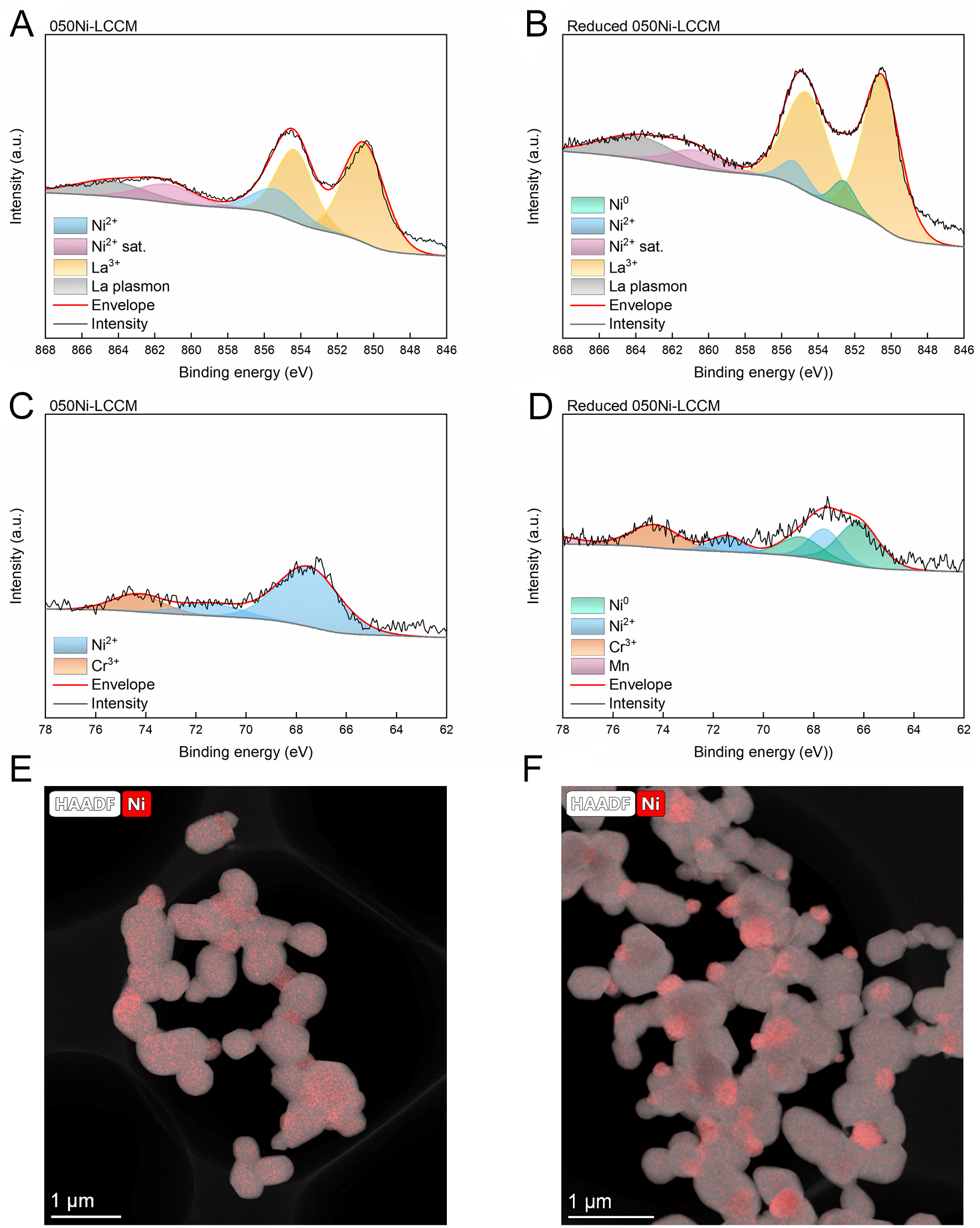
Figure 3. Surface Ni chemical states and reduction-induced Ni redistribution in 050Ni-LCCM. (A-D) XPS spectra of 050Ni-LCCM before and after reduction at 750 °C in H2/N2; (E and F) HAADF-STEM images and corresponding STEM-EDS Ni elemental maps of 050Ni-LCCM before and after reduction. The Ni EDS signal is displayed in red. HAADF-STEM: High-angle annular dark-field scanning transmission electron microscopy; XPS: X-ray photoelectron spectroscopy; EDS: energy-dispersive X-ray spectroscopy; LCCM: (La0.75Ca0.25)(Cr0.5Mn0.5)O3-δ.
To further verify the Ni chemical states, the Ni 3p region was analyzed. The spectra show signatures of metallic Ni0 at ~66.3 eV and Ni2+ at ~67.6 eV, together with the corresponding shake-up satellite features [Figure 3C and D][40-42]. Owing to the spectral overlap between Ni 3p, Cr 3p, and Mn 3p signals, Cr- and Mn-related components were included in the deconvolution where required to obtain a reliable fit. The coexistence of Ni0 and Ni2+ after reduction indicates partial reduction of Ni species, consistent with Ni exsolution from the perovskite lattice and partial surface oxidation of the exsolved nanoparticles[43,44]. Complete spectra for all compositions are provided in the Supplementary Materials [Supplementary Figures 3 and 4]
STEM-EDS mapping was further used to visualize the spatial redistribution of Ni in 050Ni-LCCM before and after reduction [Figure 3E and F]. In the calcined catalyst, the Ni signal is relatively homogeneous across the LCCM particles, indicating that Ni species are well dispersed within or on the oxide framework after the nitrate-based gel-casting and calcination process. After reduction in H2/N2, localized Ni-rich regions become more evident, suggesting the migration and enrichment of Ni species toward the particle surface. This observation is consistent with the XRD results, where metallic Ni reflections appear after reduction while the LCCM perovskite framework remains intact, confirming that Ni species are reduced without collapse of the parent oxide structure. The XPS analysis further supports this interpretation by showing the coexistence of metallic Ni0 and residual Ni2+ species after reduction, indicating partial reduction and possible surface oxidation of reduced Ni species.
Together, the XRD, XPS, and STEM-EDS results show that the nitrate-derived 050Ni-LCCM catalyst undergoes reduction-induced Ni redistribution while retaining the LCCM perovskite backbone. The emergence of Ni-rich surface regions provides microscopic evidence for reduction-induced Ni enrichment, consistent with the formation of surface-enriched/exsolved Ni species. These surface-enriched Ni species are expected to contribute to methane activation, while the stable LCCM framework helps maintain structural integrity under reducing conditions. This also confirms that replacing the previous oxide/carbonate-based slurry gel-casting route with a nitrate-based solution gel-casting route does not compromise the formation or redox stability of the LCCM-based catalyst.
HRTEM analysis of the 100Ni-LCCM catalyst was conducted as a representative case because of its clearly resolved interfacial features [Figure 4]. The low-magnification transmission electron microscopy (TEM) image shows aggregated catalyst particles [Figure 4A], while the enlarged TEM image reveals a Ni-containing region located at the LCCM matrix interface [Figure 4B]. Further magnification of the left and right dashed regions in Figure 4B shows the HRTEM images in Figure 4C and D, respectively. In these interfacial regions, lattice spacings of 0.211 nm are assigned to NiO(200), while spacings of 0.219-0.222 nm are attributed to the LCCM perovskite lattice. The coexistence of Ni-containing and LCCM lattice fringes within the same interfacial region indicates intimate contact between the Ni-containing phase and the oxide support.
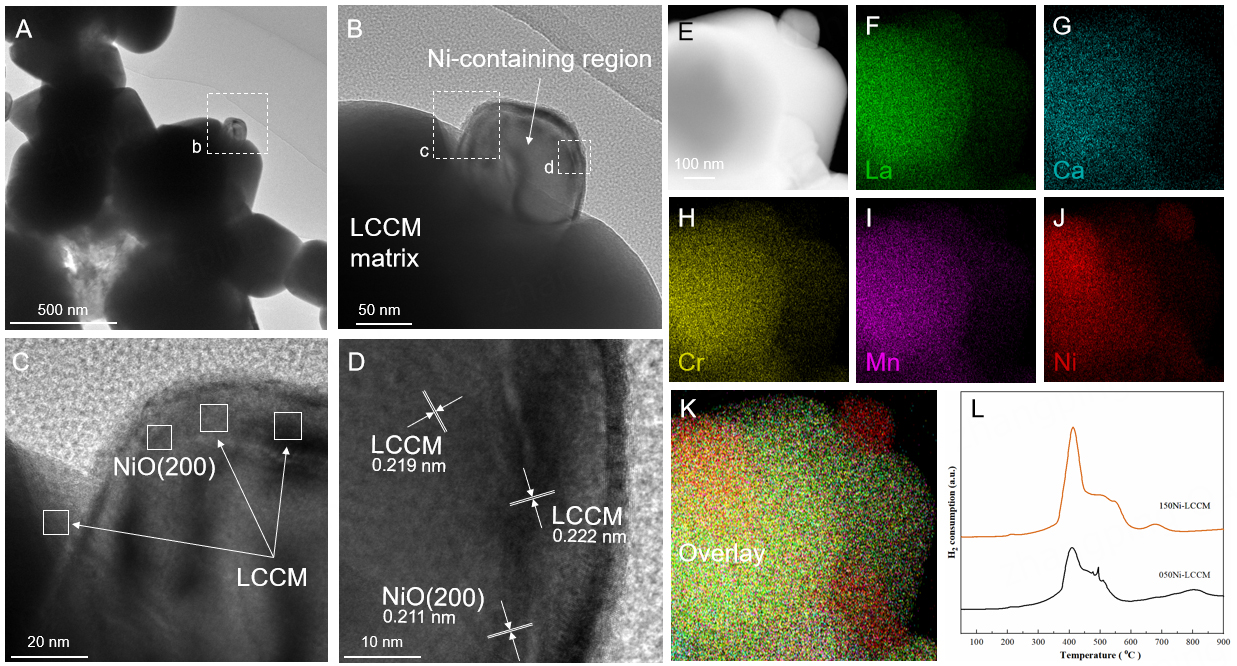
Figure 4. Ni-LCCM interfacial anchoring, elemental distribution, and reducibility of representative xNi-LCCM catalysts. (A) Low-magnification TEM image of 100Ni-LCCM showing a Ni-containing region at the LCCM matrix. (B) Enlarged TEM image of the selected interfacial region; (C and D) HRTEM images showing lattice fringes assigned to NiO and LCCM in the interfacial region; (E-K) STEM-EDS elemental mapping of the selected region: (E) HAADF image, (F) La, (G) Ca, (H) Cr, (I) Mn, (J) Ni, and (K) corresponding elemental overlay; (l) H2-TPR profiles of 050Ni-LCCM and 150Ni-LCCM catalysts after calcination in air at 1,100 °C for 5 h. HRTEM: High-resolution transmission electron microscopy; STEM: scanning transmission electron microscopy; EDS: energy-dispersive X-ray spectroscopy;
This interfacial structure is consistent with the preceding XRD and XPS results. XRD shows that Ni-containing phases appear after reduction while the LCCM perovskite framework remains intact, and XPS reveals the coexistence of metallic Ni0 and Ni2+ species after reduction. The before-and-after STEM-EDS comparison in Figure 3E and F provides direct evidence for reduction-induced Ni redistribution and local Ni enrichment in 050Ni-LCCM. In contrast, Figure 4E-K shows the local elemental distribution in the selected interfacial region of 100Ni-LCCM. Together with the HRTEM observations in Figure 4A-D, these results support the formation of Ni-containing domains anchored to the LCCM matrix. The partially embedded morphology of these domains suggests a socketed particle-support interface, which is characteristic of exsolution-derived or strongly anchored nanoparticles rather than physically detached Ni particles.
Across the catalyst series [Supplementary Figures 5-8], lattice spacings of 0.218-0.222 nm and 0.276-0.278 nm are consistently assigned to the LCCM perovskite support, while spacings of 0.208-0.213 nm correspond to NiO(200). Additional spacings of 0.244-0.245 nm are associated with Ni-containing oxide domains, and in the 150Ni-LCCM sample [Supplementary Figure 8], a spacing of ~0.179 nm is consistent with metallic Ni(200), indicating a higher degree of Ni reduction at higher Ni loadings. Overall, the coexistence of Ni-containing and LCCM lattice fringes, together with the observed interfacial anchoring, supports strong metal-support integration in the xNi-LCCM catalysts.
H2-TPR was conducted on 050Ni-LCCM and 150Ni-LCCM to further probe the reducibility of Ni species and their interaction with the LCCM framework [Figure 4L]. Both samples exhibit a main reduction peak centered at ~400 °C, together with a broad shoulder in the range of 450-550 °C. The low-temperature reduction peak becomes more intense with increasing Ni loading, indicating a larger amount of reducible NiO-like species that are more accessible to H2. This assignment is consistent with the XRD results, where NiO reflections are observed after calcination and metallic Ni reflections appear after reduction.
The shoulder at higher temperature is attributed to Ni species that interact more strongly with the LCCM perovskite lattice or are partially incorporated near the oxide framework. Such species require higher temperatures for reduction than surface NiO-like species[45,46]. This behavior is consistent with previous studies showing that Ni species with stronger interactions with the support or lattice incorporation exhibit higher reduction temperatures than surface Ni species[47]. Comparable multi-step reduction features have also been reported for Ni-containing perovskites, where reduction peaks in the ~400-600 °C range are associated with the progressive reduction of lattice-incorporated Ni species[48]. Together with the XPS results showing the coexistence of metallic Ni0 and residual Ni2+ after reduction, the before-and-after STEM-EDS comparison in Figure 3E and F, and the interfacial TEM/STEM-EDS observations in Figure 4A-K, the H2-TPR profiles further support the presence of multiple Ni environments in Ni-LCCM catalysts, including accessible surface NiO-like species and more strongly bound lattice-associated Ni species. These different Ni environments are expected to contribute to the formation of surface-enriched/exsolved Ni sites during reduction and subsequent methane decomposition.
To correlate the Ni-loading-dependent increase in reducible Ni species observed by H2-TPR with catalyst morphology, FESEM was used to examine the calcined xNi-LCCM catalysts after treatment in air at 1,100 °C for 5 h. The corresponding images and particle size distributions are provided in the Supplementary Materials [Supplementary Figure 9]. These morphology data provide additional context for understanding how Ni loading affects the distribution and accessibility of reducible Ni species.
Evaluation of catalytic activity in CDM
Effect of reaction temperature
The effect of reaction temperature was evaluated using 050Ni-LCCM and 150Ni-LCCM, which were selected as representative compositions for comparing Ni utilization and catalytic stability. As discussed above, XRD, XPS, STEM-EDS, and H2-TPR results indicate that increasing Ni loading increases the amount of reducible Ni species and promotes the formation of surface-enriched Ni-containing domains, while the LCCM framework remains structurally stable under reducing conditions. These structural features are expected to influence methane activation and catalyst deactivation during CDM.
Increasing the reaction temperature from 700 to 750 °C markedly enhanced methane conversion and Ni-normalized carbon productivity [Figure 5][3]. At 700 °C, methane activation was limited, resulting in low conversion and low carbon productivity. Raising the temperature to 750 °C improved methane decomposition kinetics and gave the highest Ni-normalized carbon productivity for 050Ni-LCCM, while 150Ni-LCCM showed a slightly higher value at 800 °C. Further increasing the temperature to 800-850 °C generally increased the initial methane conversion but also accelerated deactivation. At 850 °C, the Ni-normalized carbon productivity decreased for both catalysts.
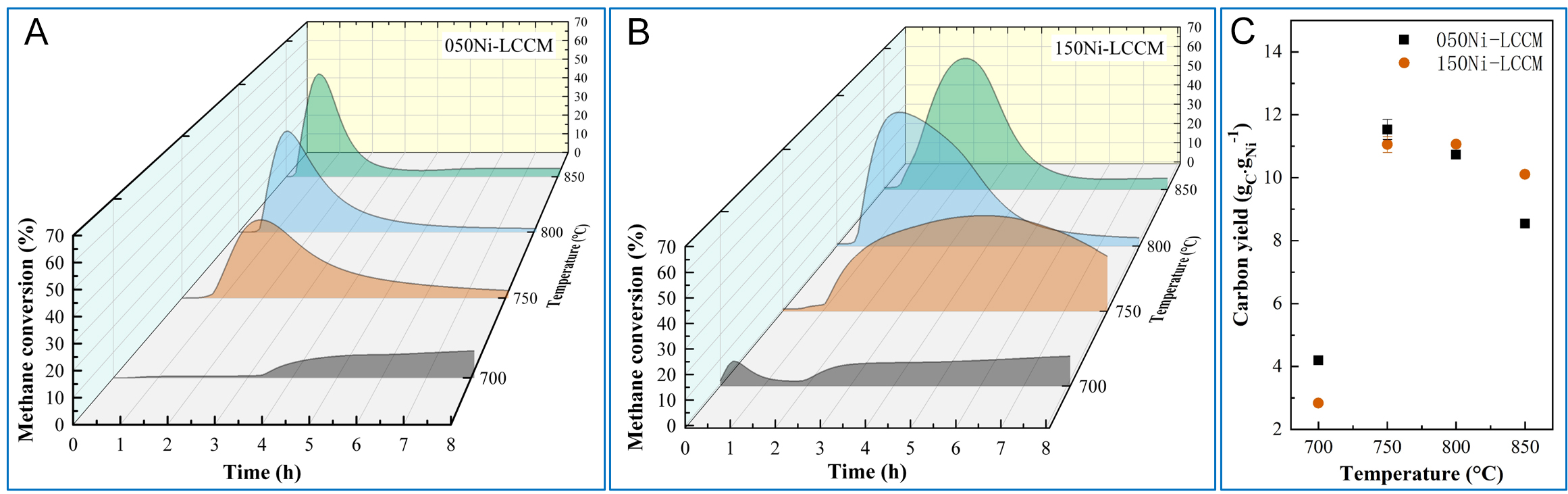
Figure 5. Effect of reaction temperature on methane conversion and Ni-normalized carbon productivity over 050Ni-LCCM and 150Ni-LCCM catalysts. (A and B) Methane conversion as a function of time on stream over (A) 050Ni-LCCM and (B) 150Ni-LCCM at 700-850 °C; (C) Ni-normalized carbon productivity at different reaction temperatures. The experiments were conducted in a rotary reactor at 1 rpm for 8 h with a space velocity of 3 L·gcat.-1·h-1. Error bars represent the standard deviation of three independent tests performed at 750 °C. This temperature was selected as the representative reaction condition for reproducibility verification. LCCM: (La0.75Ca0.25)(Cr0.5Mn0.5)O3-δ.
This temperature-dependent behavior suggests a trade-off between methane activation and catalyst stability. Higher temperatures facilitate C-H bond activation and initially increase methane conversion, but they may also accelerate Ni migration, sintering, or carbon encapsulation, thereby reducing the number of accessible active sites during prolonged operation. This interpretation is consistent with the H2-TPR and microscopy results, which show that Ni species exist in multiple environments and that reducible Ni-rich regions form under reducing conditions. Considering the overall balance among activity, Ni-normalized carbon productivity, and catalytic stability under rotary-bed operation, 750 °C was selected as the representative reaction temperature for subsequent studies.
Non-monotonic Ni utilization in xNi-LCCM catalysts
The catalytic performance of the xNi-LCCM series was evaluated at 750 °C under rotary-bed operation to examine the effect of Ni loading on methane decomposition. Here, x denotes the sample-specific Ni-loading designation (x = 025-200), with the corresponding nominal Ni:La:Ca:Cr:Mn molar compositions provided in Table 1. Methane conversion generally increases with increasing Ni loading, indicating that a higher Ni content provides more reducible Ni species and improves the overall methane activation capacity [Figure 6A]. This trend is consistent with the H2-TPR results, which show a larger amount of reducible NiO-like species at higher Ni loading, and with the XRD/XPS results showing the formation of metallic Ni-containing species after reduction. Lower-Ni samples deactivate more rapidly, whereas higher-Ni samples maintain more stable conversion over 8 h at 750 °C.
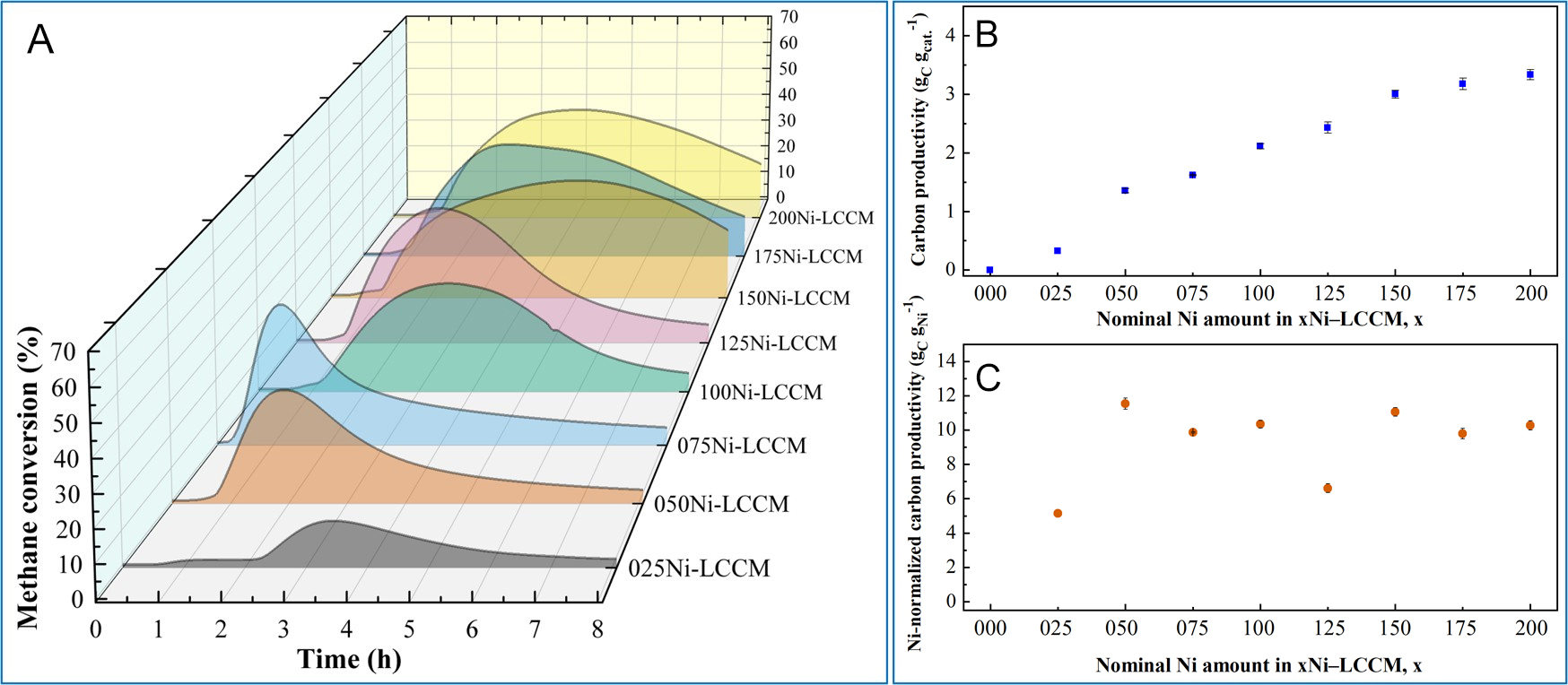
Figure 6. Ni-loading-dependent methane decomposition performance and carbon productivity of xNi-LCCM catalysts at 750 °C. (A) Methane conversion as a function of time on stream over xNi-LCCM catalysts; (B) Catalyst-mass-normalized carbon productivity; (C) Ni-normalized carbon productivity. The experiments were conducted in a rotary reactor at 750 °C and 1 rpm for 8 h with a space velocity of
The carbon yield determined from post-reaction mass collection was independently verified by thermogravimetric analysis, confirming the reliability of the gravimetric measurements [Supplementary Table 2]. For the Ni-free LCCM (x = 000), no measurable carbon formation was detected in repeated experiments, consistent with the FESEM observations showing essentially unchanged LCCM particle surfaces after reaction. Accordingly, Ni-normalized carbon productivity is not applicable to this sample and is omitted from Figure 6C. When normalized by catalyst mass, the carbon productivity (gC·gcat.-1) increases monotonically with Ni loading [Figure 6B], following the trend in methane conversion. This indicates that increasing total Ni content enhances the overall carbon formation capacity of the catalyst. However, when the carbon yield is normalized by Ni content (gC·gNi-1), the productivity does not scale proportionally with the amount of Ni [Figure 6C]. Instead, Ni-normalized carbon productivity shows a non-monotonic dependence on Ni loading, with local maxima at x = 050 and x = 150, while neighboring compositions display lower values.
This non-monotonic behavior suggests that Ni utilization is not determined solely by the total Ni content, but is also strongly influenced by the local configuration, reducibility, and accessibility of Ni species in the LCCM framework. The structural characterization above supports this interpretation: XRD confirms that the LCCM framework remains stable after reduction, XPS shows the coexistence of Ni0 and Ni2+ species, the before-and-after STEM-EDS comparison in Figure 3E and F reveals reduction-induced Ni redistribution, and HRTEM/STEM-EDS analysis in Figure 4A-K indicates local Ni enrichment and interfacial anchoring between Ni-containing domains and the LCCM matrix. Therefore, increasing Ni loading can improve total methane conversion, but excessive or less accessible Ni may contribute less efficiently to intrinsic carbon productivity.
The origin of this non-monotonic Ni utilization is further examined by density functional theory calculations in the following section, where the experimental Ni-normalized carbon productivities are correlated with representative DFT-derived rate-limiting barriers in Table 2. A comparison of carbon productivity and reaction conditions for representative Ni-based methane decomposition catalysts is provided in Supplementary Table 3. Because reported carbon yields are normalized using different bases across studies, this comparison is intended only as a contextual benchmark rather than a direct ranking.
Correlation between experimental Ni-normalized carbon productivity and representative DFT models for xNi-LCCM catalysts
| Experimental sample | Nominal Ni/LCCM molar ratio | DFT model | Ni-normalized carbon productivity, gCgNi-1 | Rate-limiting activation barrier, eV |
| LCCM | 0.00 | LCCM | N/A | 5.88 |
| 025Ni-LCCM | 0.25 | 1Ni-LCCM | 5.70 | 4.86 |
| 050Ni-LCCM | 0.50 | 2Ni-LCCM | 11.53 | 2.58 |
| 075Ni-LCCM | 0.75 | 3Ni-LCCM | 9.86 | 4.39 |
| 100Ni-LCCM | 1.00 | 4Ni-LCCM | 10.34 | 4.76 |
| 125Ni-LCCM | 1.25 | 5Ni-LCCM | 10.13 | 4.25 |
| 150Ni-LCCM | 1.50 | 6Ni-LCCM | 11.05 | 3.45 |
| 175Ni-LCCM | 1.75 | 7Ni-LCCM | 10.61 | 4.35 |
| 200Ni-LCCM | 2.00 | 8Ni-LCCM | 10.27 | 4.05 |
DFT analysis of Ni-configuration-dependent methane decomposition
DFT calculations were performed to examine elementary C-H bond-cleavage steps, adsorption behavior, and activation barriers (Ea) associated with methane decomposition. To rationalize the experimentally observed non-monotonic Ni-normalized carbon productivity, calculations were carried out on LCCM, Ni(111), and representative yNi-LCCM surface models with different relative Ni-loading levels and local Ni configurations. As shown in Figure 7A and B, Ni(111) and the LCCM(0-10) surface were first constructed as reference models, representing metallic Ni and the parent LCCM surface, respectively. These two reference structures provide the baseline for evaluating the effects of progressively introduced Ni species and their local configurations in the yNi-LCCM models. The LCCM surface model was constructed based on XRD refinement [Supplementary Figure 10], and the corresponding surface configuration is shown in Supplementary Figure 11. Ni atoms were introduced into the LCCM surface model to represent increasing relative Ni-loading levels, followed by structural optimization [Figure 7C-J]. As defined in Table 1, the yNi-LCCM models serve as representative computational analogs of the experimental xNi-LCCM series, rather than exact bulk stoichiometric replicas. The correlation between the experimental Ni-normalized carbon productivity and the DFT-derived rate-limiting barriers is summarized in Table 2. Ni(111) was included as a reference surface because it is a stable and commonly used model for metallic Ni in methane decomposition studies[49].
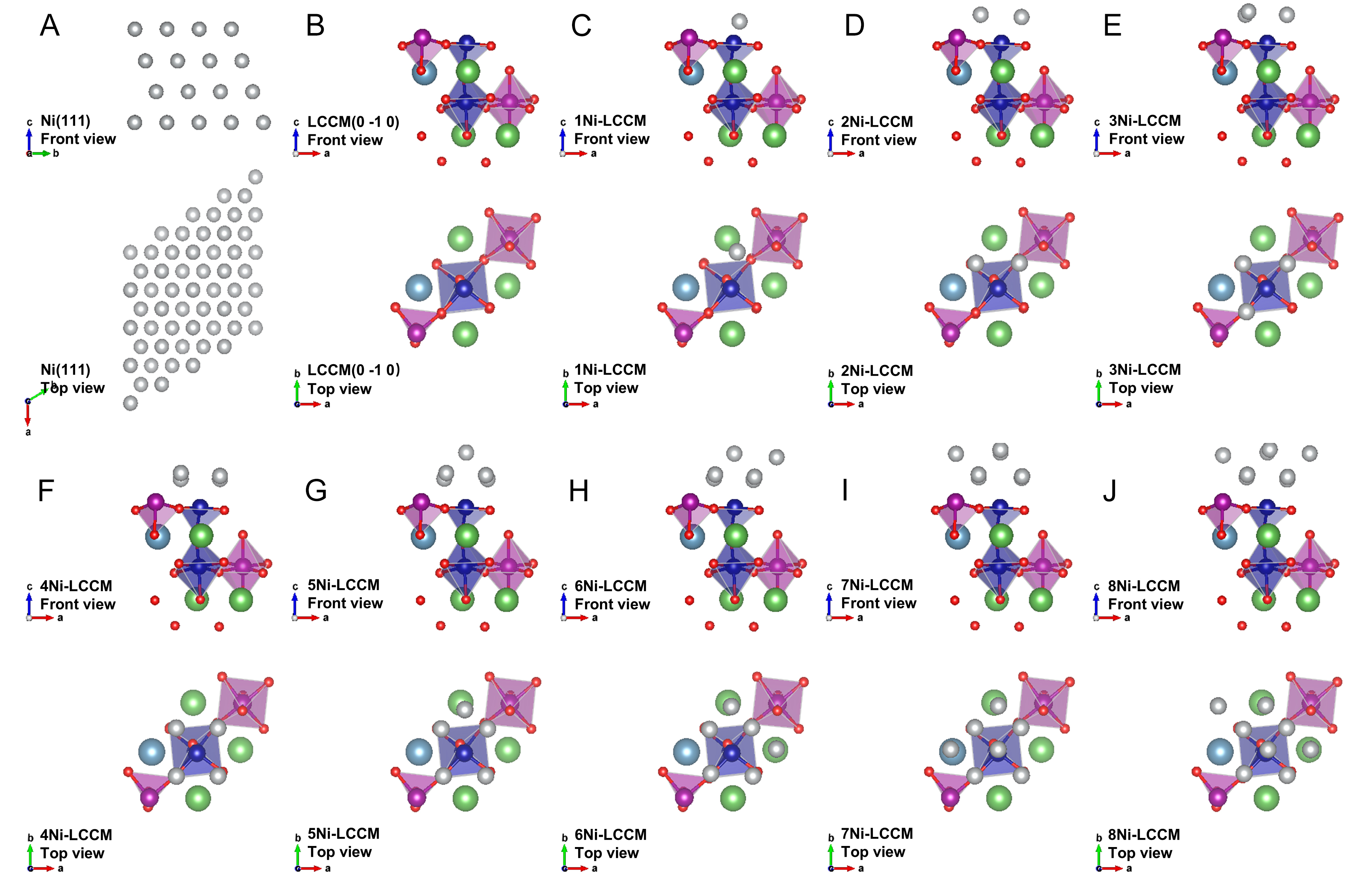
Figure 7. Optimized surface configurations of (A) Ni(111), (B) LCCM, and (C-J) yNi-LCCM surfaces (y = 1 - 8). Each panel shows the front and top views of the optimized model. Colors denote different elements: La (green), Ca (light blue), Cr (dark blue), Mn (purple), Ni (white/grey), and O (red). LCCM: (La0.75Ca0.25)(Cr0.5Mn0.5)O3-δ.
The stepwise C-H bond cleavage pathway of methane was modeled through four elementary dehydrogenation steps from surface-bound CH4 to surface carbon species. Transition-state calculations were used to determine the activation energy for each elementary C-H bond cleavage step. The rate-limiting step was defined as the elementary step with the highest activation barrier for each surface. The elementary C-H bond cleavage steps are listed in Supplementary Table 4, and the calculated activation energies are summarized in
Reaction energy profiles are shown in Figure 8, and the corresponding rate-limiting activation energies are summarized in Table 2 and Supplementary Table 5. Comparison across different Ni loadings reveals a non-monotonic variation in the rate-limiting activation energy. Among the yNi-LCCM models, 2Ni-LCCM and 6Ni-LCCM exhibit lower rate-limiting barriers than neighboring compositions, indicating more favorable C-H bond cleavage kinetics. These two models serve as representative computational analogs of the experimental 050Ni-LCCM and 150Ni-LCCM compositions, respectively. As summarized in Table 2, the lower calculated barriers for 2Ni-LCCM and 6Ni-LCCM are consistent with the experimentally observed local maxima in Ni-normalized carbon productivity. This comparison suggests that the non-monotonic carbon productivity is closely related to the local reaction energetics of composition-tuned Ni sites.
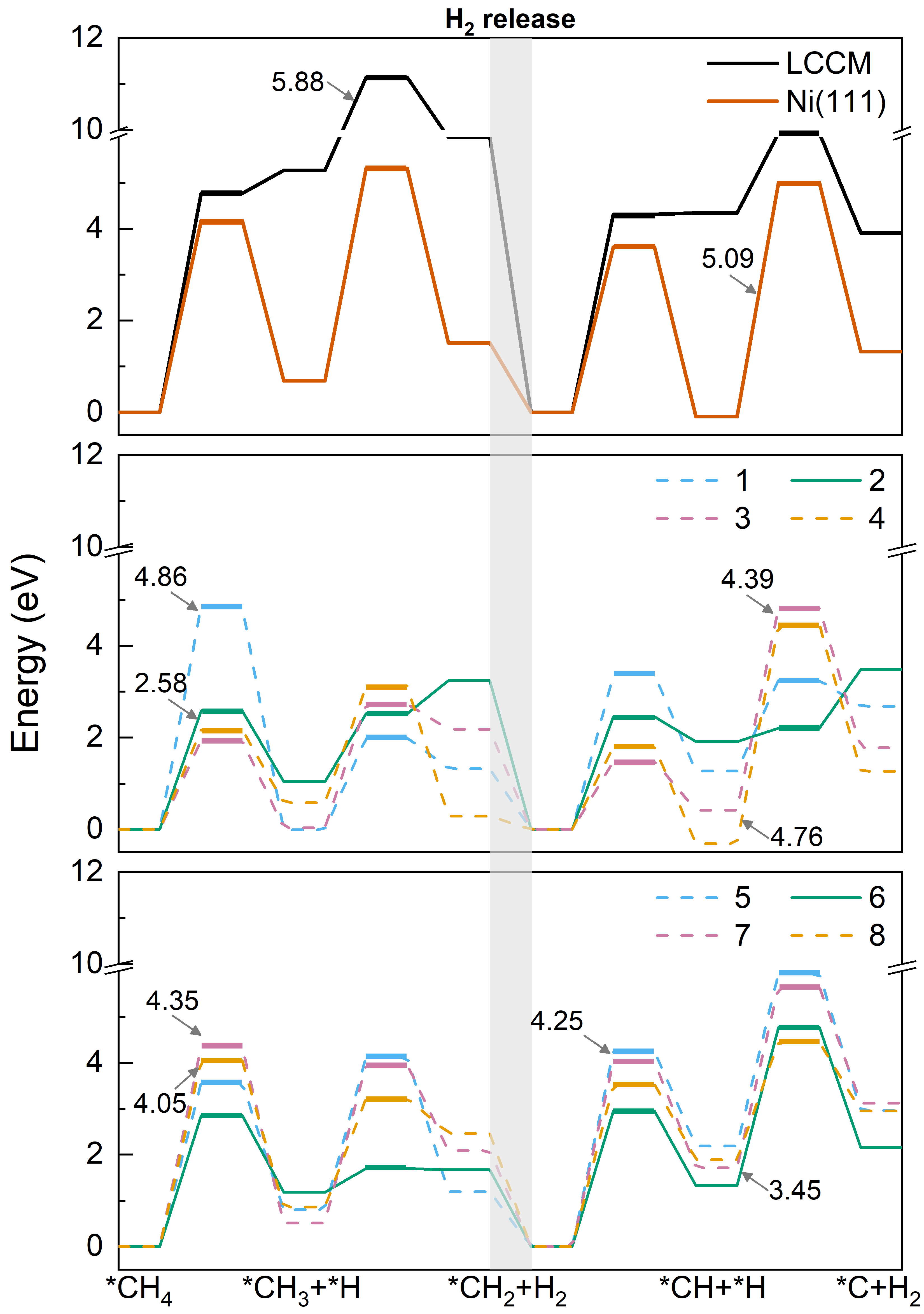
Figure 8. Reaction energy profiles for methane decomposition on LCCM, Ni(111), and yNi-LCCM surfaces (y = 1-8). The grey region highlights the simplified hydrogen-release step. LCCM: (La0.75Ca0.25)(Cr0.5Mn0.5)O3-δ.
Further insight is obtained from the optimized surface configurations [Figure 7]. At lower Ni loadings, Ni atoms are primarily located in the surface layer of the LCCM model, whereas additional Ni atoms occupy second-layer configurations at higher loadings. In the present models, up to four Ni atoms can be accommodated near the surface before excess Ni preferentially occupies subsurface or second-layer positions. This transition alters the local coordination environment and Ni-Ni ensemble structure of the active sites.
The calculated low-barrier compositions, particularly 050Ni-LCCM and 150Ni-LCCM, correspond to favorable surface Ni configurations before extensive second-layer Ni occupation. With further increases in Ni loading, additional Ni atoms increasingly contribute to Ni-Ni ensemble or bulk-like behavior rather than improving the intrinsic activity of each Ni site. This provides a possible explanation for why increasing Ni content enhances overall methane conversion and catalyst-mass-normalized carbon yield but does not lead to a proportional increase in Ni-normalized carbon productivity.
Overall, the DFT results help rationalize the experimental observation that Ni utilization in xNi-LCCM is not controlled by total Ni content alone, but is strongly influenced by local Ni configuration, Ni reducibility, and site accessibility. This interpretation is consistent with the structural and surface analyses discussed above: XRD confirms the stability of the LCCM framework after reduction, XPS shows the coexistence of Ni0 and Ni2+ species, STEM-EDS reveals reduction-induced Ni redistribution, and HRTEM indicates interfacial anchoring of Ni-containing domains on the LCCM matrix. These findings suggest that composition-tuned, exsolution-related Ni configurations play an important role in determining methane decomposition activity and intrinsic carbon productivity.
Carbon characterization
Figure 9A presents the XRD patterns of the spent LCCM and xNi-LCCM catalysts after methane decomposition at 750 °C for 8 h. For the Ni-containing samples, diffraction peaks corresponding to metallic Ni are observed, which can be attributed to the in situ reduction of Ni species under the methane reaction environment. Additional diffraction features at 2θ ≈ 26.3-26.5° are assigned to graphitic carbon formed during CDM. In contrast, no diffraction peaks associated with either metallic Ni or graphitic carbon are observed for the Ni-free LCCM sample, indicating that the LCCM support remains structurally stable and shows negligible activity toward methane decomposition under the investigated conditions.
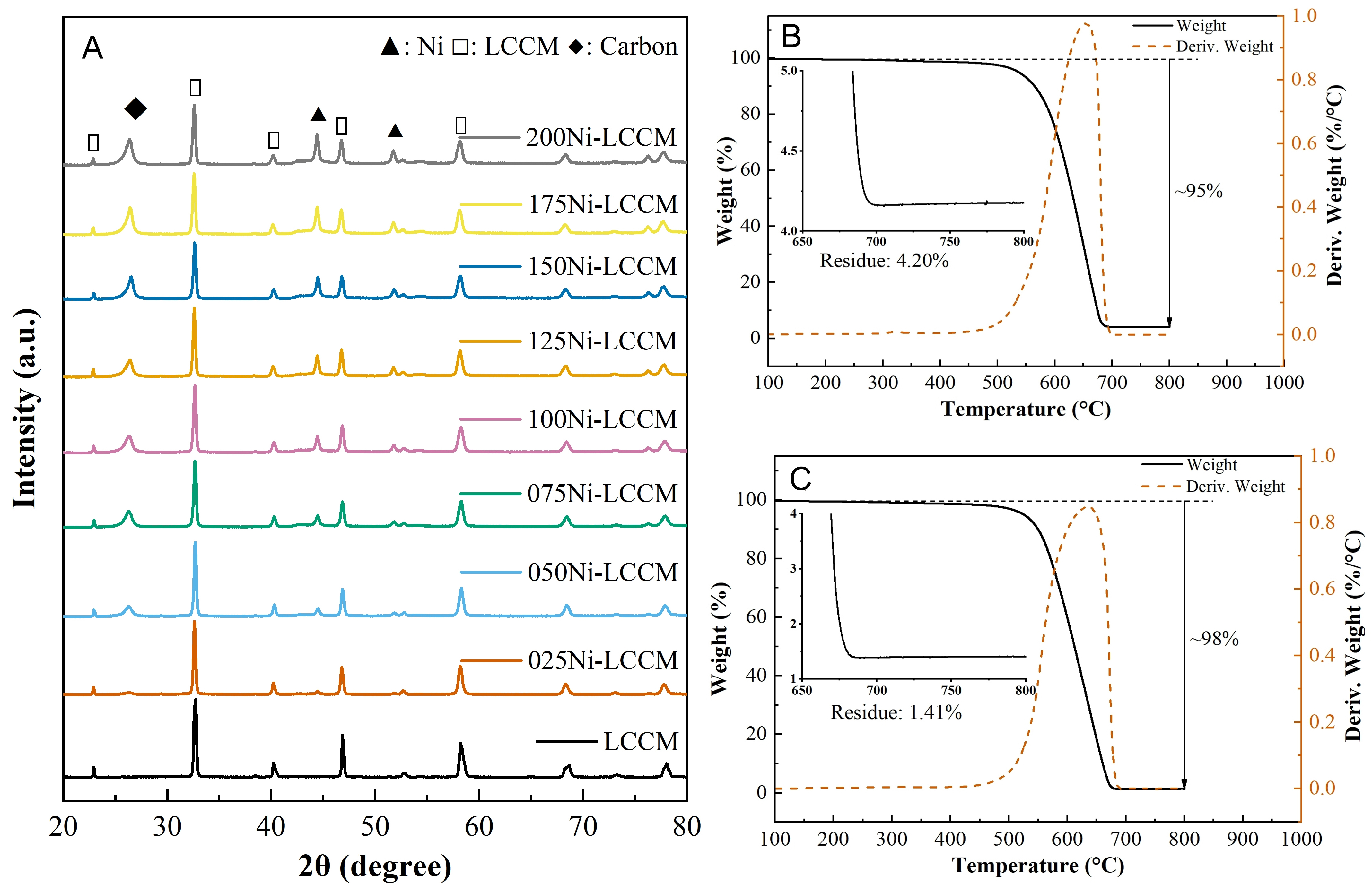
Figure 9. Carbon phase formation and residual inorganic content of xNi-LCCM-derived carbon products. (A) XRD patterns of spent LCCM and xNi-LCCM catalysts after methane decomposition at 750 °C for 8 h. Diffraction peaks corresponding to LCCM, metallic Ni, and graphitic carbon are marked; (B and C) TGA and derivative weight curves of acid-treated carbon products obtained from (B) 050Ni-LCCM and (C) 150Ni-LCCM after treatment with 5 M HNO3. The residual masses after carbon oxidation were used to estimate the remaining inorganic contents. XRD: X-ray diffraction; TGA: thermogravimetric analysis; LCCM: (La0.75Ca0.25)(Cr0.5Mn0.5)O3-δ.
The carbon-catalyst mixture collected after methane decomposition was subsequently treated with
Figure 10 shows representative TEM images of the carbon-catalyst mixture before and after acid treatment. Before acid washing, dark contrast regions are observed and are attributed to catalyst particles. After treatment with 5 M HNO3, these regions are largely removed, indicating effective separation of the catalyst from the carbon product. The overall carbon morphology is largely retained after acid treatment, suggesting that the acid washing step mainly removes the inorganic catalyst component without causing obvious structural damage to the carbon framework. TEM analysis also shows that the carbon product contains mixed nanostructures, including carbon nanotubes, carbon nanofibers, and carbon nano-onions.
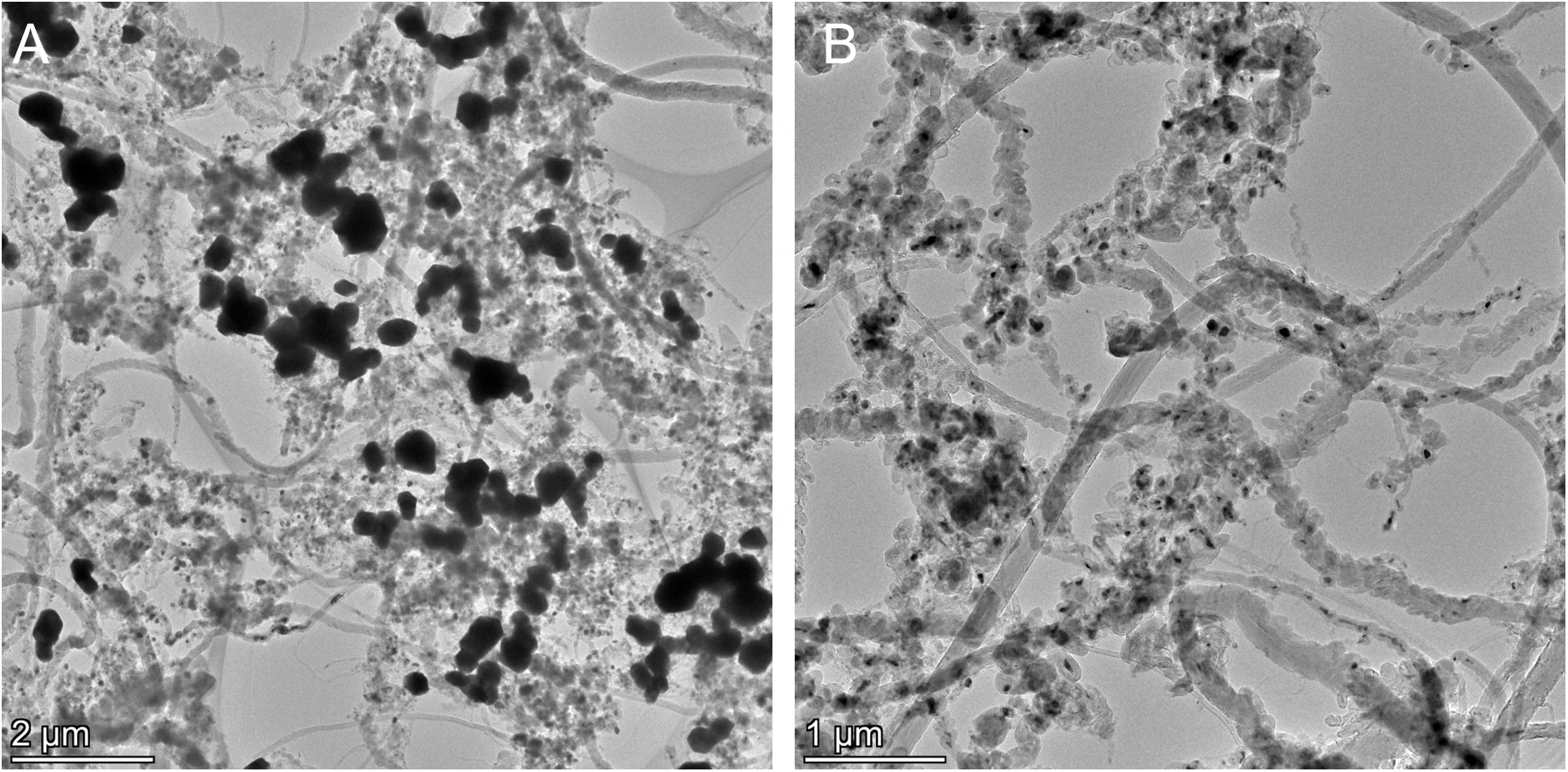
Figure 10. Representative TEM images of carbon-catalyst mixture after 8 h CDM reaction: (A) before acid treatment and (B) after acid treatment with 5 M HNO3. Dark contrast regions associated with catalyst particles are significantly reduced after acid treatment, while the overall carbon morphology is preserved. TEM: Transmission electron microscopy; CDM: catalytic decomposition of methane.
Raman spectroscopy was performed to evaluate the structural ordering of the carbon products before and after acid treatment. The spectra were baseline-corrected and deconvoluted using Lorentzian functions to analyze the D, G, and 2D bands. The D band at ~1,350 cm-1 is associated with defect-induced vibrational modes, while the G band at ~1,580 cm-1 corresponds to the in-plane stretching vibration of sp2-hybridized carbon[38]. The D/G intensity ratio (ID/IG) was used to assess the structural ordering of the carbon products, with lower values indicating fewer defects and higher graphitic order.
The mean ID/IG values of the carbon products ranged from approximately 0.74 to 0.90 before acid washing and from approximately 0.62 to 0.75 after acid treatment [Figure 11]. The decrease in ID/IG after purification suggests improved apparent graphitic ordering, which is mainly attributed to the removal of disordered carbon species and residual catalyst-related impurities rather than direct structural transformation of the carbon framework. Together with the relatively high oxidation temperature observed in TGA and the tubular carbon morphologies observed by TEM, the well-defined D, G, and 2D bands indicate that the carbon products are predominantly nanocrystalline graphitic carbon rather than amorphous carbon.
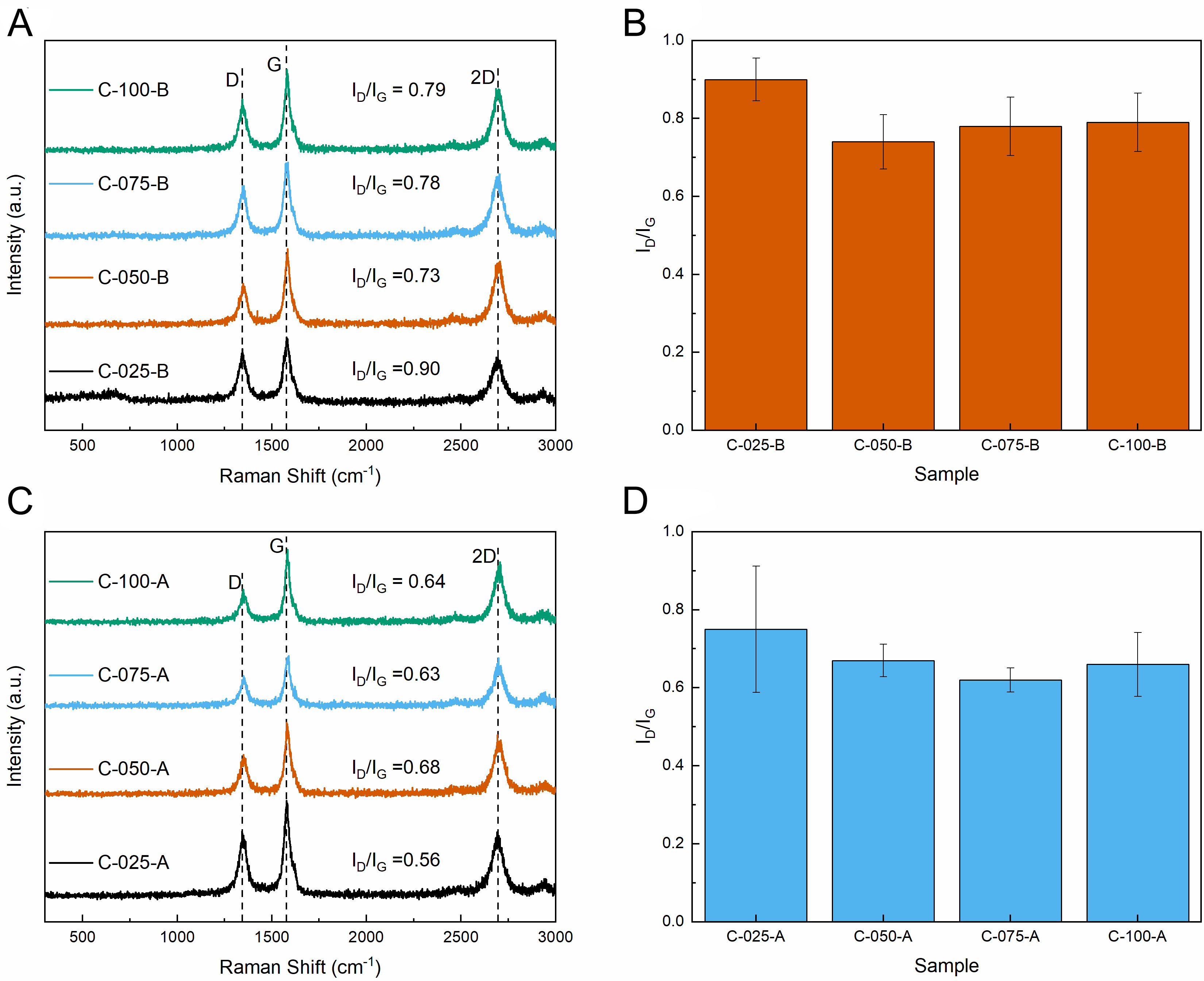
Figure 11. Raman spectra of carbon-catalyst mixtures after 8 h CDM reaction and acid-washed carbon treated with 5 M HNO3: (A and C) Raman spectra before and after acid treatment, respectively; (B and D) corresponding ID/IG ratios. The D, G, and 2D bands are indicated. The ID/IG values annotated in (A and C) correspond to the representative spectra shown, whereas the bars in (B and D) represent the mean ID/IG values obtained from three Raman spectra collected from different regions of each sample; error bars indicate the corresponding standard deviations. CDM: Catalytic decomposition of methane.
CONCLUSIONS
Ni-LCCM catalysts were developed and evaluated for catalytic methane decomposition using a nitrate-based gel-casting route. Under the optimized reaction condition of 750 °C, 050Ni-LCCM achieved a high Ni-normalized carbon productivity of 11.53 gC·gNi-1, indicating efficient utilization of active Ni species.
A non-monotonic dependence of intrinsic carbon productivity on Ni loading was observed. The highest Ni-normalized carbon productivities occurred for 050Ni-LCCM and 150Ni-LCCM, while neighboring compositions showed lower values. DFT calculations showed lower relative rate-limiting activation barriers for the corresponding 2Ni-LCCM and 6Ni-LCCM models. Combined with the catalytic and structural characterization results, this suggests that methane decomposition activity is strongly influenced by local Ni configuration, Ni reducibility, and site accessibility rather than by total Ni content alone.
Carbon characterization confirmed the formation of predominantly nanocrystalline graphitic carbon. TEM analysis showed mixed carbon nanostructures, while Raman spectroscopy showed a decrease in the mean ID/IG values from approximately 0.74-0.90 to 0.62-0.75 after acid treatment. Together with TGA oxidation at ~600-700 °C, these results indicate that the carbon products are mainly graphitic rather than amorphous.
Post-reaction purification using 5 M HNO3 effectively separated the carbon product from the catalyst. The residual inorganic contents were reduced to 4.20% and 1.41% for carbon products from 050Ni-LCCM and 150Ni-LCCM, respectively, corresponding to TGA-based carbon contents of approximately 95.8% and 98.6%. The overall carbon morphology was largely retained after acid treatment.
Overall, this work demonstrates that Ni-LCCM is an effective catalyst system for CDM, where optimized Ni configurations enhance intrinsic activity while enabling recovery of high-carbon-content solid products after mild acid treatment. Further optimization of reaction conditions may improve control over carbon morphology and product selectivity.
DECLARATIONS
Author’s contributions
Conceptualization, methodology, investigation, data curation, formal analysis, visualization, writing - original draft: Chua, S. R.
Methodology, software, investigation, data curation, formal analysis, visualization, writing - review and editing: Wang, R.
Investigation, data curation: He, H.; Cao, X.
Writing - review and editing: Deng, Z.; Xiao, G.; Wang, J.; Zhang, L. (Lili Zhang); Poh, C. K.
Conceptualization, methodology, supervision, writing - review and editing: Zhang, L. (Lan Zhang)
Supervision, writing - review and editing: Ni, M.; Chan, S. H.
Availability of data and materials
The original contributions presented in this study are included in the article/Supplementary Materials. Further inquiries can be directed to the corresponding author(s).
AI and AI-assisted tools statement
During the preparation of this manuscript, multiple versions of ChatGPT (OpenAI) were used solely for language editing over the course of manuscript preparation. The tool did not influence the study design, data collection, analysis, interpretation, or the scientific content of the work. All authors take full responsibility for the accuracy, integrity, and final content of the manuscript.
Financial support and sponsorship
The research is supported by grants from the Research Grants Council (Project numbers: SRFS2324-5S02 and 15304825) and the University Grants Committee, HK SAR. The authors gratefully acknowledge financial support from A*STAR’s Central Research Fund. This work was supported by the Fundamental Research Program of Industrial Foundation (SINAP-CYJJ-202502).
Conflicts of interest
All authors declared that there are no conflicts of interest.
Ethical approval and consent to participate
Not applicable.
Consent for publication
Not applicable.
Copyright
© The Author(s) 2026.
Supplementary Materials
REFERENCES
1. Ishaq, H.; Dincer, I.; Crawford, C. A review on hydrogen production and utilization: Challenges and opportunities. Int. J. Hydrogen. Energy. 2022, 47, 26238-64.
2. Hermesmann, M.; Müller, T. Green, turquoise, blue, or grey? Environmentally friendly hydrogen production in transforming energy systems. Prog. Energy. Combust. Sci. 2022, 90, 100996.
3. Tong, S.; Miao, B.; Zhang, W.; Zhang, L.; Chan, S. H. Optimization of methane catalytic decomposition in a fluidized bed reactor: a computational approach. Energy. Convers. Manag. 2023, 297, 117719.
4. Zainal, B. S.; Ker, P. J.; Mohamed, H.; et al. Recent advancement and assessment of green hydrogen production technologies. Renew. Sustain. Energy. Rev. 2024, 189, 113941.
5. Shokrollahi, M.; Teymouri, N.; Ashrafi, O.; Navarri, P.; Khojasteh-salkuyeh, Y. Methane pyrolysis as a potential game changer for hydrogen economy: techno-economic assessment and GHG emissions. Int. J. Hydrogen. Energy. 2024, 66, 337-53.
6. Qian, J. X.; Chen, T. W.; Enakonda, L. R.; Liu, D. B.; Basset, J.; Zhou, L. Methane decomposition to pure hydrogen and carbon nano materials: State-of-the-art and future perspectives. Int. J. Hydrogen. Energy. 2020, 45, 15721-43.
7. Pinilla, J.; Utrilla, R.; Lázaro, M.; Moliner, R.; Suelves, I.; García, A. Ni- and Fe-based catalysts for hydrogen and carbon nanofilament production by catalytic decomposition of methane in a rotary bed reactor. Fuel. Process. Technol. 2011, 92, 1480-8.
8. Lua, A. C.; Wang, H. Y. Decomposition of methane over unsupported porous nickel and alloy catalyst. Appl. Catal. B. Environ. 2013, 132-133, 469-78.
9. Moghaddam, A. L.; Hejazi, S.; Fattahi, M.; et al. Methane pyrolysis for hydrogen production: navigating the path to a net zero future. Energy. Environ. Sci. 2025, 18, 2747-90.
10. Sun, E.; Zhai, S.; Kim, D.; et al. A semi-continuous process for co-production of CO2-free hydrogen and carbon nanotubes via methane pyrolysis. Cell. Rep. Phys. Sci. 2023, 4, 101338.
11. Bayat, N.; Meshkani, F.; Rezaei, M. Thermocatalytic decomposition of methane to COx-free hydrogen and carbon over Ni-Fe-Cu/Al2O3 catalysts. Int. J. Hydrogen. Energy. 2016, 41, 13039-49.
12. Ahmad, A.; Hamdani, I. R.; Srinivasakannan, C.; Al Shoaibi, A.; Hossain, M. M. Catalytic cracking of methane to hydrogen and carbon: scale-up perspective. Int. J. Hydrogen. Energy. 2024, 54, 1212-30.
13. Ahmed, H.; Alotibi, M. F.; Fakeeha, A. H.; et al. Hydrogen production via methane decomposition over alumina doped with titanium oxide-supported iron catalyst for various calcination temperatures. ChemistryOpen 2024, 13, e202300173.
14. Feng, F.; Song, G.; Xiao, J.; Shen, L.; Pisupati, S. V. Carbon deposition on Ni-based catalyst with TiO2 as additive during the syngas methanation process in a fluidized bed reactor. Fuel 2019, 235, 85-91.
15. Busillo, E.; Damizia, M.; De Filippis, P.; de Caprariis, B. Methane pyrolysis in molten media: the interplay of physical properties and catalytic activity on carbon and hydrogen production. J. Anal. Appl. Pyrolysis. 2024, 183, 106752.
16. Sanyal, A.; Malalasekera, W.; Bandulasena, H.; Wijayantha, K. Review of the production of turquoise hydrogen from methane catalytic decomposition: optimising reactors for sustainable hydrogen production. Int. J. Hydrogen. Energy. 2024, 72, 694-715.
17. Polo-garzon, F.; Fung, V.; Liu, X.; et al. Understanding the impact of surface reconstruction of perovskite catalysts on CH4 activation and combustion. ACS. Catal. 2018, 8, 10306-15.
18. Neagu, D.; Tsekouras, G.; Miller, D. N.; Ménard, H.; Irvine, J. T. In situ growth of nanoparticles through control of non-stoichiometry. Nat. Chem. 2013, 5, 916-23.
19. Jardiel, T.; Caldes, M.; Moser, F.; Hamon, J.; Gauthier, G.; Joubert, O. New SOFC electrode materials: the Ni-substituted LSCM-based compounds (La0.75Sr0.25)(Cr0.5Mn0.5-xNix)O3-δ and (La0.75Sr0.25)(Cr0.5-xNixMn0.5)O3-δ. Solid. State. Ionics. 2010, 181, 894-901.
20. Sun, H.; He, X.; Huang, X.; Gan, L. Modification of LSCM structure by anchoring alloy nanoparticles for efficient CO2 electrolysis. Energy. Fuels. 2024, 38, 3436-44.
21. Neagu, D.; Oh, T. S.; Miller, D. N.; et al. Nano-socketed nickel particles with enhanced coking resistance grown in situ by redox exsolution. Nat. Commun. 2015, 6, 8120.
22. Yu, J.; Liu, X.; Zhong, M.; et al. Suppression of Sr segregation in La0.6Sr0.4Co0.2Fe0.8O3-δ oxygen electrode via Ca doping for enhanced performance stability of reversible solid oxide cell. ACS. Appl. Mater. Interfaces. 2026, 18, 11409-20.
23. Koo, B.; Kim, K.; Kim, J. K.; Kwon, H.; Han, J. W.; Jung, W. Sr segregation in perovskite oxides: why it happens and how it exists. Joule 2018, 2, 1476-99.
24. Zhang, L.; Zhang, W.; Poh, C. K.; et al. Catalytic decomposition of methane: Ni-promoted perovskite oxide catalysts for turquoise hydrogen and carbon nanomaterials Co-production. Energy. Mater. 2025, 5, 500023.
25. Perdew, J. P.; Burke, K.; Ernzerhof, M. Generalized gradient approximation made simple. Phys. Rev. Lett. 1996, 77, 3865-8.
26. Monkhorst, H. J.; Pack, J. D. Special points for Brillouin-zone integrations. Phys. Rev. B. 1976, 13, 5188-92.
27. Jónsson, H.; Mills, G.; Jacobsen, K. W. Nudged elastic band method for finding minimum energy paths of transitions. In Classical and Quantum Dynamics in Condensed Phase Simulations, LERICI, Villa Marigola, July 7-18, 1997; Berne B. J.; Ciccotti, G.; Coker, D. F.; Eds.; World Scientific, 1997; pp 385-404.
28. Henkelman, G.; Uberuaga, B. P.; Jónsson, H. A climbing image nudged elastic band method for finding saddle points and minimum energy paths. J. Chem. Phys. 2000, 113, 9901-4.
29. Vera, E.; Trillaud, V.; Metaouaa, J.; et al. Comparative study of exsolved and impregnated Ni nanoparticles supported on nanoporous perovskites for low-temperature CO oxidation. ACS. Appl. Mater. Interfaces. 2024, 16, 7219-31.
30. Flores-lasluisa, J.; Huerta, F.; Cazorla-amorós, D.; Morallón, E. LaNi1-xCoxO3 perovskites for application in electrochemical reactions involving molecular oxygen. Energy 2023, 273, 127256.
31. Khan, U. M.; Sarmad, Q.; Anwar, M.; et al. Synthesis of cobalt loaded double perovskite Sr2TiFeO6‐δ (STF) as a stable catalyst for enhanced hydrogen production via methane decomposition. Int. J. Energy. Res. 2021, 45, 20073-88.
32. Rudolph, B.; Tsiotsias, A. I.; Ehrhardt, B.; et al. Nanoparticle exsolution from nanoporous perovskites for highly active and stable catalysts. Adv. Sci. 2023, 10, e2205890.
33. Piazzolla, F.; Moraes, T. S.; Figueiredo, S. S.; et al. Exsolution of Ni nanoparticles from La0.4Sr0.4Ti0.8Ni0.2O3-δ perovskite for ethanol steam reforming. Catal. Today. 2025, 444, 115011.
34. Qiao, L.; Bi, X. Direct observation of Ni3+ and Ni2+ in correlated LaNiO3-δ films. EPL 2011, 93, 57002.
35. Whitten, A.; Guo, D.; Tezel, E.; Denecke, R.; Nikolla, E.; McEwen, J. S. Deconvoluting XPS spectra of La-containing perovskites from first-principles. JACS. Au. 2024, 4, 3104-17.
36. Barreau, M.; Salusso, D.; Zhang, J.; et al. Uncovering the critical function of lanthanum in CH4 production from CO2 using exsolved LaNiO3 perovskite catalysts. J. Mater. Chem. A. 2024, 12, 7605-21.
37. Vargas, N. F. C.; Alkathy, M. S.; Eiras, J. A.; Mastelaro, V. R.; Lente, M. H. Sintering‐driven effects on the band gap of (Pb,La)(Ti,Ni)O3 photovoltaic ceramics. J. Am. Ceram. Soc. 2021, 104, 2600-9.
38. Sun, Z.; Gong, Y.; Cheng, D.; Sun, Z. Reinforcing hydrogen and carbon nanotube co-production via Cr-O-Ni catalyzed methane decomposition. J. Mater. Chem. A. 2024, 12, 4893-902.
39. Sunding, M.; Hadidi, K.; Diplas, S.; Løvvik, O.; Norby, T.; Gunnæs, A. XPS characterisation of in situ treated lanthanum oxide and hydroxide using tailored charge referencing and peak fitting procedures. J. Electron. Spectrosc. Relat. Phenom. 2011, 184, 399-409.
40. Soltani, N.; Arcos, L. H.; Bahrami, A.; Carvayar, J. C. Structural changes in NiO-Ce0.8Sm0.2O2-x anode under reducing atmosphere. Mater. Charact. 2019, 150, 8-12.
41. Ning, X.; Wang, Z.; Zhang, Z. Fermi level shifting, charge transfer and induced magnetic coupling at La0.7Ca0.3MnO3/LaNiO3 interface. Sci. Rep. 2015, 5, 8460.
42. Hillebrecht, F. U.; Fuggle, J. C.; Bennett, P. A.; Zołnierek, Z.; Freiburg, C. Electronic structure of Ni and Pd alloys. II. X-ray photoelectron core-level spectra. Phys. Rev. B. 1983, 27, 2179-93.
43. Cao, P.; Tang, P.; Bekheet, M. F.; et al. Atomic-scale insights into nickel exsolution on LaNiO3 catalysts via in situ electron microscopy. J. Phys. Chem. C. 2022, 126, 786-96.
44. Wei, Y.; Zheng, Y.; Hu, Y.; et al. Controlling the cation exsolution of perovskite to customize heterostructure active site for oxygen evolution reaction. ACS. Appl. Mater. Interfaces. 2022, 14, 25638-47.
45. Anjaneyulu, C.; Naresh, G.; Kumar, V. V.; Tardio, J.; Rao, T. V.; Venugopal, A. Influence of rare earth (La, Pr, Nd, Gd, and Sm) metals on the methane decomposition activity of Ni-Al catalysts. ACS. Sustainable. Chem. Eng. 2015, 3, 1298-305.
46. Garbarino, G.; Kowalik, P.; Riani, P.; et al. Improvement of Ni/Al2O3 catalysts for low-temperature CO2 methanation by vanadium and calcium oxide addition. Ind. Eng. Chem. Res. 2021, 60, 6554-64.
47. Zhang, T.; Liu, Z.; Zhu, Y.; et al. Dry reforming of methane on Ni-Fe-MgO catalysts: influence of Fe on carbon-resistant property and kinetics. Appl. Catal. B. Environ. 2020, 264, 118497.
48. Osti, A.; Costa, S.; Rizzato, L.; Senoner, B.; Glisenti, A. Photothermal activation of methane dry reforming on perovskite-supported Ni-catalysts: impact of support composition and Ni loading method. Catal. Today. 2025, 449, 115200.
49. Helveg, S.; López-Cartes, C.; Sehested, J.; et al. Atomic-scale imaging of carbon nanofibre growth. Nature 2004, 427, 426-9.
Cite This Article
 Open Access
How to Cite
Chua, S. R.; Wang, R.; Deng, Z.; Xiao, G.; Wang, J.Q.; He, H.; Cao, X.; Poh, C. K.; Zhang, L.; Zhang, L.; Ni, M.; Chan, S. H. Exsolved nickel sites for methane decomposition to hydrogen and carbon. Energy Mater. 2026, 6, 600125. https://dx.doi.org/10.20517/energymater.2026.229
Download Citation
If you have the appropriate software installed, you can download article citation data to the citation manager of your choice. Simply select your manager software from the list below and click on download.
Export Citation File
Type of Import
Tips on Downloading Citation
Citation Manager File Format
Type of Import
Direct Import: When the Direct Import option is selected (the default state), a dialogue box will give you the option to Save or Open the downloaded citation data. Choosing Open will either launch your citation manager or give you a choice of applications with which to use the metadata. The Save option saves the file locally for later use.
Indirect Import: When the Indirect Import option is selected, the metadata is displayed and may be copied and pasted as needed.
About This Article
Copyright

Data & Comments
Data
0











Comments
Comments must be written in English. Spam, offensive content, impersonation, and private information will not be permitted. If any comment is reported and identified as inappropriate content by OAE staff, the comment will be removed without notice. If you have any queries or need any help, please contact us at support@oaepublish.com.