
Advances in electrothermal catalysis for heterogeneous reactions
 0
0 Abstract
The transition toward electrified chemical manufacturing is accelerating the development of catalytic technologies that can efficiently couple renewable electricity with thermochemical reactions. Among these, electrothermal catalysis has attracted increasing attention because it generates heat directly within catalytic systems through Joule heating, thereby redefining thermal energy delivery to reaction zones. Compared with conventional heated reactors, electrothermal systems enable rapid, localized, and dynamically controllable heating, offering new opportunities for process intensification and energy-efficient catalysis. This review summarizes recent advances in electrothermal catalysis, including its fundamental principles, electrothermal materials, reactor design strategies, and emerging applications in adsorption-desorption processes, hydrogen production, environmental catalysis, and CO2 valorization. It also highlights recent mechanistic insights into how electrical input can modulate interfacial electronic structure and reaction pathways beyond purely thermal effects. Finally, key challenges and future opportunities are discussed, highlighting the potential of electrothermal catalysis as a versatile platform for electrified and sustainable chemical transformations.
Keywords
INTRODUCTION
Heterogeneous catalysis underpins modern chemical manufacturing and environmental remediation by enabling the efficient conversion of small molecules into value-added products and the elimination of harmful pollutants[1,2]. In conventional catalytic processes, the required thermal energy is typically supplied by external heat sources, such as furnaces, combustion systems and electric heaters, to overcome reaction barriers[3]. Although this approach has supported large-scale industrial operation for decades, it remains fundamentally limited by indirect heat delivery. In fixed-bed and other packed-bed reactors, heat must first cross the reactor wall and then spread through the catalyst bed by conduction and convection, often leading to slow thermal response, pronounced temperature gradients, substantial heat loss and limited energy efficiency[4]. These shortcomings become increasingly restrictive in emerging scenarios that demand rapid start-up, flexible load following, decentralized operation and direct utilization of intermittent electricity.
Against this background, alternative energy-input strategies such as photocatalysis, microwave-assisted catalysis, plasma catalysis and electrochemical catalysis have been developed to overcome the limitations of conventional thermal-driven operation[5-8]. Among them, electrothermal catalysis has gained increasing interest because it directly converts electrical energy into heat within the catalytic bed, typically through Joule heating in conductive media[9]. This internally generated heat shortens the heat-transfer pathway, reduces thermal resistance and allows rapid, localized and programmable temperature control[10,11]. As a result, electrothermal systems can achieve fast start-up and shut-down, low thermal inertia, improved temperature uniformity and higher energy utilization, making them promising for electrified chemical manufacturing and responsive environmental treatment.
Importantly, the role of electric input in electrothermal catalysis may extend beyond heat generation alone. In conductive catalytic systems, electric current and associated charge transport may perturb local electronic states, alter adsorption properties, enhance lattice or surface oxygen mobility, and redirect reaction pathways. As a result, the performance gains observed in electrothermal systems are increasingly attributed not only to improved heating efficiency, but also to possible electrothermal synergistic effects. However, the relative contributions of thermal enhancement, local hotspot formation, current-induced surface reconstruction and other non-equilibrium phenomena remain under active debate, and the mechanistic basis of electrothermal promotion is still far from fully resolved.
Electrothermal catalysis has progressed rapidly in recent years across a broad range of heterogeneous reactions, including electrothermally driven desorption, hydrogen production, environmental catalysis and CO2 valorization[12,13]. In parallel, the development of conductive catalysts, self-heating supports and structured reactor architectures - based on carbon materials, metal foams and conductive ceramics, among others - has greatly expanded the design space of electrothermal systems[14,15]. These developments indicate that electrothermal catalysis is evolving from a simple substitution of external heat sources toward a more integrated strategy involving coupled optimization of catalyst composition, current pathways, heat management and reactor architecture.
Given the rapid growth of this field, a critical and structured overview is timely. In this review, we summarize recent progress in electrothermal catalysis from the perspectives of fundamental principles, electrothermal reactor and material design, and representative applications in heterogeneous reactions. Particular emphasis is placed on how electrothermal input restructures heat generation and transport, how conductive catalytic systems are designed to exploit these features, and how recent studies have sought to disentangle purely thermal effects from broader electrothermal promotion mechanisms. Finally, we conclude by outlining key challenges and future directions for the rational design of next-generation electrothermal catalytic systems.
FUNDAMENTAL PRINCIPLES AND RECENT EVOLUTION OF ELECTROTHERMAL CATALYSIS
Electrothermal catalysis is fundamentally based on Joule heating, whereby electrical energy is directly converted into heat as current passes through conductive media[16,17]. In such systems, conductive supports, catalyst beds, or reactor components function as resistive heating elements, enabling heat generation within the catalytic zone. This mode of internal heating differs fundamentally from conventional external heating, where thermal energy must first pass through reactor walls and then diffuse across the catalyst bed via conduction, convection, and radiation [Figure 1A]. Consequently, the heat-transfer distance is greatly reduced. As shown in Table 1, Joule heating generally provides a higher energy efficiency (95%-99%) than conventional resistance furnaces (50%-85%), while also comparing favorably with microwave (70%-95%) and electromagnetic induction heating (80%-95%). The associated heating length scale is likewise reduced from the furnace scale to the resistor scale, which helps suppress heat loss and improve the temporal response of the system. These features underlie several key advantages of electrothermal catalytic systems, including rapid heating, low thermal inertia, and improved energy utilization[18].
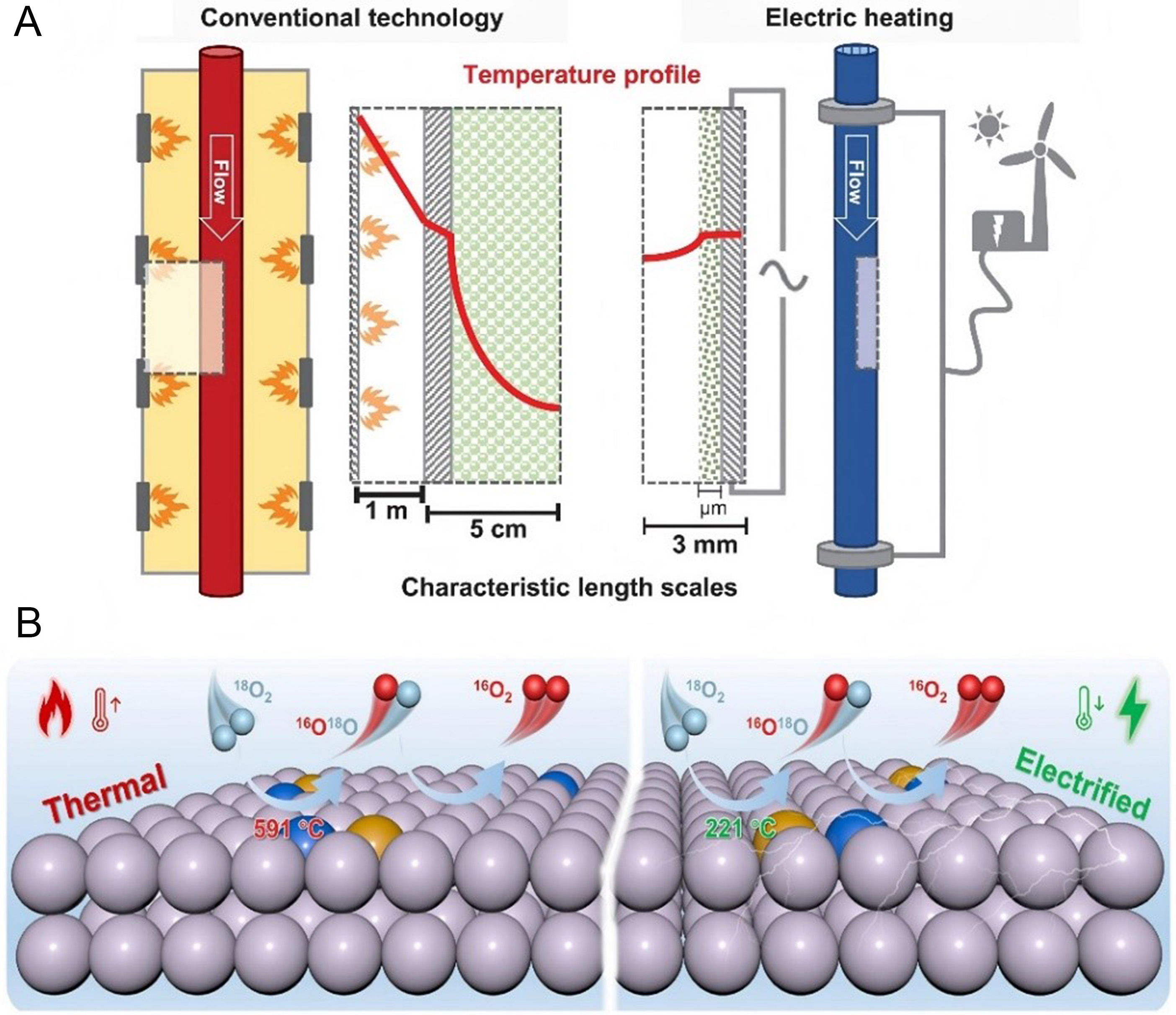
Figure 1. (A) Heating principles of conventional fired reactor and electric resistance-heated reactor. Reprinted with permission from Ref.[18]. Copyright 2019, The American Association for the Advancement of Science; (B) Schematic diagram of isotopic oxygen exchange process under thermal and current-assisted conditions. Reprinted with permission from Ref.[19]. Copyright 2025, Wiley-VCH.
Comparison of various heating methods on their material selectivity, heat transfer, energy efficiency, and length scale
| Method | Material selectivity | Heat transfer | Energy efficiency | Length scale |
| Joule heating | Moderately conductive materials | Surficial | 95%-99% | Resistor size |
| Resistance furnace | Any conductivity | Thermal radiation | 50%-85% | Furnace size |
| Microwaves | Dielectric materials | Volumetric | 70%-95% | Penetration depth |
| Electromagnetic induction | Ferromagnetic material | Surficial | 80%-95% | Penetration depth |
Beyond efficient heat delivery, electrothermal catalysis may also involve additional current-related effects at the catalyst interface. Electron transport and associated electron-phonon interactions can give rise to localized heat accumulation and may perturb surface electronic states, adsorption behavior, and oxygen mobility [Figure 1B][19]. As a result, the promotional effects observed in electrothermal systems cannot always be interpreted solely in terms of bulk temperature rise. Instead, electrothermal catalysis is increasingly viewed as a coupled process in which heat generation, current distribution, and interfacial catalytic events may interact across multiple length scales. The relative importance of these contributions, however, remains highly dependent on catalyst composition, reactor architecture, and reaction conditions.
The recent evolution of electrothermal catalysis reflects a clear shift from electrically assisted heating in adsorption-desorption systems to integrated self-heating platforms for heterogeneous catalysis[20-22]. Early studies mainly exploited Joule heating for the regeneration of conductive adsorbents, whereas later advances in conductive carbons, metal foams, and conductive ceramics enabled the development of catalysts and supports with improved electrical conductivity, thermal robustness, and structural tunability[23]. In parallel, structured electrothermal reactors, including monolithic architectures and conductive packed beds, have been introduced to improve current pathways, temperature uniformity, and catalyst utilization[24]. Together, these developments have expanded electrothermal catalysis from a heating strategy into a broader platform for electrified reaction engineering, with growing relevance in environmental remediation, hydrogen production, methane conversion, and CO2 valorization [Figure 2][25-27]. This rapid development is further reflected in bibliometric trends: the steady increase in related publications over the past two decades, particularly since the mid-2010s, underscores the accelerating research interest in electrically driven catalytic processes [Figure 3].
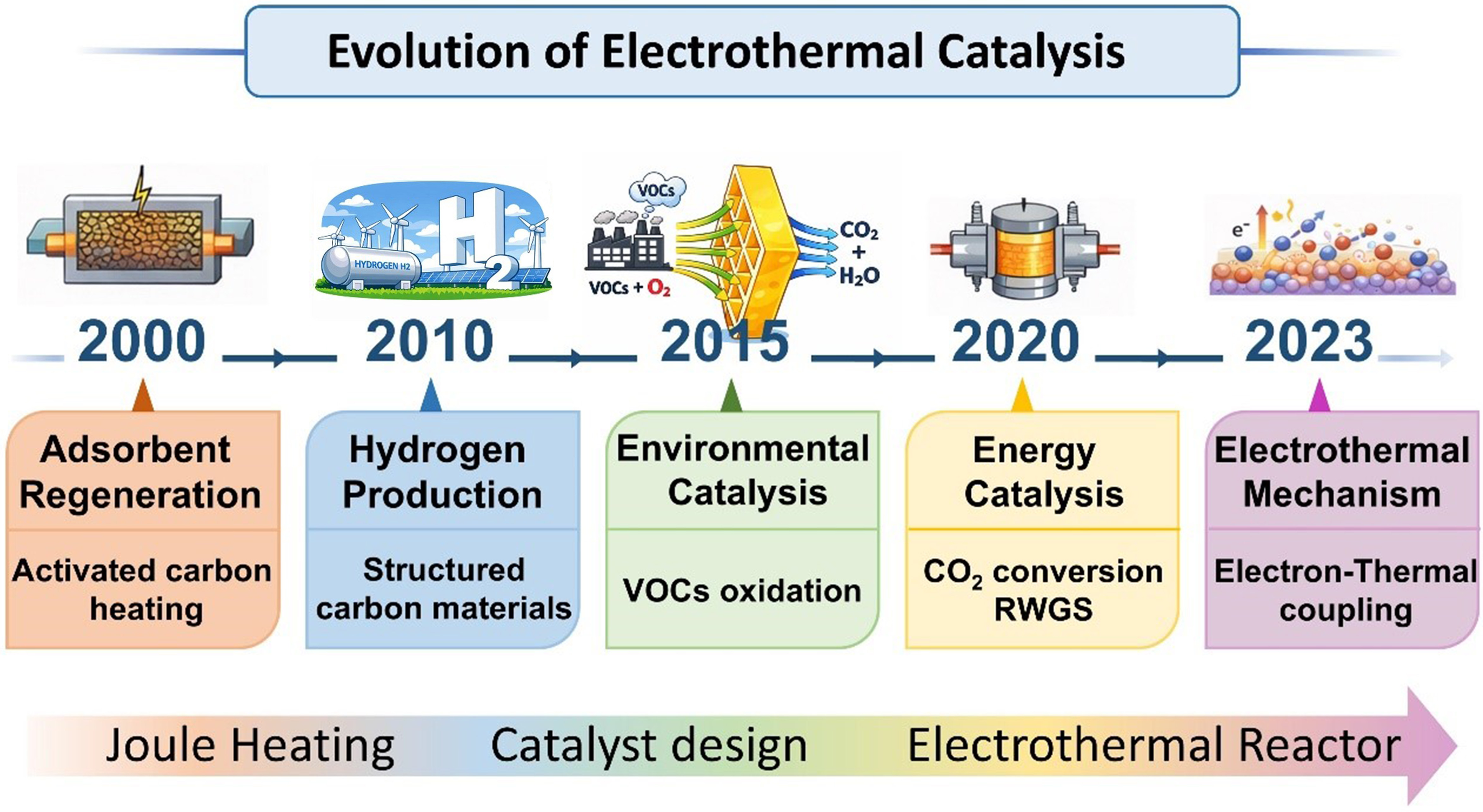
Figure 2. Schematic diagram of the evolution of electrothermal catalysis. VOCs: Volatile organic compounds.
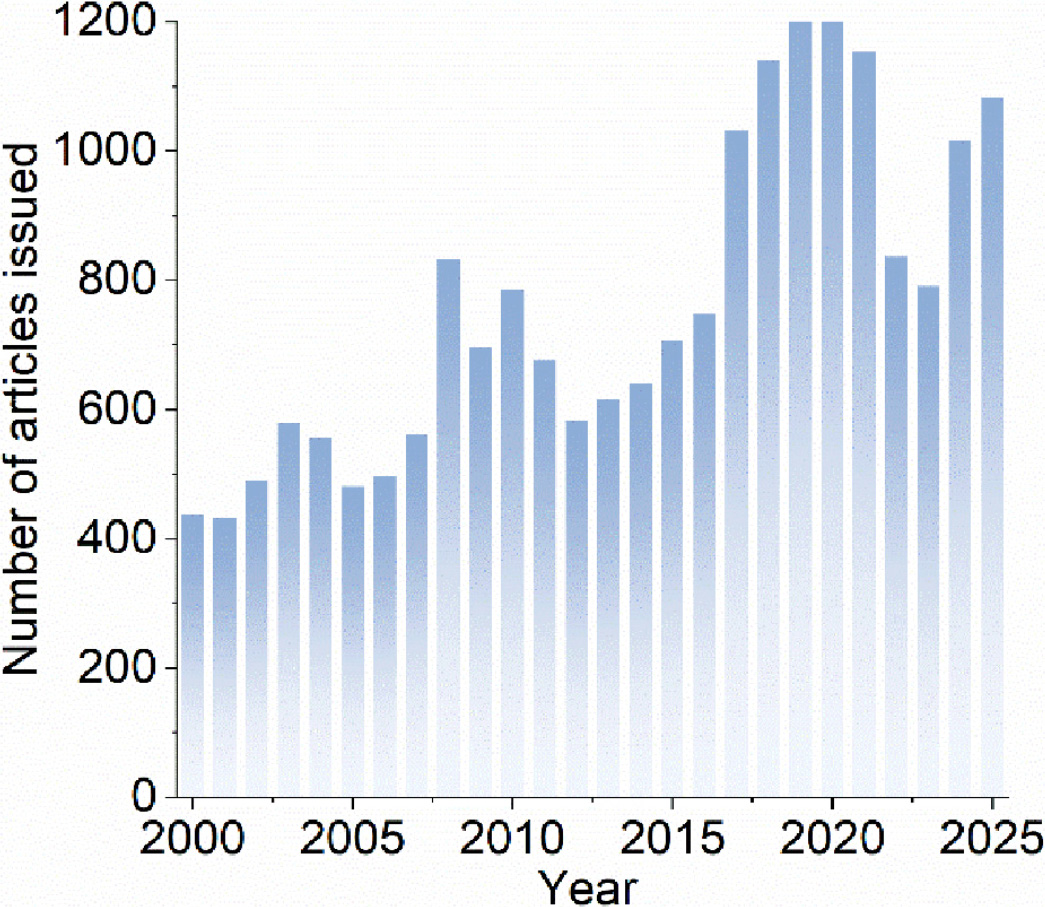
Figure 3. Publication statistics of electrothermal research from the Web of Science database.
DESIGN PRINCIPLE OF ELECTROTHERMAL CATALYST
The design of electrothermal catalysts requires the integration of heat generation, catalytic functionality, and structural stability within a single material framework. Unlike conventional catalytic systems, where heating elements and catalysts are spatially separated, electrothermal systems rely on conductive catalyst architectures that simultaneously act as electrical heaters, catalyst supports, and transport-regulating structures. As a result, the central design principle is the coordinated optimization of electrical conductivity, thermal transport, and catalytic interface properties to ensure efficient Joule heating while maintaining uniform temperature distribution and stable catalytic performance [Figure 4]. Importantly, these requirements cannot be considered independently from reactor architecture, because current pathways, heat dissipation, gas-solid contact, and mechanical constraints are all strongly influenced by the geometric configuration of the reactor and the manner in which the catalyst is integrated into it. A key challenge in this design lies in balancing these interdependent properties. Sufficient electrical conductivity is required to establish continuous current pathways for controllable resistive heating, whereas appropriate thermal conductivity is necessary to distribute heat within the catalytic zone and suppress localized overheating. In addition, the conductive framework must provide chemically stable surfaces capable of anchoring active sites and sustaining repeated thermal and redox cycling under reactive environments. At the same time, catalyst morphology and microstructure must be compatible with the reactor format, since features such as monolithic channels, porous networks, foams, or coated structured supports directly affect current distribution, local temperature gradients, pressure drop, and mass-transfer efficiency. Consequently, electrothermal catalyst design increasingly focuses on coupling electrical pathways with catalytic interfaces, enabling efficient energy conversion while preserving structural and catalytic integrity. In this sense, catalyst design in electrothermal systems is more appropriately viewed as a catalyst-reactor co-design problem rather than a purely materials-selection problem.
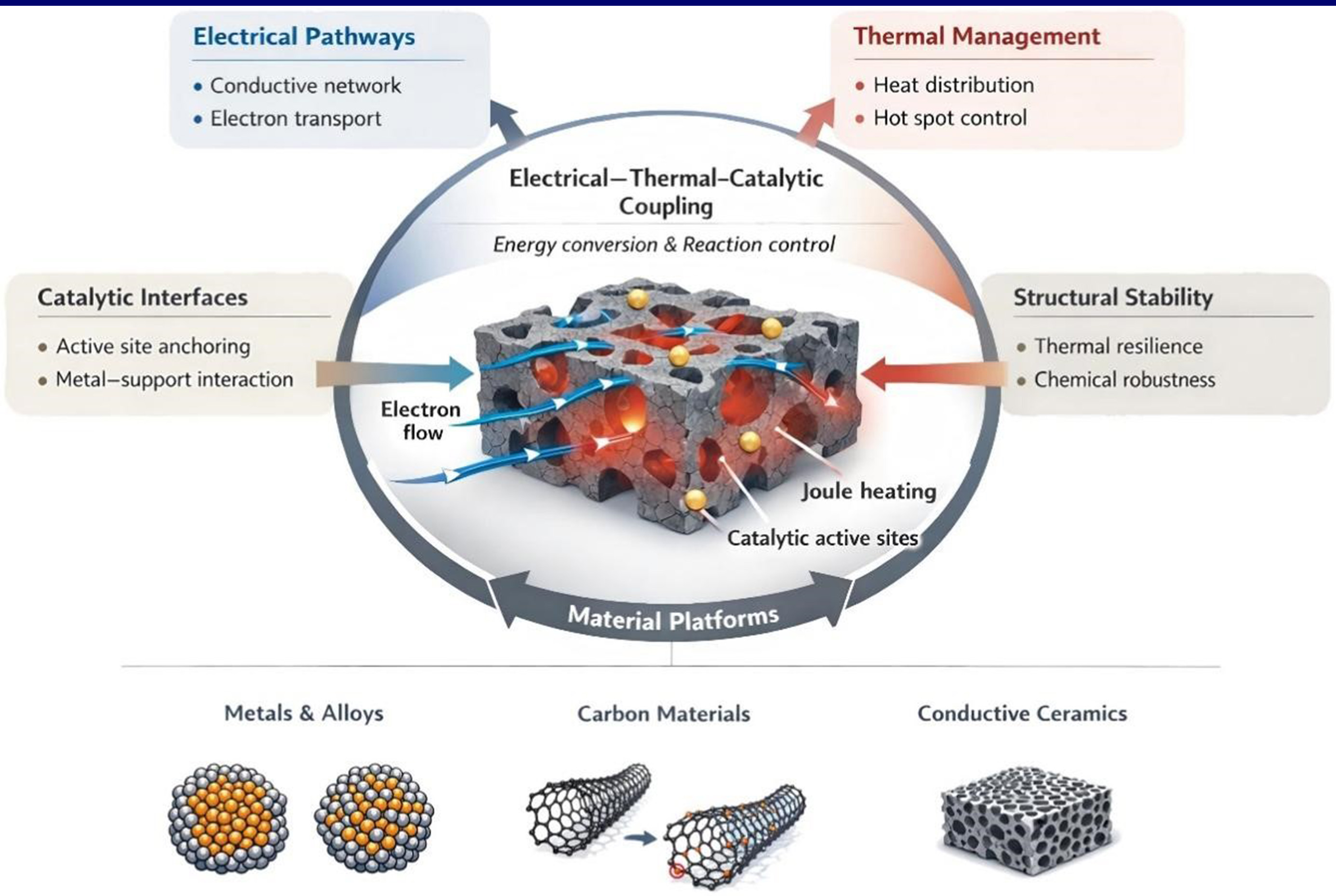
Figure 4. Design principles of electrothermal catalysts.
These principles are typically realized through conductive material platforms such as metallic structures, carbon-based frameworks, and conductive ceramics or carbides. Metallic systems provide excellent electrical transport and mechanical robustness, carbon materials offer rapid thermal response and high surface area, while conductive ceramics such as SiC exhibit exceptional thermal and chemical stability under harsh reaction conditions[28-32]. Rather than representing mutually exclusive options, these materials illustrate different strategies for implementing electrothermal catalyst design. Ultimately, the optimal system depends on the coordinated design of conductive pathways, heat-transfer characteristics, and catalyst-support interactions tailored to specific reaction environments.
DESIGN PRINCIPLE OF ELECTROTHERMAL REACTOR
Electrothermal reactors represent a fundamental departure from conventional thermochemical reactor design by internalizing heat generation within or near the catalytic zone. In traditional externally heated systems, heat must be transferred from the reactor wall to the catalyst bed through conduction and convection, which often leads to large temperature gradients, heat loss, and substantial thermal inertia[33]. By contrast, electrothermal reactors generate heat directly through resistive elements embedded in the reaction environment, thereby shortening the heat-transfer distance and enabling rapid, localized, and on-demand heating. This internalized heating mode improves thermal response, reduces unnecessary heating of non-reactive components, and allows more precise matching between heat input and reaction demand.
A wide range of reactor architectures has been developed to exploit these advantages. Structured resistive elements in planar, curved, or twisted forms provide design flexibility for tuning current pathways, heat distribution, and gas-solid contact [Figure 5A]. Planar configurations are often preferred in model systems because they offer simple geometry and well-defined temperature fields, whereas curved or twisted structures can enhance surface contact and flow disturbance. From an engineering perspective, the distribution of current within these structures is critical, because local variations in conductivity, geometry, or electrode contact can lead to uneven current density and therefore non-uniform heat generation. Such inhomogeneity may create local hotspots, which can be beneficial for activating strongly endothermic reactions but may also accelerate catalyst sintering, side reactions, material degradation, or even thermal runaway if heat removal is insufficient. At a smaller scale, hollow-fiber and other wall-functionalized electrothermal microreactors further intensify transport by integrating Joule heating with reaction confinement and, in some cases, selective product permeation [Figure 5B][34]. These systems offer excellent heat- and mass-transfer characteristics, but their engineering translation requires careful control of electrical insulation, sealing reliability, and long-term stability under continuous bias and thermal cycling. In parallel, three-dimensional porous conductive networks composed of carbon fibers, foams, or conductive particles enable volumetric heat generation throughout the reactor bed, which is particularly advantageous for transport-limited and strongly endothermic reactions [Figure 5C][35]. Nevertheless, their practical behavior is strongly influenced by particle-to-particle contacts, packing heterogeneity, and compression-dependent resistance, all of which can alter current pathways and produce spatially uneven temperature fields.
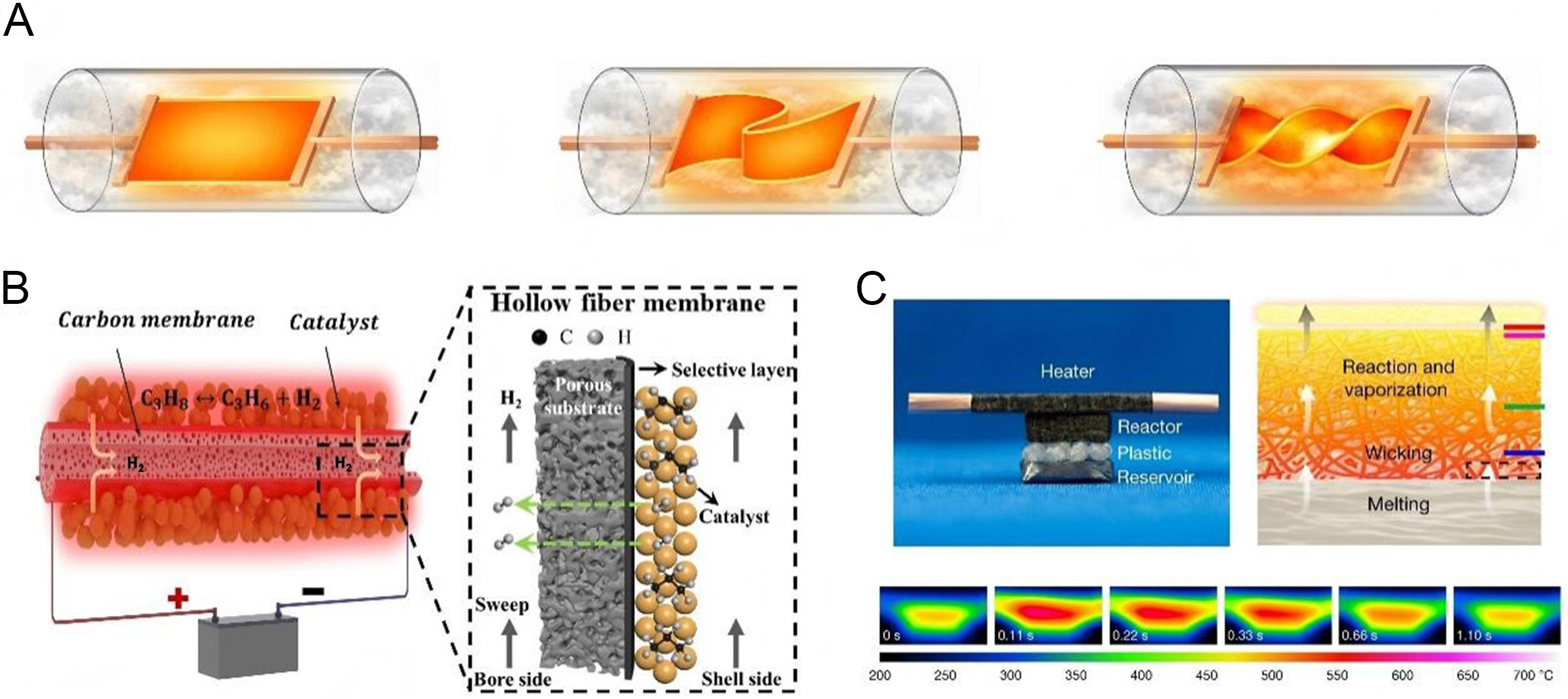
Figure 5. (A) Representative resistive heater configurations (planar, curved, and twisted); (B) Rechargeable carbon-based hollow fiber microreactor. Reprinted with permission from Ref.[34]. Copyright 2023, Elsevier; (C) Plastic pyrolysis driven by a porous carbon Joule heater with efficient heat transfer and synchronized temperature distribution between heater and reactants. Reprinted with permission from Ref.[35]. Copyright 2023, Springer Nature.
Collectively, these reactor concepts illustrate a broader transition from wall-heated vessels to multifunctional electrothermal architectures. In many cases, the conductive framework no longer serves merely as a heating element, but also as the catalyst support, flow distributor, and structural scaffold. This “catalyst-as-heater” or “reactor-as-functional-medium” design philosophy minimizes thermal resistance between heating and reaction sites and opens new opportunities for process intensification. More broadly, electrothermal reactor design is evolving toward integrated control of heat generation, mass transport, catalytic function, and structural stability, forming a key engineering foundation for electrified heterogeneous catalysis.
ELECTROTHERMAL CATALYSIS: APPLICATIONS
Electrothermal catalysis offers a powerful route for electrifying thermochemical processes by generating heat directly within catalytic systems. Compared with conventional externally heated reactors, this internalized heat supply enables rapid thermal response, localized temperature control, and efficient coupling between heat generation and catalytic reactions[36]. These features make electrothermal strategies particularly attractive for processes constrained by heat-transfer limitations, slow thermal dynamics, or highly endothermic reaction requirements. In recent years, electrothermal catalysis has been explored across a wide range of catalytic scenarios. In this section, we summarize representative advances in five major areas: electrothermally driven desorption processes, hydrogen production, environmental catalysis, CO2 valorization, and mechanistic investigations of electrothermal catalytic promotion.
Electrothermal-assisted desorption
Electrothermal regeneration represents one of the earliest and most mature applications of electrothermal technology in adsorption-based separation. Its significance lies not merely in replacing external heating with electricity, but in fundamentally changing how energy is delivered during the adsorption-desorption cycle. In contrast to conventional temperature-swing adsorption, which relies on wall-mediated heat transfer and often suffers from slow heating and substantial parasitic heat losses, Joule heating generates heat directly within conductive adsorbents or supporting frameworks, thereby enabling rapid, localized, and low-thermal-inertia desorption. This feature makes electrothermal regeneration particularly attractive for cyclic removal of dilute pollutants and trace components, where fast thermal response and reduced energy consumption are essential.
Recent studies show that this field has evolved along three main directions: improved regeneration efficiency, coupling with catalytic purification, and adaptation to structured and application-oriented devices. In volatile organic compound (VOC) treatment, conductive adsorbents such as activated carbon fibers and carbon cloth have demonstrated rapid regeneration, shortened cycle times, and stable operation under repeated adsorption-desorption conditions, highlighting the value of internal heat generation for efficient pollutant removal [Figure 6A][37-44]. More importantly, the integration of conductive substrates with catalytic phases has extended electrothermal desorption beyond simple adsorbent recovery toward combined desorption-oxidation processes, enabling continuous purification of pollutants such as formaldehyde while maintaining fast thermal responsiveness [Figure 6B][45-47]. A similar evolution is evident in CO2 capture systems, where electrothermal regeneration has progressed from direct in situ desorption on conductive sorbents to more sophisticated architectures involving hierarchical porous monoliths, sorbent-coated conductive fibers, and air-filter-type modules [Figure 6C and D][48-51]. These systems illustrate that the key advantage of electrothermal-assisted desorption lies not only in faster heating, but in the coordinated optimization of adsorbent structure, conductive pathways, heat and mass transfer, and module integration. Overall, electrothermal desorption is developing from a regeneration technique into a broader process-intensification strategy for dilute-gas separation and purification, with growing relevance to VOC abatement, CO2 capture, and other electrically driven cyclic separation processes.
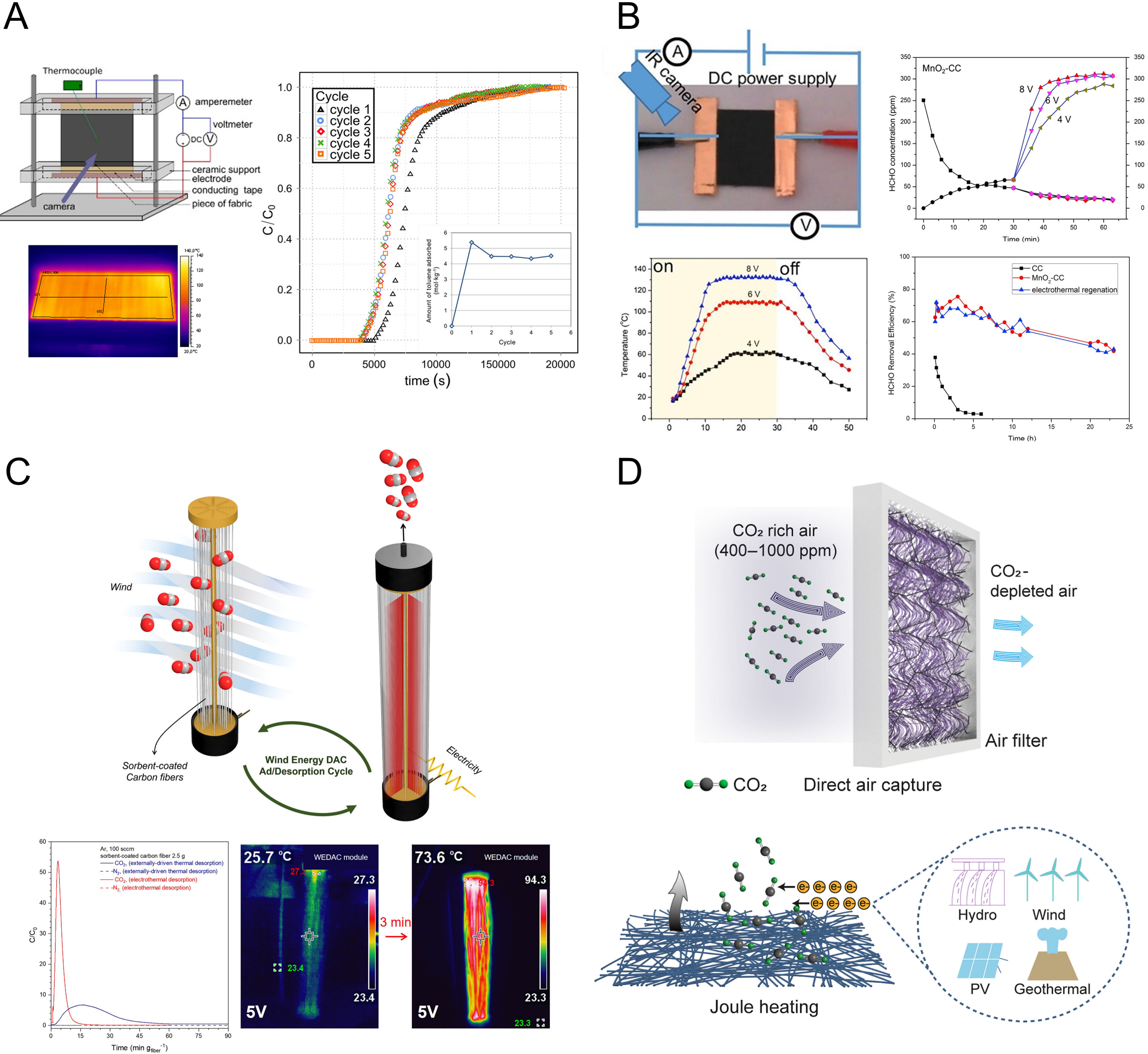
Figure 6. (A) Experimental setup for electrothermal desorption and cyclic adsorption-desorption of toluene. Reprinted with permission from Ref.[39]. Copyright 2014, American Chemical Society; (B) Schematic structure of a flexible MnO2-CC electrothermal heater with a Cu electrode and its effect on HCHO purification. Reprinted with permission from Ref.[46]. Copyright 2019, Elsevier; (C) Sorbent-coated carbon fibers and WEDAC modules for direct air capture: CO2 desorption performance during TSA and ETSA cycles and electrothermal heating behavior revealed by thermal imaging. Reprinted with permission from Ref.[49]. Copyright 2023, Elsevier; (D) Schematic illustration of CO2 capture from air using a CNF-based filter and its regeneration via Joule heating powered by renewable energy. Reprinted with permission from Ref.[48]. Copyright 2025, The American Association for the Advancement of Science. WEDAC: Wind-driven electric adsorption capture; TSA: temperature swing adsorption; ETSA: electrically-driven temperature swing adsorption; CNF: carbon nanofiber; DC: direct current; IR: infrared; PV: photovoltaic.
Electrothermal-assisted hydrogen production
The application of electrothermal technology in hydrogen production is centered on the intensification of strongly endothermic catalytic reactions. In conventional reforming processes, heat is supplied from outside the reactor, which inevitably creates large temperature gradients, slow thermal response, and inefficient catalyst utilization. Electrothermal operation changes this paradigm by generating heat directly within the catalytic bed, conductive support, or structured reactor. This internalized heat supply shortens the heat-transfer path, accelerates start-up, and enables tighter coupling between heat input and reaction demand.
Early studies mainly established the feasibility of internally heated reforming systems. Electrically heated alumina-based monoliths, anodic supports, and catalytic beds demonstrated that direct resistive heating could improve transverse heat transfer, shorten start-up time, and sustain stable reforming under cyclic operation[52-56]. These studies showed that the benefit of electrification is not simply the replacement of combustion by electricity, but the relocation of the heat source from the reactor wall to the reaction zone itself. This shift is particularly important for methane reforming, where catalytic performance is often constrained by insufficient heat delivery through the catalyst layer.
Recent work has moved beyond feasibility toward integrated electrothermal reactor design. As illustrated by Figure 7A, compact electrified methane reformers can deliver heat directly to the coated catalytic zone, allowing the reactor to operate closer to the thermal and kinetic requirements of steam reforming while greatly reducing characteristic reactor dimensions[18]. In parallel, dry reforming studies have shown that electrothermal input must be coupled with catalyst stabilization strategies. The representative system in Figure 7B shows that internal Joule heating, when combined with confined Ni active sites, can sustain high activity under undiluted CH4/CO2 feeds while mitigating deactivation by sintering and coking[57]. This highlights a key evolution in the field, namely that catalyst design and electrothermal operation must be developed together rather than treated independently. A further step is the emergence of conductive structured catalysts that integrate current transport, heat generation, and catalytic function within a single body. The systems shown in Figure 7C exemplify this trend. Structured conductive frameworks can minimize the distance between heat generation sites and active centers, improve temperature uniformity, and enhance reforming stability under harsh endothermic conditions[58]. Related studies on SiC- and SiSiC-based catalysts further demonstrate that suitable resistivity, thermal conductivity, and structural robustness can enable direct Joule heating to reforming temperatures with high methane conversion and favorable energy efficiency[59]. Taken together, these studies reveal a clear transition in electrothermal hydrogen production, from electrically heated reactors as proof-of-concept systems to electrothermal catalysis as a process-intensification platform. Its central value lies not merely in electrifying heat supply, but in reorganizing how heat is generated, distributed, and consumed within the reactor.
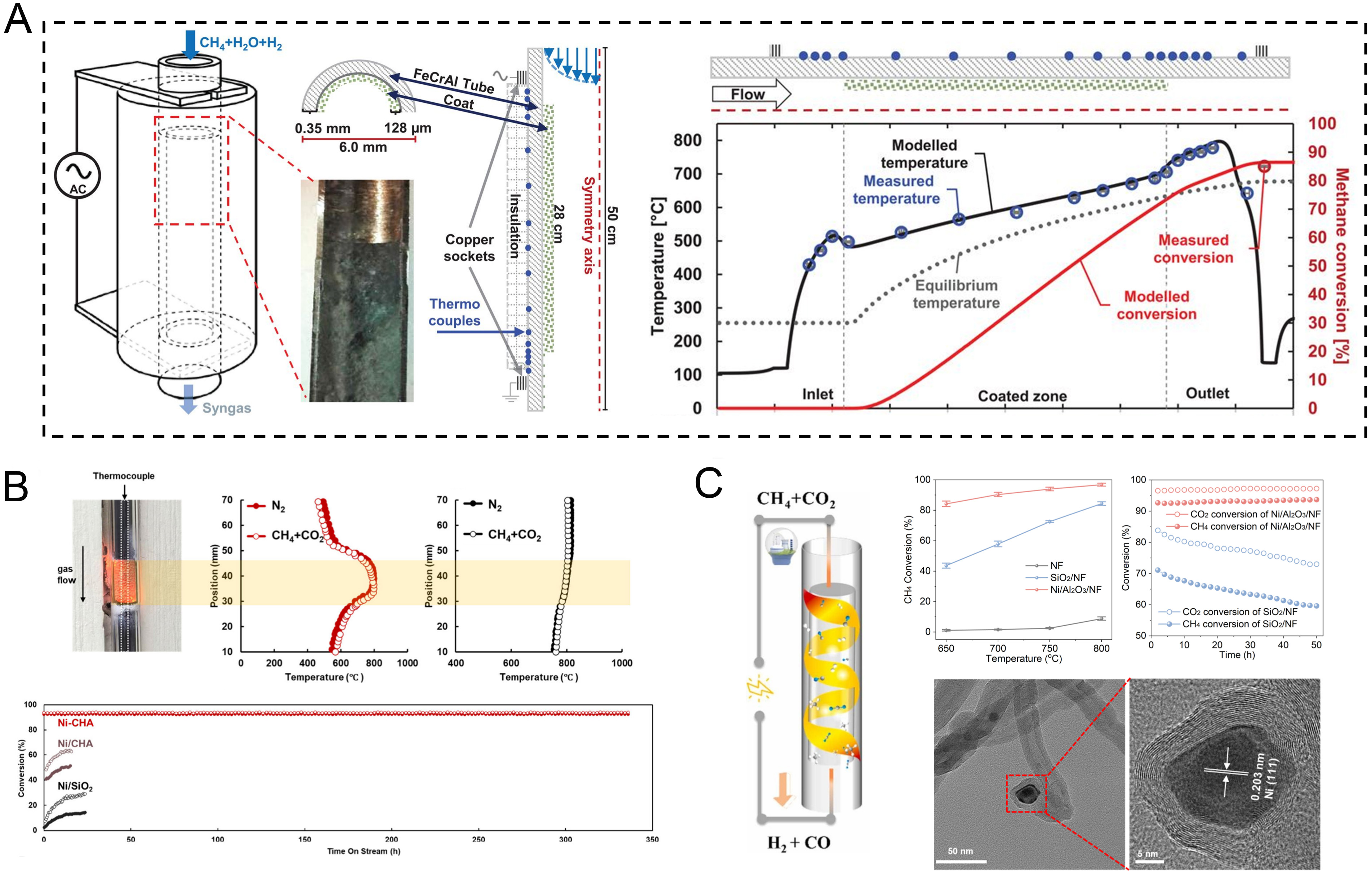
Figure 7. (A) Schematic illustration and cross-sectional features of a laboratory-scale resistance-heated reactor, together with its axial temperature distribution and methane conversion performance. Reprinted with permission from Ref.[18]. Copyright 2019, The American Association for the Advancement of Science; (B) Axial temperature distribution of the catalyst bed in the reactor. Reprinted with permission from Ref.[57]. Copyright 2025, American Chemical Society; (C) Spiral electrothermal reactor configuration and its performance for the co-production of syngas via methane dry reforming and carbon nanotubes. Reprinted with permission from Ref.[58]. Copyright 2026, Elsevier. AC: Alternating current; CHA: chabazite.
Electrothermal-assisted environmental catalysis
The application of electrothermal technology in environmental catalysis is increasingly defined by its ability to coordinate heat delivery, interfacial reactivity, and dynamic operation within a single catalytic system. Rather than serving only as an alternative heating mode, electrothermal input has evolved into a process-intensification strategy that integrates conductive supports, catalyst-substrate interface engineering, oxygen activation, and device-level design. Existing studies show that this approach has been extended across VOC oxidation, particulate removal, indoor air purification, and flue-gas denitrification, with a clear shift from rapid ignition alone toward broader multifunctional control[60-62].
One important research theme is the use of structured electrothermal monolithic catalysts for VOC oxidation. As shown in Figure 8A, FeCrAl-based electrically heated monoliths can simultaneously act as structural supports, current pathways, and heat-generating media, enabling rapid ignition and high conversion of pollutants such as CO and C2H4 under high space velocity[60]. Subsequent studies on
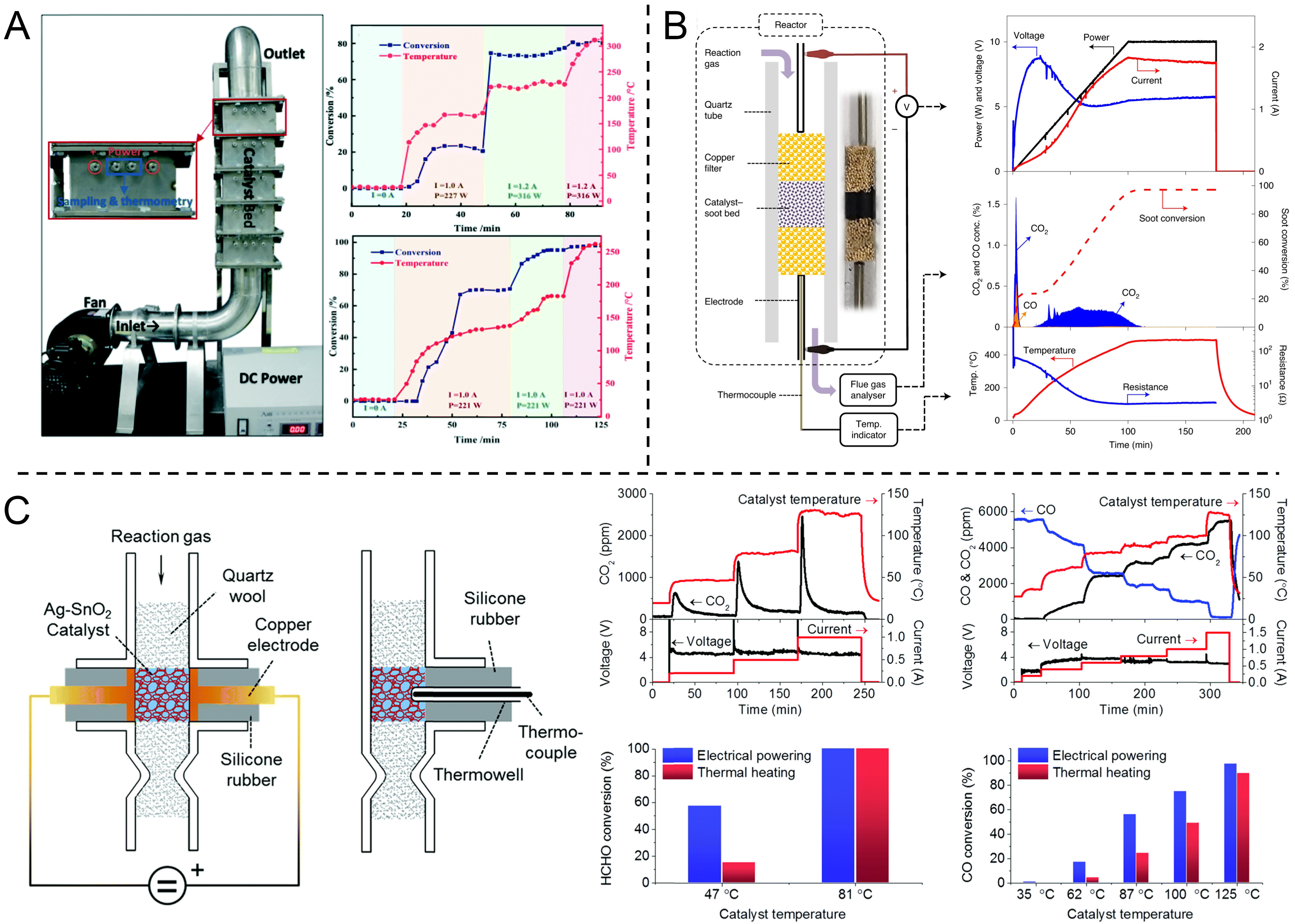
Figure 8. (A) Photograph of the pilot-scale VOC catalytic combustion unit and its catalytic performance. Reprinted with permission from Ref.[60]. Copyright 2019, Royal Society of Chemistry; (B) Electrically powered programmed oxidation strategy for soot combustion. Reprinted with permission from Ref.[65]. Copyright 2021, Springer Nature; (C) Schematic illustration of the designed reactor and its catalytic activity for HCHO and CO oxidation. Reprinted with permission from Ref.[68]. Copyright 2020, Royal Society of Chemistry. VOC: Volatile organic compound; DC: direct current.
Another major area of development concerns the electrothermal catalytic removal of particulates and interfacially constrained pollutants. The conductive oxide catalyst shown in Figure 8B demonstrates that electrothermal input can markedly decrease the ignition temperature of diesel soot and enhance combustion efficiency in the low-temperature region[65]. This effect cannot be attributed to rapid heating alone. It is also closely associated with enhanced lattice-oxygen activation, improved oxygen mobility, and better catalyst-soot contact. Similar concepts have been explored for cold-start hydrocarbon abatement, highlighting the particular value of electrothermal catalysis in systems where reaction initiation is difficult and interfacial contact strongly limits performance[66,67].
In parallel with these developments, increasing attention has been directed toward scenario-oriented electrothermal purification devices. The portable air-cleaner prototype in Figure 8C, based on a conductive Ag-SnO2 catalyst, achieves the simultaneous removal of HCHO and CO under low-voltage operation[68]. This result shows that electrothermal environmental catalysis is moving beyond reactor enhancement toward practical end-use integration. Related studies on MnO2/Ni foam and Mn/NiFe/NF systems likewise suggest that electrothermal conditions can promote electron transfer and surface oxygen activation, allowing higher activity and stability at lower apparent temperatures[67,69]. Such findings support the transition of environmental catalytic devices toward lightweight, distributed, and low-power operation.
Beyond these representative cases, electrothermal strategies are also being extended to more complex flue-gas treatment processes. For example, electrothermally integrated V2O5-WO3/TiO2 catalysts have been shown to broaden the effective operating window of NH3-SCR through surface-temperature regulation, while also enabling in situ regeneration after deactivation[70]. More broadly, the field is evolving from rapid ignition and low-temperature oxidation toward a wider framework that includes interfacial regulation, catalyst regeneration, and device integration. The key value of electrothermal technology in environmental catalysis therefore lies not simply in providing a new heat source, but in offering a rapid, localized, and programmable energy-input mode that improves the adaptability of catalytic systems to low-temperature, dynamic, and distributed pollution-control scenarios.
Electrothermal-assisted CO2 utilization
In the field of CO2 valorization, electrothermal technology has been primarily applied to reaction systems with strong thermal demands, including CO2 methanation, reverse water-gas shift, and dry reforming of methane. Compared with conventional externally heated configurations, recent studies have moved beyond simple heat-source replacement toward the coordinated optimization of catalytic-site utilization, structured reactor design, and dynamic process control[71]. Electrothermal CO2 conversion is therefore emerging as an integrated framework that links catalyst design, reactor engineering, and coupling with renewable electricity.
As exemplified by the system shown in Figure 9A, Ni-foam-based structured catalysts promoted with Fe, La, and Ce can enable internal electrical heating while simultaneously enhancing low-temperature CO2 methanation activity and sulfur tolerance[72]. In these systems, electrothermal input serves not only as a rapid heating mode, but also as a means of reinforcing metal-support interactions and modulating surface adsorption and activation behavior. Such synergy facilitates CO2 activation while mitigating H2S poisoning. Internally heated methanation systems thus illustrate how electrothermal operation can simultaneously lower the apparent thermal threshold of CO2 hydrogenation, increase CH4 formation rates, and improve tolerance to fluctuating hydrogen supply, which is particularly relevant to renewable-energy-coupled operation.
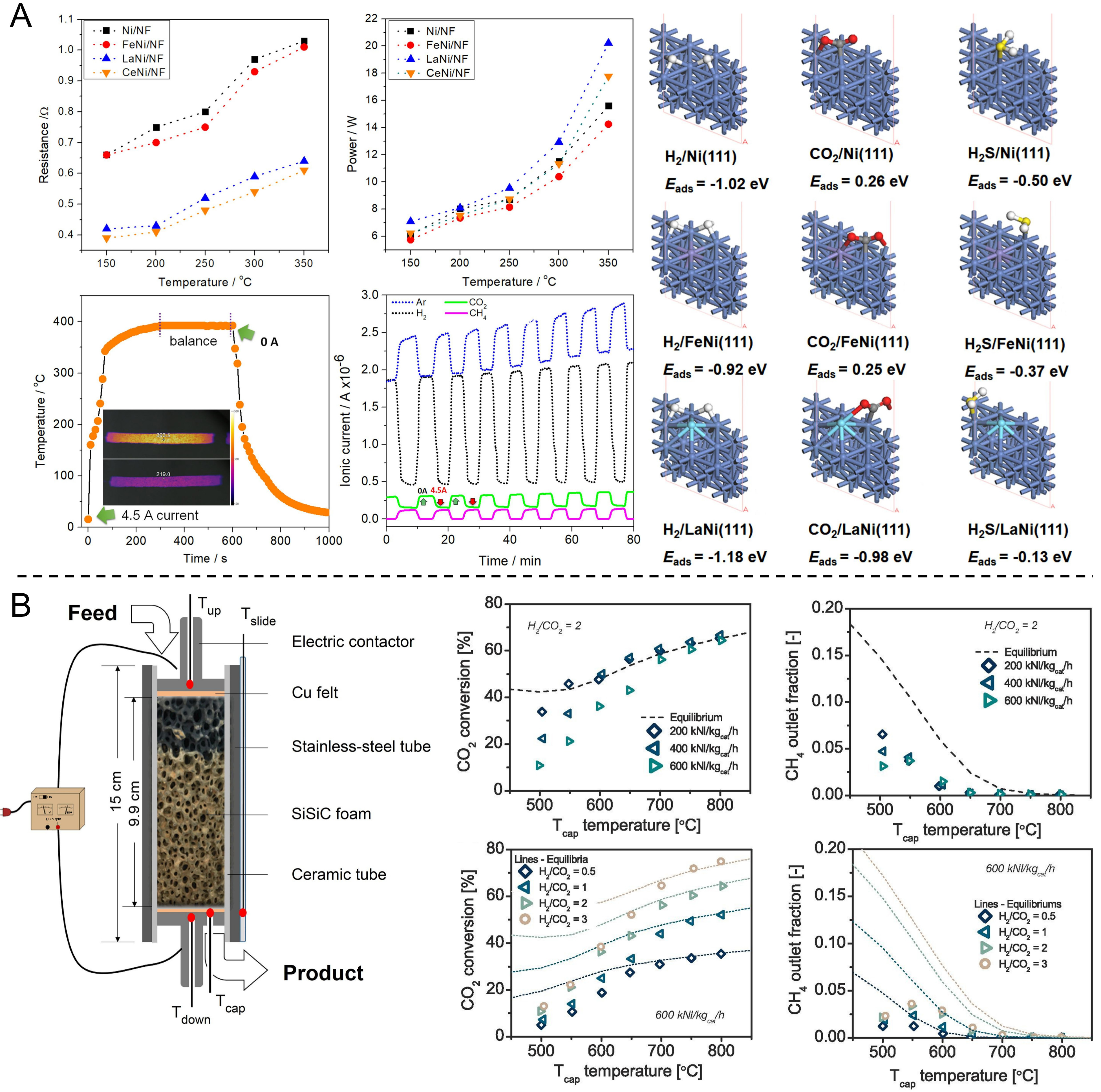
Figure 9. (A) Electrothermal behavior, catalytic stability, and reactant adsorption characteristics of Ni-based structured catalysts. Reprinted with permission from Ref.[72]. Copyright 2021, Elsevier; (B) Electrified reactor configuration and eRWGS performance under varying operating conditions. Reprinted with permission from Ref.[25]. Copyright 2023, Elsevier. eRWGS: Electrified reverse water-gas shift; DC: direct current.
In CO2 reforming and reverse water-gas shift, the advantages of electrothermal input are expressed more clearly at the reactor level through structured design. As illustrated in Figure 9B, directly Joule-heated foams and other open-cell conductive substrates can simultaneously function as current carriers, heat-transfer media, and catalyst supports, thereby establishing close spatial coupling between electrical input and the reactive zone[25]. Studies on SiC- and SiSiC-based structured catalysts have shown that electrothermal operation can sustain high CH4 and CO2 conversion while improving temperature uniformity and reducing ineffective thermal dissipation[71,73]. Under conditions where RWGS and reforming proceed concurrently, the product distribution can also be tuned more flexibly by adjusting the input power, bed temperature, and feed composition, thereby enhancing process controllability.
Beyond these catalytic systems, modeling and process-level studies further indicate that electrothermal CO2 valorization offers clear advantages in start-up dynamics, thermal management, and integration with low-carbon electricity[74]. Taken together, these studies suggest that the central value of electrothermal strategies lies in their ability to deliver rapid, tunable, and spatially controllable energy input, thereby improving heat utilization, reaction selectivity, and operational adaptability in CO2 conversion processes. More broadly, these advances position electrothermal CO2 valorization as a representative mode of electrified thermocatalysis, in which catalyst design, thermal management, and renewable-power integration are co-optimized within a single reaction platform.
Electrothermal-assisted mechanistic investigation
In recent years, mechanistic studies on electrothermal promotion have progressed from phenomenological observations toward a deeper understanding of the fundamental physicochemical processes involved. Current evidence suggests that the catalytic enhancement observed under electrical input cannot always be explained solely by the average bulk temperature rise arising from Joule heating. Instead, electrothermal systems often involve multiple coupled effects, including localized Joule heating, steep temperature gradients, charge-carrier migration, surface electronic redistribution, and accelerated proton or oxygen transport. As a result, the observed promotion should be viewed as the outcome of intertwined thermal and current-mediated contributions rather than being assigned unambiguously to a single origin.
A critical issue is that the distinction between thermal and non-thermal effects remains experimentally challenging. In many electrothermal reactors, the measured bulk or external temperature may not accurately reflect the local temperature at catalytically relevant interfaces, where current concentration, contact resistance, and microstructural heterogeneity can produce local overheating or transient hotspots. Within this context, early investigations revealed that reactions conducted under electric fields exhibit markedly different kinetic characteristics, including altered apparent activation energies, reaction orders, and surface intermediate evolution[75]. In this context, the concept of ‘surface protonics’ demonstrated that proton hopping across adsorbed species can directly participate in catalytic processes under an electric field, enabling reactions such as methane steam reforming, dry reforming, and ammonia synthesis to proceed at temperatures far below those required for purely thermal systems. More broadly, subsequent studies on redox-type catalytic systems showed that electrical input can facilitate oxygen vacancy formation, increase the concentration of reactive surface oxygen species, and accelerate intermediate turnover, often accompanied by changes in metal oxidation states and metal-oxygen bond strength[76]. These findings support the possibility that electrical input can modify surface chemistry beyond simple external heat delivery; however, the relative contribution of true electronic effects versus localized thermal effects remains system-dependent and is still under active debate.
More recent studies have provided direct electronic-level insights into this mechanism and extended it from single-site regulation to cooperative multi-site catalysis[77]. In a representative single-atom catalyst system [Figure 10A], weak current-assisted NH3-SCR was found to originate from directional electron accumulation around isolated metal sites. The migrated electrons increase the occupation of antibonding orbitals, weaken metal-oxygen bonds, and facilitate lattice oxygen release and regeneration, producing an ‘electron scissors effect’ that lowers the barrier for key surface transformations and enables highly efficient NOx reduction at low temperatures. This mechanistic picture was subsequently expanded in dual-atom catalytic systems, where current-assisted oxidation reactions were interpreted through an ‘atomic relay’ mechanism[78]. In such systems [Figure 10B], electron enrichment preferentially occurs at one metal center, promoting metal-oxygen bond weakening and lattice oxygen activation, while an adjacent heteroatomic site primarily facilitates bond activation and product desorption. The spatial proximity of the two atomic centers enables sequential reaction steps to occur cooperatively across different sites, resulting in step-specific catalytic enhancement. Further developments demonstrated that electrical input can dynamically strengthen interatomic charge transfer in diatomic catalysts, thereby weakening metal-oxygen bonds and promoting lattice oxygen activation while simultaneously lowering the activation barrier for C-H bond cleavage[19]. Importantly, the catalytic rate can be continuously tuned by adjusting the applied current even at a constant temperature, indicating that electrical input can act as an in-situ regulator of interatomic interaction and catalytic activity. Collectively, these studies establish a coherent mechanistic framework in which electrothermal promotion arises from current-induced electronic redistribution that weakens local metal-oxygen bonding and accelerates lattice oxygen dynamics, evolving from site-selective activation in single-atom catalysts to cooperative and dynamically tunable multi-site catalysis. Electrothermal catalysis therefore represents a distinct catalytic paradigm in which flowing electrons actively reshape local bonding environments and reaction networks.
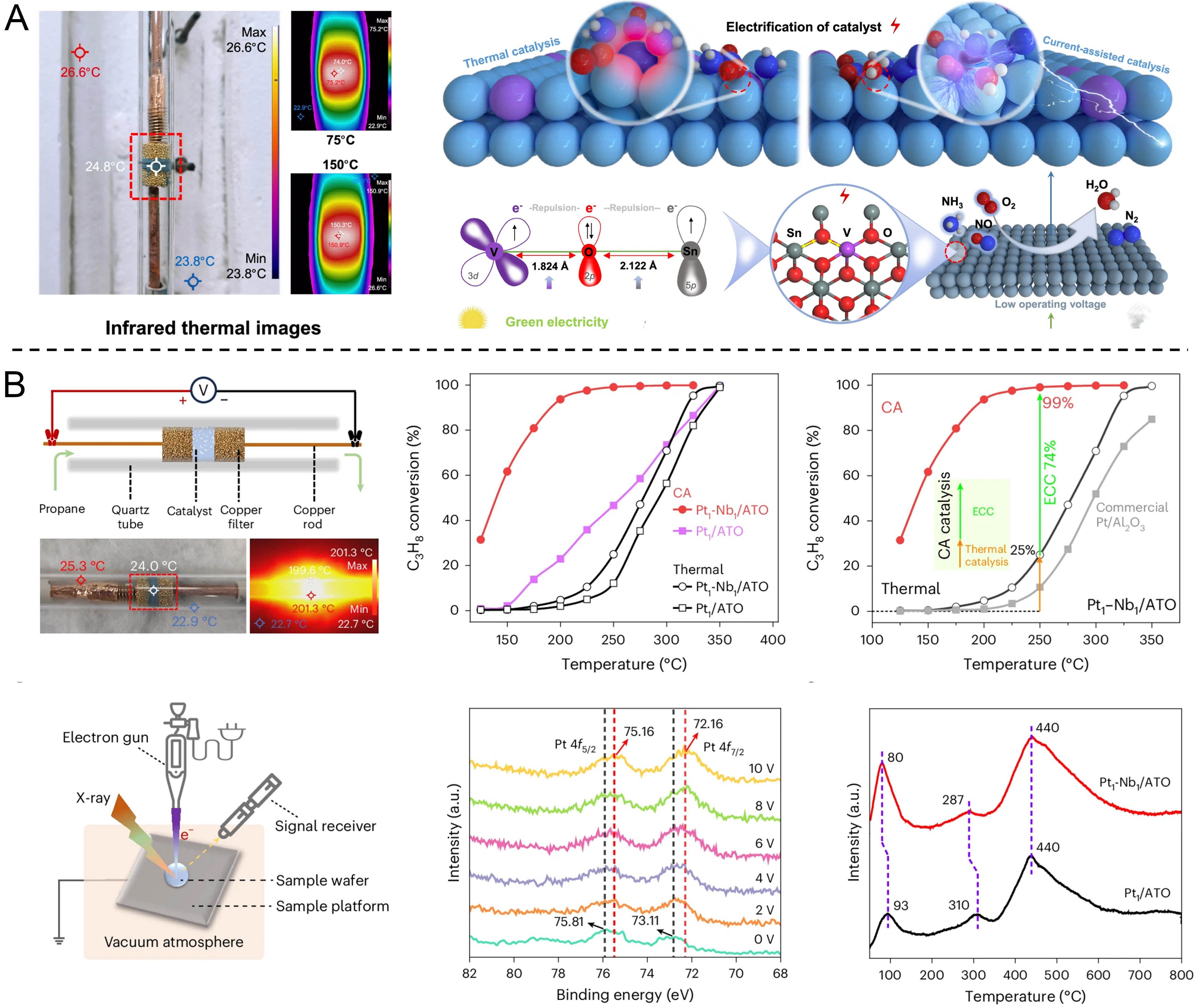
Figure 10. (A) Current-assisted catalytic systems and atomic-scale active-site structure revealed by DFT calculations. Reprinted with permission from Ref.[77]. Copyright 2024, Springer Nature; (B) Catalytic performance and mechanistic understanding of current-assisted propane combustion. Reprinted with permission from Ref.[78]. Copyright 2026, Springer Nature. DFT: Density functional theory; CA: current-assisted; ATO: antimony-doped tin oxide.
CONCLUSION AND OUTLOOK
Electrothermal catalysis is emerging as a distinctive mode of electrified heterogeneous catalysis. By internalizing heat generation within conductive catalysts, supports, or reactor architectures, it fundamentally reshapes how thermal energy is delivered to reaction zones. Compared with conventional externally heated systems, this strategy enables faster thermal response, lower thermal inertia, more efficient heat utilization, and tighter coupling between energy input and catalytic demand. Across desorption processes, hydrogen production, environmental catalysis, and CO2 valorization, electrothermal operation has shown particular promise for reactions constrained by heat-transfer limitations, dynamic operating requirements, or strong thermal demands.
More importantly, the significance of electrothermal catalysis extends beyond the substitution of fossil-derived heat with electricity. It is increasingly evolving into an integrated platform in which catalyst design, reactor engineering, and process control are systematically integrated and jointly optimized. Recent advances indicate that conductive materials can simultaneously serve as heating media, catalyst supports, and transport-regulating frameworks, while electrothermal reactors are moving toward multifunctional architectures that integrate heat generation, catalysis, and reaction management within a single system. In this sense, electrothermal catalysis should be viewed not simply as an alternative heating strategy, but as a broader route for process intensification in electrified chemical transformations.
Despite this progress, several critical challenges remain. A central unresolved issue is the difficulty of disentangling purely thermal contributions from current-induced interfacial effects, since local temperature gradients, current pathways, catalyst-state evolution, and reaction kinetics are often strongly coupled. Moreover, the rational co-optimization of electrical conductivity, thermal transport, catalytic activity, and long-term stability remains far from mature. Further challenges arise from the lack of standardized evaluation protocols, especially for comparing local temperature, electrical input, and energy efficiency across different reactor configurations. Practical deployment also requires greater attention to scale-up, durability under cyclic operation, electrical safety, and compatibility with fluctuating renewable-power input.
Future progress will depend on closer integration across mechanism, materials, and reactor design. In particular, more rigorous operando characterization and multiscale modeling are needed to resolve local temperature heterogeneity, current distribution, interfacial charge transfer, catalyst-state evolution, and elementary reaction pathways under realistic working conditions. Meanwhile, electrothermal systems should be assessed not only by catalytic activity, but also by metrics central to electrified processing, including specific energy consumption, effective thermal utilization, start-up/shut-down dynamics, load-following capability, and operational flexibility. Looking forward, the greatest opportunity may lie in coupling electrothermal catalysis with renewable electricity and modular reactor technologies, thereby enabling compact, load-flexible, and low-carbon chemical processes. Realizing this potential will require standardized evaluation protocols, deeper catalyst-reactor co-design, improved management of hotspot formation and current uniformity, and validation under long-term cyclic and dynamically fluctuating operating conditions. If these challenges can be addressed, electrothermal catalysis may develop from a promising laboratory concept into a broadly applicable platform for sustainable chemical manufacturing and environmental remediation.
DECLARATIONS
Authors’ contributions
Writing original draft: Wang, C.
Methodology: Wang, C.; Xiang, L.
Formal analysis: Wang, C.; Gao, Y.
Drawing the figure: Nie, G.
Writing outlook: Bi, F.
Writing and conceptualization: Wu, Z.
Review and editing: Weng, X.
Project administration: Weng, X.
Funding acquisition: Weng, X.
Availability of data and materials
Not applicable.
AI and AI-assisted tools statement
Not applicable.
Financial support and sponsorship
The authors gratefully acknowledge the support of this work from the Zhejiang Provincial Natural Science Foundation of China (Grant No. LZ26E080003) and the National Natural Science Foundation of China (Grant No. 525B2164).
Conflicts of interest
Weng, X. is an Editorial Board Member of the journal Greenverse Science. Weng, X. was not involved in any steps of the editorial process, notably including reviewers’ selection, manuscript handling, or decision making. The other authors declare that there are no conflicts of interest.
Ethical approval and consent to participate
Not applicable.
Consent for publication
Not applicable.
Copyright
©The Author(s) 2026.
REFERENCES
1. Xu, H.; Yan, N.; Qu, Z.; et al. Gaseous heterogeneous catalytic reactions over Mn-based oxides for environmental applications: a critical review. Environ. Sci. Technol. 2017, 51, 8879-92.
2. Wang, S.; Wang, L.; Wang, D.; Li, Y. Recent advances of single-atom catalysts in CO2 conversion. Energy. Environ. Sci. 2023, 16, 2759-803.
3. Wang, C.; Su, S.; Li, Q.; et al. Monolithic catalyst of Ni foam-supported MnOx for boosting magnetocaloric oxidation of toluene. Environ. Sci. Technol. 2023, 58, 1410-9.
4. Shan, X.; Zhu, J.; Qiu, Z.; et al. Ultrafast-loaded nickel sulfide on vertical graphene enabled by Joule heating for enhanced lithium metal batteries. Small 2024, 20, 2401491.
5. Li, Q.; Wang, H.; Zhang, M.; Li, G.; Chen, J.; Jia, H. Suppressive strong metal-support interactions on ruthenium/TiO2 promote light-driven photothermal CO2 reduction with methane. Angew. Chem. Int. Ed. 2023, 62, e202300129.
6. Głowniak, S.; Szczęśniak, B.; Choma, J.; Jaroniec, M. Advances in microwave synthesis of nanoporous materials. Adv. Mater. 2021, 33, 2103477.
7. Xu, S.; Chansai, S.; Stere, C.; et al. Sustaining metal-organic frameworks for water-gas shift catalysis by non-thermal plasma. Nat. Catal. 2019, 2, 142-8.
8. Zheng, L.; Ambrosetti, M.; Tronconi, E. Joule-heated catalytic reactors toward decarbonization and process intensification: a review. ACS. Eng. Au. 2023, 4, 4-21.
9. Eddy, L.; Xu, S.; Liu, C.; et al. Electric field effects in flash Joule heating synthesis. J. Am. Chem. Soc. 2024, 146, 16010-9.
10. Xie, H.; Qin, M.; Hong, M.; et al. Rapid liquid phase-assisted ultrahigh-temperature sintering of high-entropy ceramic composites. Sci. Adv. 2022, 8, eabn8241.
11. Dong, Q.; Hu, S.; Hu, L. Electrothermal synthesis of commodity chemicals. Nat. Chem. Eng. 2024, 1, 680-90.
12. Zhou, L.; Guo, Y.; Zhang, Q.; et al. A novel catalyst with plate-type anodic alumina supports, Ni/NiAl2O4/γ-Al2O3/alloy, for steam reforming of methane. Appl. Catal. A. Gen. 2008, 347, 200-7.
13. Ma, Q.; Gao, Y.; Sun, B.; Du, J.; Zhang, H.; Ma, D. Grave-to-cradle dry reforming of plastics via Joule heating. Nat. Commun. 2024, 15, 8243.
14. Deng, B.; Xu, S.; Eddy, L.; et al. Flash separation of metals by electrothermal chlorination. Nat. Chem. Eng. 2024, 1, 627-37.
15. Wang, W.; Zhao, S.; Tang, X.; Chen, C.; Yi, H. Electrothermal catalysis for heterogeneous reaction: mechanisms and design strategies. Chem. Eng. J. 2023, 455, 140272.
16. Dou, L.; Yan, C.; Zhong, L.; et al. Enhancing CO2 methanation over a metal foam structured catalyst by electric internal heating. Chem. Commun. 2020, 56, 205-8.
17. Xiao, M. Research progress in preparation of materials by joule heating method and its application in energy storage and conversion. J. Alloys. Compd. 2025, 1037, 182308.
18. Wismann, S. T.; Engbæk, J. S.; Vendelbo, S. B.; et al. Electrified methane reforming: a compact approach to greener industrial hydrogen production. Science 2019, 364, 756-9.
19. Tao, S.; Wang, X.; Rao, C.; et al. A smart catalytic system with in situ dynamic current-tuned Pd-Ce diatomic interactions for enhanced methane oxidation. Adv. Funct. Mater. 2025, 36, e19202.
20. Sullivan, P. D.; Rood, M. J.; Grevillot, G.; Wander, J. D.; Hay, K. J. Activated carbon fiber cloth electrothermal swing adsorption system. Environ. Sci. Technol. 2004, 38, 4865-77.
21. Subrenat, A.; Baléo, J.; Le Cloirec, P.; Blanc, P. Electrical behaviour of activated carbon cloth heated by the joule effect: desorption application. Carbon 2001, 39, 707-16.
22. Chen, B. C.; Tsai, C. Y.; Pan, S. Y.; Chen, Y. T.; Hsi, H. C. Sustainable recovery of gaseous mercury by adsorption and electrothermal desorption using activated carbon fiber cloth. Environ. Sci. Technol. 2020, 54, 1857-66.
23. Le Cloirec, P. Adsorption onto activated carbon fiber cloth and electrothermal desorption of volatile organic compound (VOCs): a specific review. Chin. J. Chem. Eng. 2012, 20, 461-8.
24. Wismann, S. T.; Engbæk, J. S.; Vendelbo, S. B.; et al. Electrified methane reforming: elucidating transient phenomena. Chem. Eng. J. 2021, 425, 131509.
25. Zheng, L.; Ambrosetti, M.; Beretta, A.; Groppi, G.; Tronconi, E. Electrified CO2 valorization driven by direct Joule heating of catalytic cellular substrates. Chem. Eng. J. 2023, 466, 143154.
26. Idamakanti, M.; Ledesma, E. B.; Ratnakar, R. R.; Harold, M. P.; Balakotaiah, V.; Bollini, P. Electrified catalysts for endothermic chemical processes: materials needs, advances, and challenges. ACS. Eng. Au. 2023, 4, 71-90.
27. Zheng, L.; Ambrosetti, M.; Zaio, F.; Beretta, A.; Groppi, G.; Tronconi, E. Direct electrification of Rh/Al2O3 washcoated SiSiC foams for methane steam reforming: an experimental and modelling study. Int. J. Hydrogen. Energy. 2023, 48, 14681-96.
28. Yao, Y.; Fu, K. K.; Zhu, S.; et al. Carbon welding by ultrafast Joule heating. Nano. Lett. 2016, 16, 7282-9.
29. Wang, C.; Ping, W.; Bai, Q.; et al. A general method to synthesize and sinter bulk ceramics in seconds. Science 2020, 368, 521-6.
30. Xie, H.; Liu, N.; Zhang, Q.; et al. A stable atmospheric-pressure plasma for extreme-temperature synthesis. Nature 2023, 623, 964-71.
31. Wang, W.; Fu, Z.; Yang, K.; Zhong, R.; Wang, H.; Qi, J. Deep understanding the formation of MnCoOx in-situ grown on foam nickel towards efficient lean methane catalytic oxidation. Colloids. Surf. A. Physicochem. Eng. Asp. 2024, 694, 134145.
32. Du, P.; Wang, R.; Deng, B.; et al. In-situ Joule-heating drives rapid and on-demand catalytic VOCs removal with ultralow energy consumption. Nano. Energy. 2022, 102, 107725.
33. Yang, H.; Nuran Zaini, I.; Pan, R.; et al. Distributed electrified heating for efficient hydrogen production. Nat. Commun. 2024, 15, 3868.
34. Liu, L.; Bhowmick, A.; Cheng, S.; et al. Alkane dehydrogenation in scalable and electrifiable carbon membrane reactor. Cell. Rep. Phys. Sci. 2023, 4, 101692.
35. Dong, Q.; Lele, A. D.; Zhao, X.; et al. Depolymerization of plastics by means of electrified spatiotemporal heating. Nature 2023, 616, 488-94.
36. Chen, J.; Xu, W.; Li, X.; Wang, C.; Hu, Z.; Jia, H. Combining bi-functional Pt/USY and electromagnetic induction for rapid in-situ adsorption-combustion cycling of gaseous organic pollutant. J. Hazard. Mater. 2022, 426, 128097.
37. Downarowicz, D. Adsorption characteristics of propan-2-ol vapours on activated carbon Sorbonorit 4 in electrothermal temperature swing adsorption process. Adsorption 2015, 21, 87-98.
38. Das, D.; Gaur, V.; Verma, N. Removal of volatile organic compound by activated carbon fiber. Carbon 2004, 42, 2949-62.
39. Giraudet, S.; Boulinguiez, B.; Le Cloirec, P. Adsorption and electrothermal desorption of volatile organic compounds and siloxanes onto an activated carbon fiber cloth for biogas purification. Energy. Fuel. 2014, 28, 3924-32.
40. Subrenat, A.; Le Cloirec, P. Thermal behavior of activated carbon cloths heated by Joule effect. J. Environ. Eng. 2003, 129, 1077-84.
41. Yao, M.; Zhang, Q.; Hand, D. W.; Perram, D.; Taylor, R. Adsorption and regeneration on activated carbon fiber cloth for volatile organic compounds at indoor concentration levels. J. Air. Waste. Manage. Assoc. 2012, 59, 31-6.
42. Neshati, S.; Hashisho, Z. Electrothermal regeneration of carbon-modified CuBTC for volatile organic compound adsorption. Mater. Chem. Phys. 2026, 348, 131523.
43. Neshati, S.; Hashisho, Z. Enhancing volatile organic compounds (VOC) adsorption and electrothermal regeneration of CuBTC using carbonaceous and metallic modifiers. Microporous. Mesoporous. Mater. 2025, 398, 113821.
44. Ribeiro, R. P. P. L.; Grande, C. A.; Rodrigues, A. E. Electric swing adsorption for gas separation and purification: a review. Sep. Sci. Technol. 2014, 49, 1985-2002.
45. Snyder, J. D.; Leesch, J. G. Methyl bromide recovery on activated carbon with repeated adsorption and electrothermal regeneration. Ind. Eng. Chem. Res. 2001, 40, 2925-33.
46. Zou, N.; Nie, Q.; Zhang, X.; Zhang, G.; Wang, J.; Zhang, P. Electrothermal regeneration by Joule heat effect on carbon cloth based MnO2 catalyst for long-term formaldehyde removal. Chem. Eng. J. 2019, 357, 1-10.
47. Sidheswaran, M. A.; Destaillats, H.; Sullivan, D. P.; Cohn, S.; Fisk, W. J. Energy efficient indoor VOC air cleaning with activated carbon fiber (ACF) filters. Build. Environ. 2012, 47, 357-67.
48. Wu, R.; Delgado, H. E.; Xie, Y.; et al. Distributed direct air capture by carbon nanofiber air filters. Sci. Adv. 2025, 11, eadv6846.
49. Lee, W. H.; Zhang, X.; Banerjee, S.; Jones, C. W.; Realff, M. J.; Lively, R. P. Sorbent-coated carbon fibers for direct air capture using electrically driven temperature swing adsorption. Joule 2023, 7, 1241-59.
50. An, H.; Feng, B.; Su, S. CO2 capture by electrothermal swing adsorption with activated carbon fibre materials. Int. J. Greenh. Gas. Control. 2011, 5, 16-25.
51. Wang, M.; Li, Y.; Pan, M.; et al. Shape-customizable macro-/microporous carbon monoliths for structure-to-functionality CO2 adsorption and novel electrical regeneration. Adv. Mater. Technol. 2017, 2, 1700088.
52. Labrecque, R.; Lavoie, J. Dry reforming of methane with CO2 on an electron-activated iron catalytic bed. Bioresour. Technol. 2011, 102, 11244-8.
53. Guo, Y.; Zhou, L.; Kameyama, H. Thermal and hydrothermal stability of a metal monolithic anodic alumina support for steam reforming of methane. Chem. Eng. J. 2011, 168, 341-50.
54. Guo, Y.; Li, H.; Kameyama, H. Steam reforming of kerosene over a metal-monolithic alumina-supported Ru catalyst: Effect of preparation conditions and electrical-heating test. Chem. Eng. Sci. 2011, 66, 6287-96.
55. Zhang, Q.; Nakaya, M.; Ootani, T.; Takahashi, H.; Sakurai, M.; Kameyama, H. Simulation and experimental analysis on the development of a co-axial cylindrical methane steam reformer using an electrically heated alumite catalyst. Int. J. Hydrogen. Energy. 2007, 32, 3870-9.
56. Zhou, L.; Guo, Y.; Yagi, M.; Sakurai, M.; Kameyama, H. Investigation of a novel porous anodic alumina plate for methane steam reforming: Hydrothermal stability, electrical heating possibility and reforming reactivity. Int. J. Hydrogen. Energy. 2009, 34, 844-58.
57. Huang, X.; Chu, J.; Zhu, Y.; et al. Stable electrothermal reforming of Undiluted CH4/CO2 by integrating encapsulated Ni nanoparticles with internal Joule heating. ACS. Catal. 2025, 15, 17645-57.
58. Wang, C.; Wang, C.; Xiang, L.; et al. Electrothermal-driven nickel-based bifunctional catalyst for robust dry reforming of methane. Appl. Catal. B. Environ. 2026, 386, 126362.
59. Renda, S.; Cortese, M.; Iervolino, G.; Martino, M.; Meloni, E.; Palma, V. Electrically driven SiC-based structured catalysts for intensified reforming processes. Catal. Today. 2022, 383, 31-43.
60. Zhu, Q.; Li, H.; Wang, Y.; et al. Novel metallic electrically heated monolithic catalysts towards VOC combustion. Catal. Sci. Technol. 2019, 9, 6638-46.
61. Zeng, Y.; Cai, Y.; Chu, C.; Kou, G.; Gao, W. Integrated energy and catalyst thermal management for plug-in hybrid electric vehicles. Energies 2018, 11, 1761.
62. Li, J.; Lu, X.; Wu, F.; et al. Electroplated palladium catalysts on FeCr alloy for Joule-heat-ignited catalytic elimination of ethylene in air. Ind. Eng. Chem. Res. 2017, 56, 12520-8.
63. Li, Y.; Zhang, X.; Liang, Q. Electrothermal toluene oxidation by utilizing Joule heat from Pd/FeCrAl electrified metallic monolith catalyst. Appl. Surf. Sci. 2024, 658, 159827.
64. Li, Y.; Liang, Q.; Zhang, X. Enhanced catalytic oxidation via internal Joule heating over MnOx/NiCrAl monolithic catalyst for toluene oxidation. J. Solid. State. Chem. 2026, 359, 125936.
65. Mei, X.; Zhu, X.; Zhang, Y.; et al. Decreasing the catalytic ignition temperature of diesel soot using electrified conductive oxide catalysts. Nat. Catal. 2021, 4, 1002-11.
66. Konagai, N.; Takeshita, T.; Azuma, N.; Ueno, A. Preparation of Fe-Cr wires with dispersed Co3O4 as an electrically heated catalyst for cold-start emissions. Ind. Eng. Chem. Res. 2006, 45, 2967-72.
67. Wang, L.; Chen, X.; Qin, X.; et al. Electrothermal effect in formaldehyde oxidation over a nickel-supported nano δ-MnO2 catalyst. ACS. Appl. Nano. Mater. 2025, 8, 8307-15.
68. Zhang, Y.; Mei, X.; Wang, J.; et al. A prototype for catalytic removal of formaldehyde and CO in a compact air cleaner powered by portable electricity. Mater. Adv. 2020, 1, 3582-8.
69. Chen, C.; Zhao, S.; Tang, X.; et al. δ-MnO2 decorated layered double oxides in-situ grown on nickel foam towards electrothermal catalysis of n-heptane. J. Environ. Sci. 2023, 126, 308-20.
70. Li, W.; Du, X.; Li, Z.; et al. Electrothermal alloy embedded V2O5-WO3/TiO2 catalyst for NH3-SCR with promising wide operating temperature window. Process. Saf. Environ. Prot. 2022, 159, 213-20.
71. Meloni, E.; Saraceno, E.; Martino, M.; Corrado, A.; Iervolino, G.; Palma, V. SiC-based structured catalysts for a high-efficiency electrified dry reforming of methane. Renew. Energy. 2023, 211, 336-46.
72. Dou, L.; Fu, M.; Gao, Y.; et al. Efficient sulfur resistance of Fe, La and Ce doped hierarchically structured catalysts for low-temperature methanation integrated with electric internal heating. Fuel 2021, 283, 118984.
73. Zheng, L.; Wang, D.; Jiang, Y.; et al. Volumetric internal Joule heating of a catalyst packed SiSiC foam for efficient dry reforming of methane. Chem. Eng. J. 2025, 503, 158291.
74. Lu, Y. R.; Nikrityuk, P. A. Steam methane reforming driven by the Joule heating. Chem. Eng. Sci. 2022, 251, 117446.
75. Sekine, Y.; Manabe, R. Reaction mechanism of low-temperature catalysis by surface protonics in an electric field. Faraday. Discuss. 2021, 229, 341-58.
76. Zhao, X.; Xu, D.; Wang, Y.; et al. Electric field assisted benzene oxidation over Pt-Ce-Zr nano-catalysts at low temperature. J. Hazard. Mater. 2021, 407, 124349.
77. Zheng, D.; Liu, K.; Zhang, Z.; et al. Essential features of weak current for excellent enhancement of NOx reduction over monoatomic V-based catalyst. Nat. Commun. 2024, 15, 6688.
Cite This Article
 Open Access
How to Cite
Download Citation
Export Citation File:
Type of Import
Tips on Downloading Citation
Citation Manager File Format
Type of Import
Direct Import: When the Direct Import option is selected (the default state), a dialogue box will give you the option to Save or Open the downloaded citation data. Choosing Open will either launch your citation manager or give you a choice of applications with which to use the metadata. The Save option saves the file locally for later use.
Indirect Import: When the Indirect Import option is selected, the metadata is displayed and may be copied and pasted as needed.
About This Article
Copyright

Data & Comments
Data
0




Comments
Comments must be written in English. Spam, offensive content, impersonation, and private information will not be permitted. If any comment is reported and identified as inappropriate content by OAE staff, the comment will be removed without notice. If you have any queries or need any help, please contact us at support@oaepublish.com.