

fig1
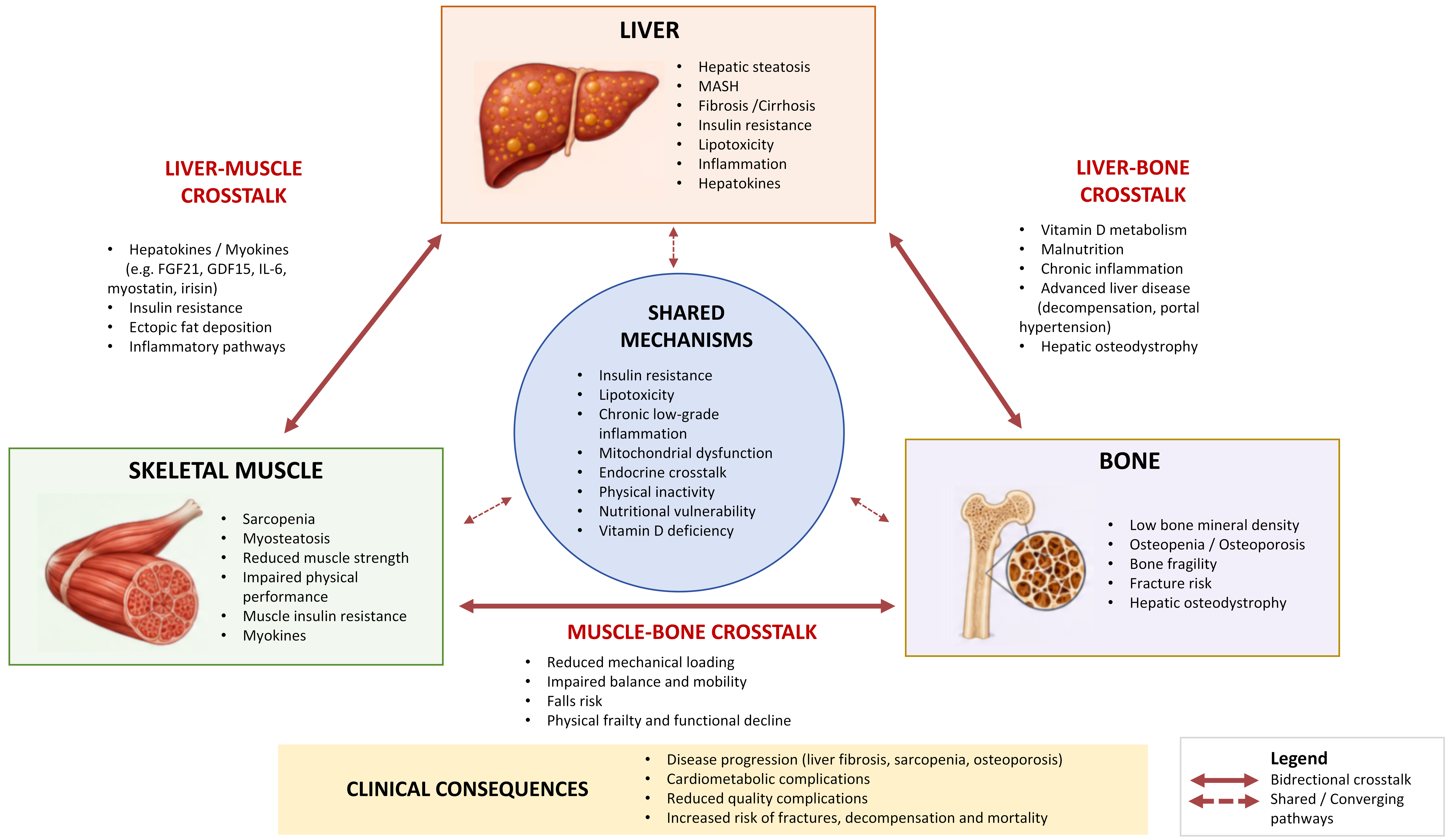
Figure 1. The liver-muscle-bone axis in MASLD: shared mechanisms and bidirectional crosstalk. This figure summarizes bidirectional crosstalk among the liver, skeletal muscle, and bone in MASLD. Hepatic steatosis, MASH, fibrosis or cirrhosis, insulin resistance, lipotoxicity, inflammation, and hepatokine dysregulation may interact with sarcopenia, myosteatosis, reduced muscle strength, impaired physical performance, and muscle insulin resistance. Bone-related abnormalities, including low bone mineral density, osteopenia or osteoporosis, bone fragility, fracture risk, and hepatic osteodystrophy, may further contribute to this multisystem phenotype. Shared mechanisms include insulin resistance, lipotoxicity, chronic low-grade inflammation, mitochondrial dysfunction, endocrine crosstalk, physical inactivity, nutritional vulnerability, and vitamin D deficiency. Liver-muscle, liver-bone, and muscle-bone interactions may contribute to liver fibrosis progression, musculoskeletal vulnerability, cardiometabolic complications, reduced quality of life, fractures, hepatic decompensation, and mortality. These pathways are biologically plausible and clinically relevant, but should not be interpreted as definitive causal relationships in humans. FGF21: Fibroblast growth factor 21; GDF15: growth differentiation factor 15; IL-6: interleukin-6; MASLD: metabolic dysfunction-associated steatotic liver disease; MASH: metabolic dysfunction-associated steatohepatitis.