




Thermally triggered shape-memory polyimide composite aerogels for strain-locked electromagnetic wave absorption
 0
0 Abstract
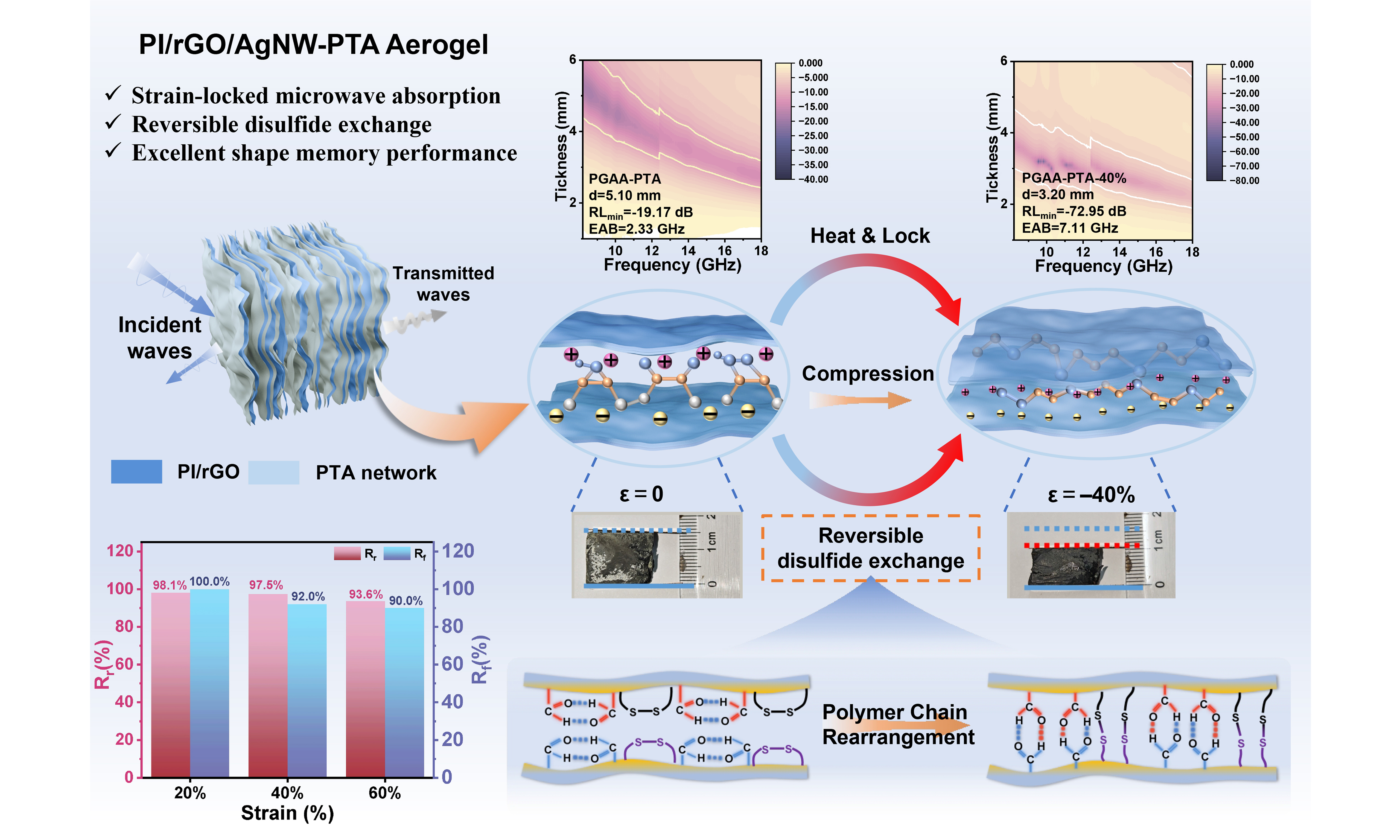
Adaptive shape-memory polymer aerogels are highly desirable for adapting to increasingly complex and dynamic electromagnetic environments. Herein, a thermally triggered shape-memory polymer aerogel composite [polyimide/reduced graphene oxide/AgNW-poly(thioctic acid) aerogel (PGAA-PTA)] is fabricated by bidirectional freeze-casting and in situ polymerization. In this architecture, polyimide and poly(thioctic acid) (PTA) serve as the polymer matrix, while reduced graphene oxide and silver nanowires construct an aligned conductive framework. The resulting aerogel integrates strain-responsive conductive pathways with thermally reversible network fixation, allowing the compressed architectures to be fixed after unloading and recovered by thermal activation. This shape-memory capability programs microwave absorption by locking predefined compressive strains without a sustained external force. Under sustained external compression, the strain-dependent absorption behavior confirms that deformation of the conductive framework effectively regulates the electromagnetic response. After introducing the PTA-crosslinked network, the programmed compressed architecture is fixed at predefined compressive strains without continuous external loading, thereby retaining the corresponding strain-defined absorption state. When locked at 40% compressive strain, PGAA-PTA exhibits a shape-fixity ratio of 92.0% and a shape-recovery ratio of 97.5%, achieving a minimum reflection loss of -72.95 dB and an effective absorption bandwidth of 7.11 GHz. Upon thermal activation at approximately 60 °C, the programmed structure recovers with a recovery ratio of 93.6% at 60% compressive strain. Moreover, the aligned PGAA framework endows the aerogel with excellent anisotropic thermal insulation performance (ΔT > 55 °C). This work provides a feasible strategy for designing lightweight, reconfigurable, and multifunctional microwave absorbers for complex application scenarios.
Keywords
INTRODUCTION
The rapid proliferation of 5G communication networks and electronic devices has intensified electromagnetic wave (EMW) pollution, raising urgent concerns about biological health and device reliability[1-5]. This challenge has accelerated the development of high-performance microwave absorption materials (MAMs) that efficiently attenuate incident EMWs and suppress electromagnetic interference[6]. Conventional MAMs, including ferrites, SiC and conductive polymers, are often limited by high density and narrow absorption bandwidth, which restrict their use in aerospace systems and flexible electronics[7-9]. Three-dimensional (3D) aerogels have emerged as attractive alternatives because their ultralow density and high porosity provide a lightweight framework for efficient EMW attenuation[10-12]. However, traditional aerogels based on carbon- and ceramic- based aerogels usually display static absorption behavior and suffer from intrinsic brittleness and structural instability, leading to irreversible changes in electromagnetic parameters after mechanical collapse[13-16]. Their poor mechanical resilience severely limits resistance to repeated compression or bending, resulting in structural degradation and compromised absorption performance, ultimately limiting their suitability for practical applications[17-21].
To address the limitations of inherent brittleness and poor structural stability in aerogels, extensive research has focused on reinforcing their frameworks through the incorporation of secondary phases, aiming to achieve a crucial balance between lightweight structure, mechanical robustness and EMW absorption properties[22-24]. Among various reinforcing candidates, silver nanowires (AgNWs) have gained prominence as multifunctional fillers, primarily due to their exceptional electrical conductivity, high aspect ratio, and inherent flexibility. For instance, Shu et al. constructed a 3D reduced graphene oxide (rGO)-based aerogel with AgNWs acting as the supporting structure, which revealed a reflection loss (RL) of -79.99 dB at
SMPAs offer large specific surface area, low density, high porosity and shape recovery capability[26,27]. Various polymers, including polyurethanes[28], polyimide (PI)[8], epoxy resins[29], cellulose[30] and polycaprolactone[31], have been widely explored for constructing SMPAs. The crosslinked polymer network reinforces the framework, fixes a deformed state without continuous external stress, and recovers the original shape under thermal stimulation[32], enabling repeatable compress-hold-release operation. Among these materials, PI aerogels are particularly attractive because of their high-temperature shape-memory activation, superior thermal stability, and excellent mechanical properties. In 2023, Guo et al. prepared thermally activated shape-memory PI aerogels[8]. The graphene oxide (GO) aerogel exhibited 76%-90% porosity, excellent shape fixation and recovery, and a high programming temperature of 280 °C, although its EMW absorption properties were not investigated. In our previous work[33], rGO and melamine sponge (MS) aerogels were reinforced with thermoplastic polyurethane to provide shape-memory recovery at 160 °C. The resulting materials exhibited good mechanical resilience, high flexibility and a high RL of -63.29 dB at a thickness of 7.18 mm; moreover, the RL became more negative from -15 to -39.2 dB as compressive strain increased from 0% to 40%. However, designing adaptable SMPAs presents challenges such as high energy consumption to achieve complete shape memory recovery at high temperatures.
Incorporating reversible bonds into polymer networks offers an effective strategy to reduce actuation barriers and impart dynamic responsiveness. Dynamic covalent bonds[34,35] and non-covalent bond interactions[36] can endow polymers with shape-memory, repair, and self-healing capabilities under relatively mild stimulation[36,37]. Since the introduction of dynamic ester bonds by Montarnal et al.[38], different dynamic covalent bonds have been utilized, including disulfides[39], acetals[40,41] and imine bonds[42]. Concurrently, non-covalent bonds interactions such as hydrogen bonds[43], ionic bonds[44] and metal-ligand interactions[43] have helped to prepare reversible polymer systems. Thioctic acid (TA) has garnered the interest of researchers due to its easy processing to prepare poly(thioctic acid) (PTA) coatings containing both dynamic disulfide and hydrogen bonds[45]. Recently, Wang et al. prepared PTA-coated GO that can undergo self-healing and shape memory processes at low temperatures[37]. However, there have been no reports on the design of adaptable, low-temperature SMPA materials based on reversible bonds possessing good mechanical and thermal stability for application in EMW absorption.
In this work, a polyimide/reduced graphene oxide/AgNW-poly(thioctic acid) aerogel (PGAA-PTA) is constructed by combining bidirectional freeze-casting with in situ polymerization. PGAA-PTA consists of rGO as the aerogel, supported by conductive AgNWs, reinforced by a shape memory PI network and coated with a low-temperature dynamic responsive PTA layer. The morphology, thermally triggered shape-memory behavior, microwave absorption performance, and thermal insulation capability of the aerogel are systematically investigated. The aligned lamellar framework and in situ-formed PTA network enable the compressed shape to be retained and the original shape to be recovered under mild thermal stimulation. This reversible configurational change alters conductive pathways and pore geometry, thereby regulating impedance matching and absorption behavior. Meanwhile, the anisotropic porous architecture also contributes to directional thermal insulation. This work therefore presents a viable strategy for developing lightweight MAMs with on-demand tunable absorption behavior and reversible structural reconfigurability.
EXPERIMENTAL
Materials
4,4′-Diaminodiphenyl ether (ODA, ≥ 98%) and pyromellitic dianhydride (PMDA, ≥ 99%) were purchased from Shanghai Aladdin Biochemical Technology Co., Ltd. Triethylamine (TEA, 99%), N,N-dimethylacetamide (DMAc, 99.8%) and TA (99%) were obtained from Shanghai Macklin Biochemical Technology Co., Ltd. Acetone (analytical reagent grade) and anhydrous ethanol (AR) were supplied by Hangzhou Gaojing Fine Chemical Co., Ltd. GO (≥ 99%) was purchased from Guangzhou Dazhan Nano Materials Co., Ltd. AgNW (10 mg/mL) suspension was purchased from Shanghai Ouyi Organic Optoelectronic Materials Co., Ltd.
Preparation of water-soluble PAS
A 15 wt% poly(amic acid) (PAA) solution was synthesized by dissolving ODA (7.4627 g) in DMAc (91 mL) under sonication, followed by the incremental addition of PMDA (7.5373 g) under continuous mechanical stirring (200 rpm) in an ice bath for 3 h. TEA (7.5373 g) was then added to yield the poly(amic acid) salt (PAS) solution. To remove residual solvents (acetone and DMAc), the product was repeatedly washed with ethanol and vacuum-dried at 40 °C for 24 h. Finally, the intermediate was mechanically fragmented into granules and subjected to a second vacuum-drying cycle at 40 °C for 24 h to ensure complete solvent removal and structural stabilization, yielding solvent-free solid PAS particles.
Preparation of PI/rGO/AgNW composite aerogels
The solid PAS particles (synthesized in Section “Preparation of water-soluble PAS”) were dispersed in deionized water via magnetic stirring at room temperature (approximately 25 °C) at 500 rpm for 12 h to form a uniform solution, followed by the addition of GO powder (0.21 g) and a predetermined volume of AgNW suspension. After 30 min of ultrasonication and continuous stirring at room temperature (approximately 25 °C) at 500 rpm for 24 h, the resulting homogeneous PAS/GO/AgNW dispersion was cast into a mold and bidirectionally frozen using liquid nitrogen.
The frozen monoliths were then lyophilized at -50 °C for 72 h to yield the aerogel precursors. Subsequently, thermal imidization was conducted in a tube furnace (CVD-6-12TFC) under a nitrogen atmosphere. A stepwise heating program was used, with dwells at 100, 200, and 300 °C for 1 h each, with a constant ramp rate of 2 °C/min. The final aerogels were designated PGAA-0, PGAA-1, PGAA-2, and PGAA-3, corresponding to solid-phase AgNW mass fractions of 0%, 0.5%, 1%, and 1.5%, respectively.
Preparation of PI/rGO/AgNW-PTA composite aerogels
TA (5 g) was dissolved in anhydrous ethanol (5 mL) and ultrasonicated for 30 min to initiate pre-polymerization. The as-prepared PGAA aerogel was subsequently immersed in this precursor solution and incubated at 40 °C for
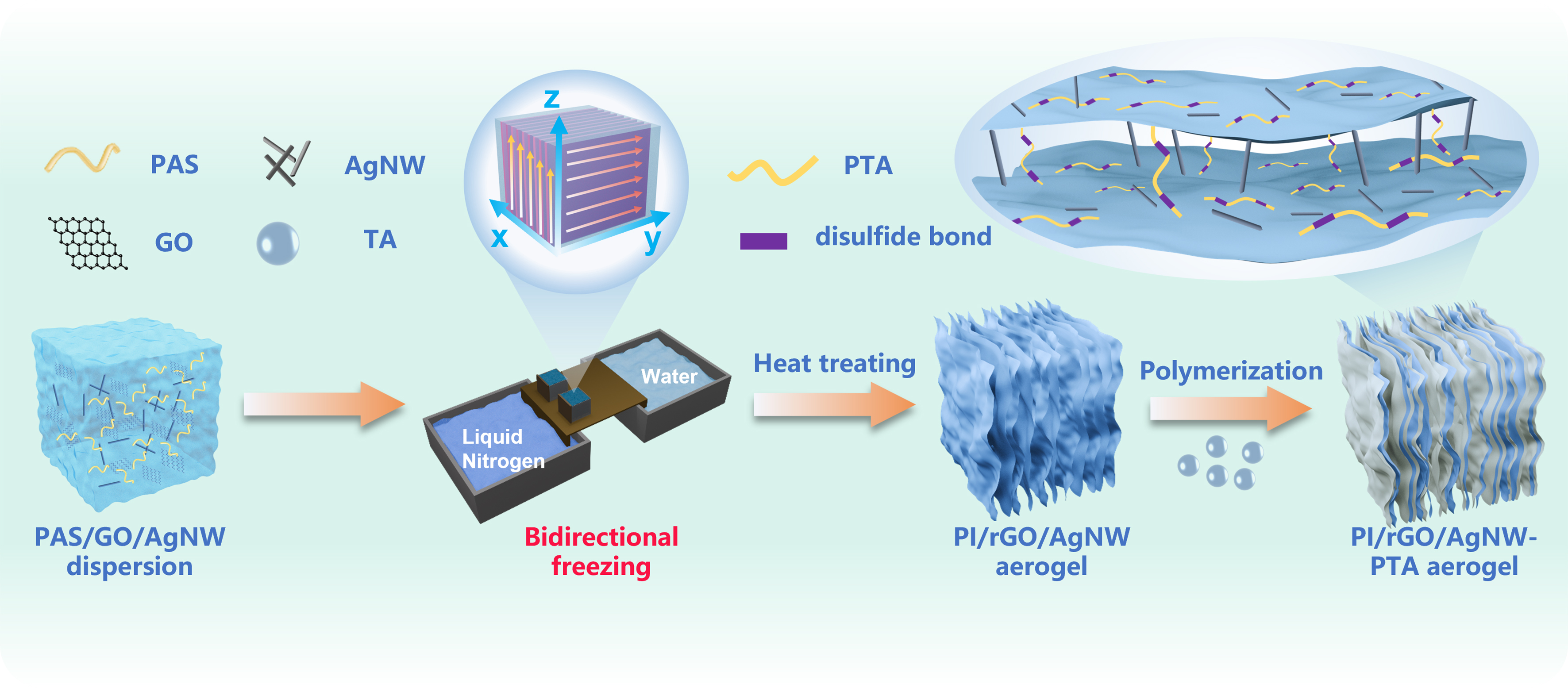
Figure 1. Schematic illustration of the fabrication process of PGAA-PTA. PGAA-PTA: polyimide/reduced graphene oxide/AgNW-poly(thioctic acid) aerogel; PAS: poly(amic acid) salt; AgNW: silver nanowire; GO: graphene oxide; TA: thioctic acid; rGO: reduced graphene oxide.
Characterization
Morphological and structural characterizations were performed using scanning electron microscopy (SEM, Hitachi S-4800, Japan) at an accelerating voltage of 5 kV. Surface chemical structures were elucidated via attenuated total reflectance Fourier transform infrared (ATR-FTIR) spectroscopy (Thermo Scientific Nicolet iS50, America) from 500 to 4,000 cm-1 over 64 scans at ambient temperature. Thermal stability was evaluated by thermogravimetric analysis (TGA, Netzsch TG 209 F1, Germany) in an air atmosphere from 25 to 800 °C at a heating rate of 10 °C min-1.
The compressive mechanical properties of the aerogels were measured using a universal testing machine (Instron 3367, America) equipped with a 500 N load cell, applying a constant strain rate of 5 mm/min. Infrared (IR) thermal imaging (InfraTec VarioCAM HD head 620, Germany) was employed to evaluate the thermal insulation performance of 10 mm thick samples at a working distance of 30 cm.
Complex electromagnetic parameters were acquired via the waveguide method using a vector network analyzer (VNA, Keysight N5222A, America) across the X-band (8.2-12.4 GHz) and Ku-band (12.4-18.0 GHz). Samples were precisely machined to match waveguide flange specifications (23 mm × 10 mm for the X-band and 6 mm × 8 mm for the Ku-band). For strain-dependent microwave absorption assessments, the aerogels were encapsulated in paraffin wax to physically lock the applied compressive strain. For structural analysis, the ice crystal growth direction is defined as the z-axis, with the perpendicular plane designated the x-y plane. Both compression and electromagnetic testing were conducted along the x-y plane, perpendicular to the z-axis.
Shape-memory behaviors were systematically quantified via dynamic mechanical analysis (DMA, TA Instruments Q850, America) using a compression clamp. In a standard one-way shape-memory cycle, the aerogel was isothermally heated to 200 °C and equilibrated for 10 min, compressed to a target maximum strain (εm) of 60%, and subsequently quenched to -50 °C under a constant applied stress to fix the temporary shape. After equilibration at -50 °C, the external load was removed and the strain retained in the unloaded state was recorded as the fixed strain (εf). The sample was subsequently reheated from -50 to 200 °C under zero load, while the strain was continuously monitored. The strain remaining after completion of the recovery process was recorded as the residual strain (εr).
The DMA measurement was conducted at a maximum compressive strain of 60%. Separate isothermal shape-memory tests were conducted at 60 °C using programmed maximum strains (εm) of 20%, 40%, and 60%. The samples were maintained at 60 °C for 10 min before being compressed to the prescribed strain and cooled to room temperature under the applied load. After unloading, the fixed strain (εf) was recorded. The samples were subsequently reheated to 60 °C for 10 min under zero load, and the residual strain (εr) after recovery was measured. The shape-fixity ratio (Rf) and shape-recovery ratio (Rr) were calculated as Rf = (εf/εm) × 100% and Rr = [(εm - εr)/εm] × 100%, where εm is the maximum programmed compressive strain, εf is the strain fixed after unloading, and εr is the residual strain after recovery.
For the THz measurements, terahertz (THz) imaging was performed at 0.34 THz using a THz focal plane array (THz-FPA) detector (Moruixin Terahertz Technology Co., Ltd., Suzhou, China).
RESULTS AND DISCUSSION
Structure and morphology of aerogels
The morphology and structural evolution of the PGAA and PGAA-PTA aerogels were examined to clarify the roles of bidirectional freezing and in situ polymerization. As shown in Figure 2A, PGAA-0 displays a highly aligned lamellar structure along the ice-growth direction, indicating that bidirectional freezing effectively creates an anisotropic porous framework. This lamellar architecture is preserved after the incorporation of AgNWs [Figure 2B]. After in situ polymerization, PGAA-PTA still retains the aligned lamellar scaffold and interlayer bridges, while the skeleton surface is uniformly covered by a conformal PTA layer [Figure 2C]. This coating keeps the pore channels open while introducing abundant nanoscale heterointerfaces, thereby increasing interfacial heterogeneity and favoring interfacial polarization and multiple scattering of EMWs. Meanwhile, bridge-like connections gradually develop between adjacent lamellae as the AgNW content increases [Figure 2D and Supplementary Figure 1]. These features likely arise from the alignment of AgNWs during directional freezing, which reinforces coupling between neighboring lamellae and helps build continuous conductive pathways throughout the framework. Elemental mapping [Figure 2E and F] further confirms that the AgNWs remain homogeneously distributed and that the conductive network is preserved after PTA deposition. Overall, PGAA-PTA retains the anisotropic conductive scaffold of PGAA while acquiring an interface-rich PTA coating.
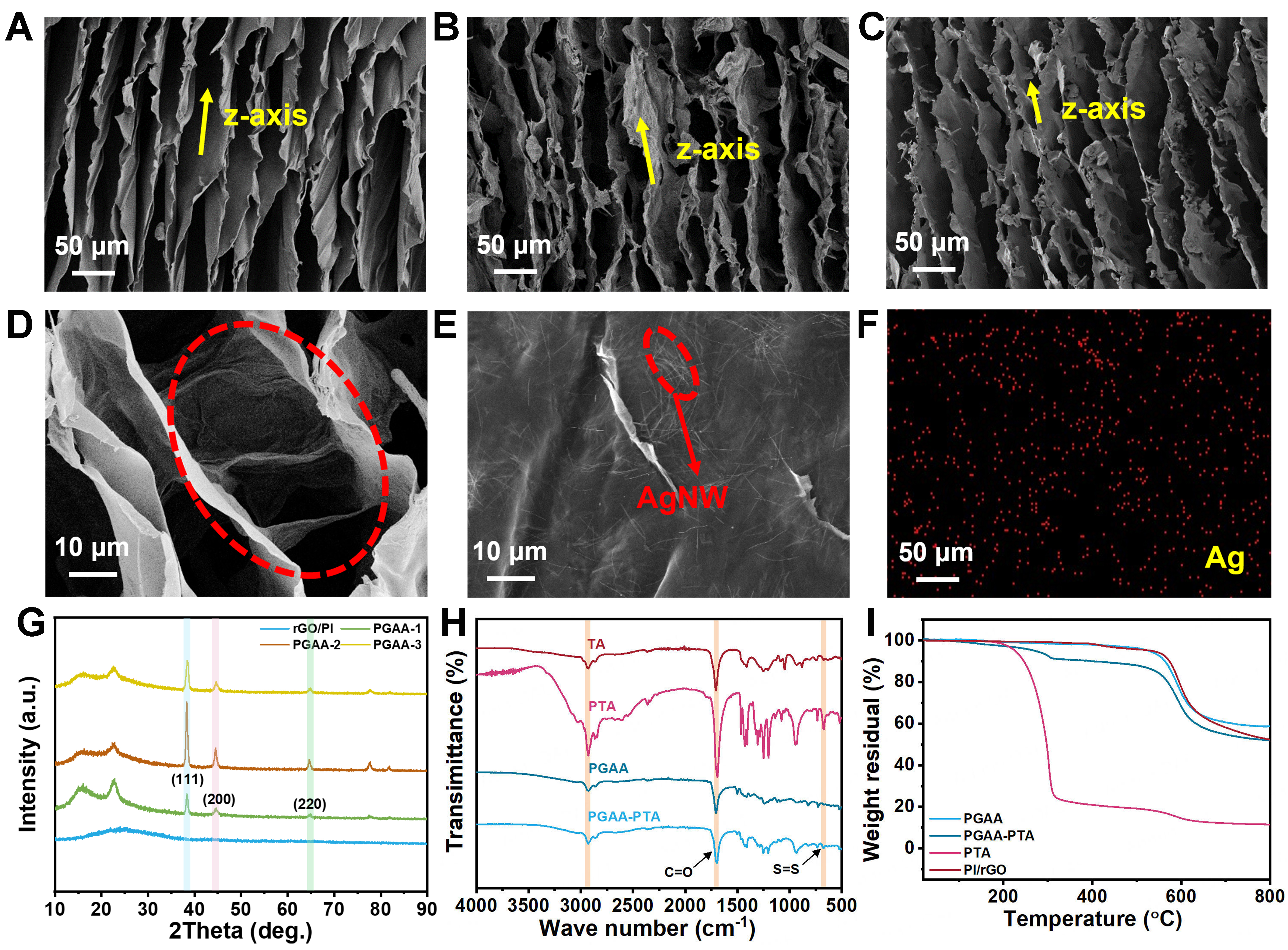
Figure 2. SEM images along the z-axis for (A) PGAA-0, (B) PGAA-2, and (C) PGAA-PTA; (D) Interlayer bridge structure of the PGAA-2 aerogel; (E) Surface morphology of the PGAA-2 lamella; (F) Distribution of Ag elements of PGAA-2; (G) XRD patterns of PGAA samples; (H) FTIR spectra and (I) TGA curves of PGAA and PGAA-PTA. SEM: Scanning electron microscopy; PGAA-PTA: polyimide/reduced graphene oxide/AgNW-poly(thioctic acid) aerogel; XRD: X-ray diffraction; FTIR: Fourier transform infrared spectroscopy; TGA: thermogravimetric analysis; rGO: reduced graphene oxide; PI: polyimide; TA: thioctic acid; AgNW: silver nanowire.
The structural composition and chemical evolution of the aerogels were further examined by XRD, FTIR and TGA. As shown in Figure 2G, the PI/rGO aerogel exhibits a broad diffraction feature, consistent with the predominantly amorphous nature of the PI-based framework. After incorporation of AgNWs, distinct reflections assigned to face-centered-cubic silver appear in PGAA, confirming the successful introduction of AgNWs while retaining the largely amorphous character of the framework. In the FTIR spectra [Figure 2H], PGAA-PTA exhibits distinct additional absorption bands in the 500-600 cm-1 region, which are assigned to stretching vibrations of disulfide (-S-S-) bonds formed during in situ polymerization. Meanwhile, the intensity of the carbonyl (C=O) stretching vibration near ~1,700 cm-1 is significantly enhanced compared with that of pristine PGAA, indicating an increased content of polar functional groups. These spectral changes provide direct evidence for the successful incorporation of PTA onto the aerogel skeleton. Moreover, the introduction of disulfide-containing polymer chains not only modifies the chemical composition of the framework but also enriches the interfacial heterogeneity and surface polarity, which are expected to facilitate interfacial polarization and thereby contribute to enhanced dielectric loss in subsequent EMW absorption performance.
The TGA curves further support this interpretation [Figure 2I]. Both PGAA and PGAA-PTA retain high thermal stability because of the PI framework, whereas PGAA-PTA exhibits an additional weight-loss stage near 300 °C, which is attributed to the cleavage of disulfide-containing moieties in PTA. These results confirm that PGAA-PTA retains an anisotropic PI/rGO/AgNW scaffold while introducing a PTA network into the aerogel framework.
Mechanical properties and strain-dependent EMW absorption
The anisotropic conductive framework of PGAA is closely related to its microwave absorption behavior. Among the PGAA aerogels, PGAA-2 showed excellent overall absorption performance [Supplementary Figure 2], with a minimum reflection loss (RLmin) of -49.77 dB at 9.88 GHz and an effective absorption bandwidth (EAB) of 4.95 GHz at a matching thickness of 3.20 mm. Therefore, PGAA-2 was selected for further investigations under compressive loading [Supplementary Figure 3]. The compression results [Figure 3A-C and Supplementary Figure 4] further show that PGAA-2 maintains structural integrity under repeated deformation, indicating that the aerogel can serve as a stable platform for strain-regulated microwave absorption.
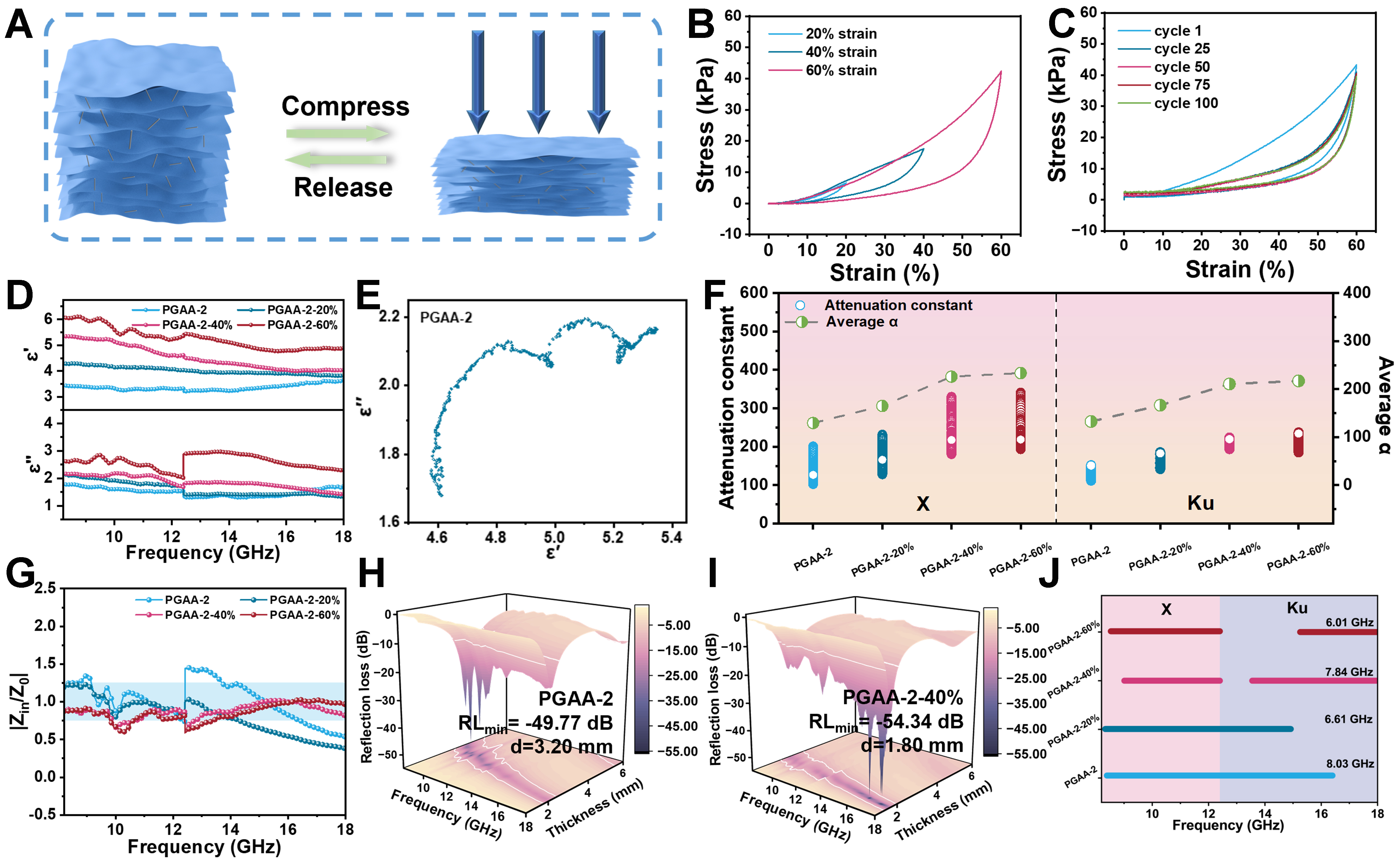
Figure 3. (A) Schematic diagram of mechanical compression of PGAA-2; (B) Stress‒strain curve of PGAA-2; (C) Compression cycle curve of PGAA-2; (D) ε′ and ε′′ of PGAA-2; (E) Cole-Cole curve of PGAA-2; (F) Attenuation constant (α); (G) |Zin/Z0|; (H and I) 3D RL curves of PGAA-2 and PGAA-2-40%; (J) EAB of PGAA-2 under different strains in the X-band and Ku-band. 3D: Three-dimensional; RL: reflection loss; EAB: effective absorption bandwidth.
As the compressive strain increased from 0% to 60%, the electromagnetic response of PGAA-2 changed accordingly. Both the real (ε′) and imaginary (ε′′) parts of the complex permittivity increased progressively [Figure 3D], indicating enhanced charge-storage capability and dielectric dissipation in the densified conductive framework. The Cole-Cole plots in Figure 3E also reveal the presence of multiple polarization relaxation processes within the heterogeneous framework. The attenuation constant (α) increased similarly [Figure 3F], indicating enhanced electromagnetic attenuation under compression. Notably, the increase from 40% to 60% was much smaller, suggesting a diminishing contribution from further densification at high strain. At the same time, the |Zin/Z0| values of PGAA-2 remained within 0.5-1.5 over a broad frequency range at compressive strains of 0%, 20%, 40% and 60% [Figure 3G], indicating favorable impedance matching under different deformation states. To quantitatively evaluate impedance matching, the proportion of frequency points with |Zin/Z0| in the optimal range (0.8-1.2) was calculated. PGAA-2-40% exhibited the highest proportion (90.33%), significantly exceeding those of PGAA-2-0 (49.19%), PGAA-2-20% (51.32%), and PGAA-2-60% (74.44%). This result confirms that moderate compression (40%) achieves the best impedance matching. Accordingly, PGAA-2-40% achieved an RLmin of -54.34 dB at a matching thickness of 1.80 mm and an EAB of 7.84 GHz, nearly covering the entire X and Ku bands [Figure 3H-J]. These results demonstrate that appropriate compressive deformation can effectively optimize the microwave absorption performance of PGAA-2. However, the deformation-defined absorption state still requires an applied external force and cannot be retained after unloading. This limitation can be addressed by introducing thermally triggered shape-memory behavior into the aerogel framework.
Thermally triggered shape-memory behavior and strain-locked EMW absorption
The introduction of a PTA network capable of reversible disulfide exchange endowed PGAA-PTA with thermally triggered shape-memory behavior, enabling fixation of the compressed configuration and recovery of the original architecture. Figure 4A and B shows photographs and SEM images of PGAA-PTA at different compressive strains of 20%, 40% and 60%. It can be observed that the increase in compressive strain causes a decrease in the height of the PGAA-PTA samples. The corresponding SEM images show that the initially separated PGAA-PTA lamellae progressively contract with increasing locked strain, leading to a denser lamellar arrangement at higher strain. These compressed microstructures remained stable after unloading and recovered their original aligned architecture after thermal activation. To further analyze the shape memory behavior of PGAA-PTA at different compressive strains, the thermomechanical shape memory cycles were investigated, as displayed in Figure 4C and D. At programmed strains of 20%, 40% and 60%, PGAA-PTA exhibited shape-fixity ratios (Rf) of 100%, 92% and 90%, together with recovery ratios (Rr) of 98.1%, 97.5% and 93.6%, respectively. As expected, the shape recovery ratios decreased with increasing strain percentage. This can be attributed to the lamination of adjacent PTA-coated sheets. Figure 4E illustrates the shape memory route based on the dynamic covalent bonds. The presence of reversible disulfide bonds and carboxylic hydrogen bonds on the PTA-coated PGAA surfaces allows structural rearrangement via thermal dynamic bond exchanges during thermomechanical programming, locking the deformed state during cooling and reactivating recovery upon heating. The shape memory of PGAA-PTA can be realized in the following sequence. Upon exerting compressive strain on the PGAA-PTA structure, the adjacent PTA-coated surface moves and aligns to promote contact between the surfaces. When heat is applied, dynamic bond exchange reactions take place between the surfaces, and cooling deactivates the dynamic reaction, thus forming new covalent bonds and fixing the new shape under compression force. This new shape can be held for an extended period of time. Finally, heating the unloaded sample causes the new covalent bonds to break and separate the adjacent sheets due to internal stresses, causing macroscopic shape recovery.
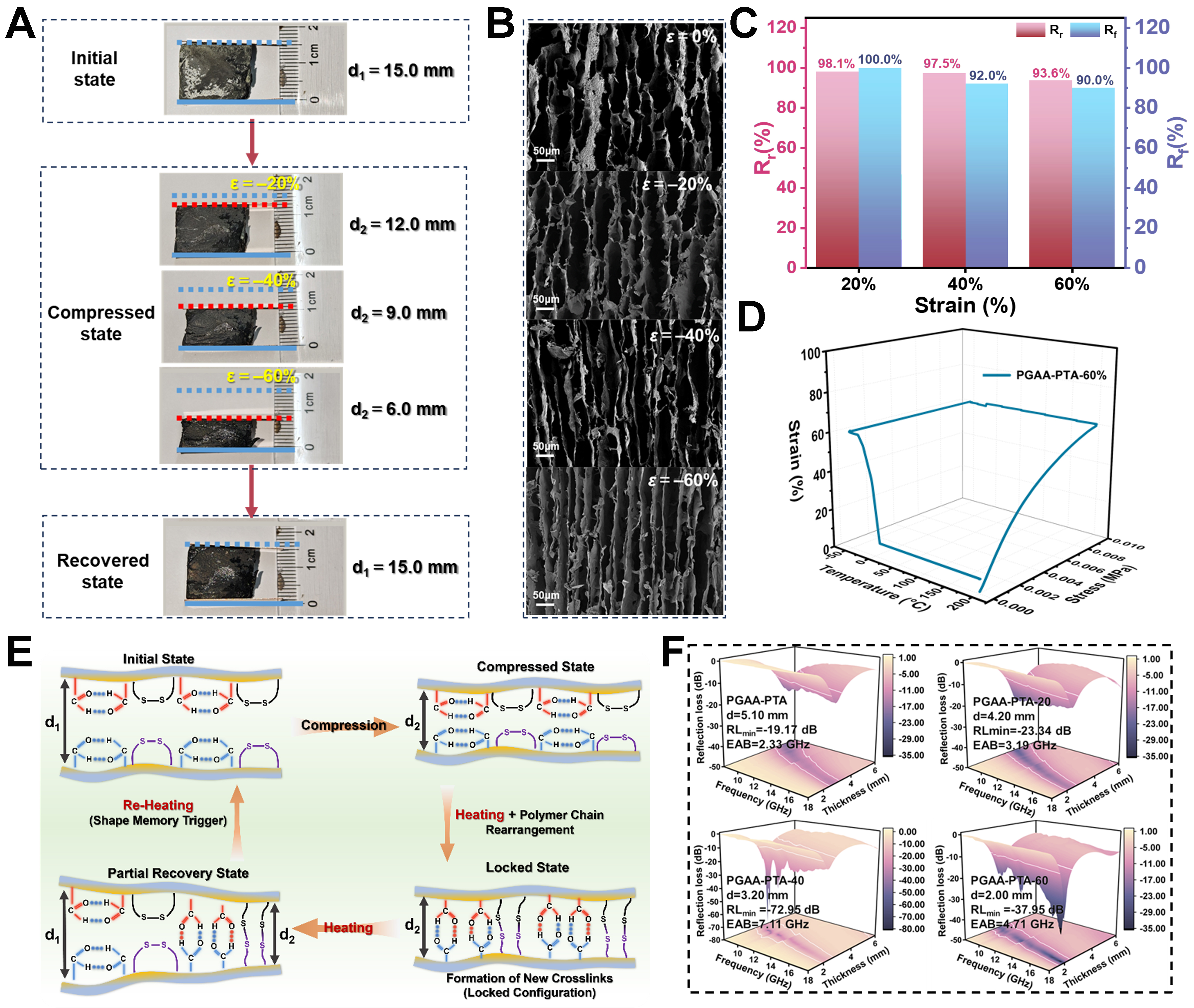
Figure 4. (A) Photographs and (B) SEM images of PGAA-PTA under different compressive strains; (C) Rf and Rr of PGAA-PTA; (D) Thermomechanical curves of PGAA-PTA-60% during the shape memory process; (E) Schematic illustration of the shape-memory mechanism of PGAA-PTA; (F) 3D RL curves under different compressive strains. SEM: Scanning electron microscopy; PGAA-PTA: polyimide/reduced graphene oxide/AgNW-poly(thioctic acid) aerogel; 3D: three-dimensional; RL: reflection loss; EAB: effective absorption bandwidth.
This ability to retain strain-defined microstructures after unloading at different strains is directly reflected in the microwave absorption behavior of PGAA-PTA as shown in Figure 4F, Supplementary Figures 5 and 6. In the uncompressed state, PGAA-PTA exhibited an RLmin of -19.17 dB at a matching thickness of 5.10 mm, with an EAB of 2.33 GHz. Fixing the compressed configuration progressively improved the absorption performance. At 20% locked strain, the RLmin and EAB of PGAA-PTA-20 improved to -23.34 dB and
This strain-dependent evolution in microwave absorption is governed by the balance between attenuation capability and impedance matching in the locked state. As illustrated in Figure 5, the aligned lamellar architecture, together with the AgNW bridges, prolongs the propagation path of incident EMWs by promoting multiple internal reflections and scattering within the framework. Locking the compressed configuration further densifies the interconnected PGAA-PTA network, thereby strengthening conduction loss through more efficient charge transport. Meanwhile, the abundant heterogeneous interfaces among PTA, rGO, AgNWs and PI promote interfacial polarization, while residual polar groups and structural defects contribute additional dipolar relaxation. These processes together enhance dielectric dissipation in the locked state [Supplementary Figure 7]. With further densification, attenuation is strengthened, but once the conductive framework becomes overly compact, the resulting impedance mismatch begins to offset this gain. Consequently, the best overall absorption performance is obtained in the compressed configuration locked at 40% strain, where attenuation is sufficiently enhanced without causing severe mismatch. These results demonstrate that the PTA network stabilizes the compression-defined state and enables its reversible microwave absorption response when exposed to heat.
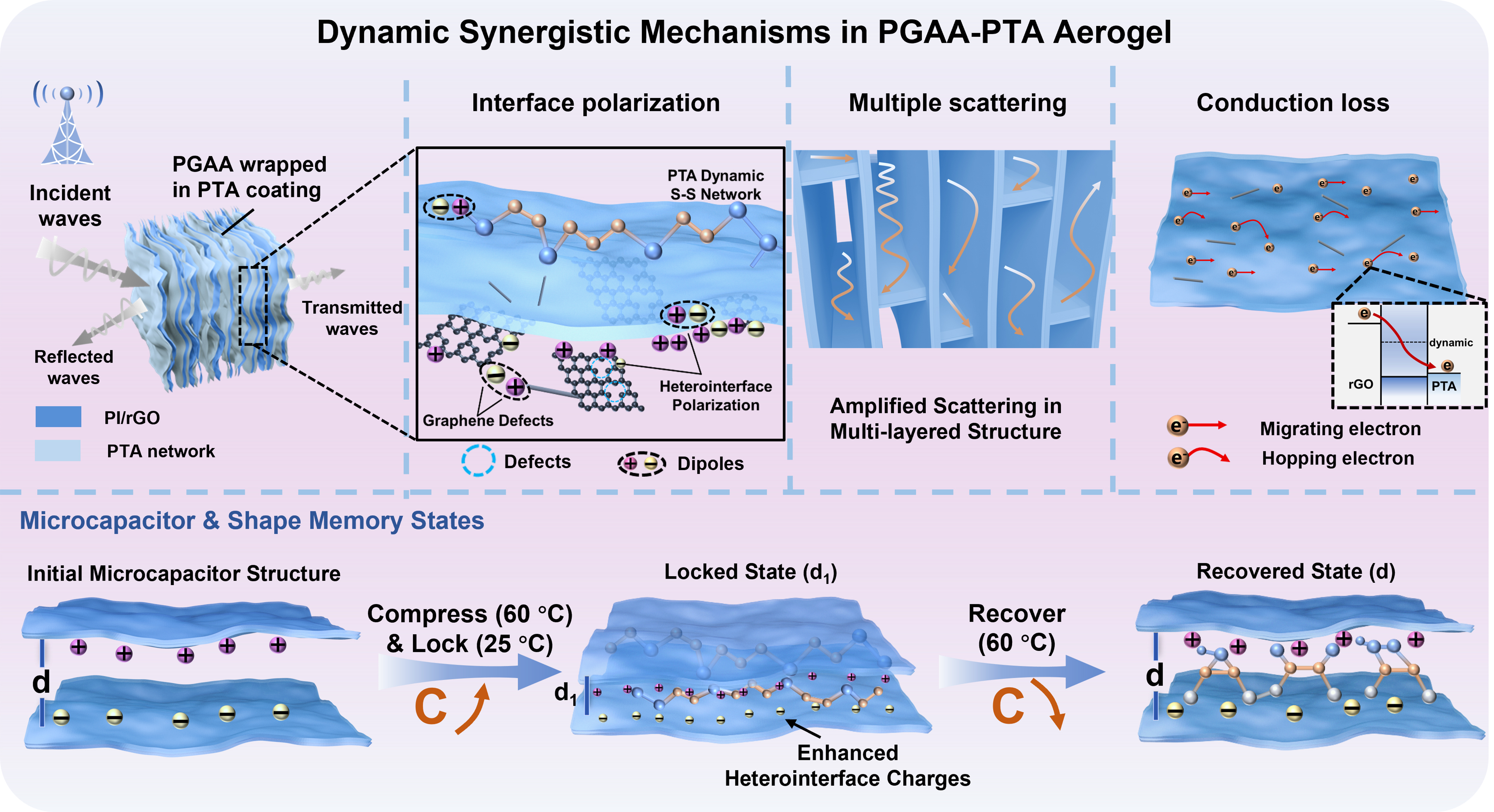
Figure 5. Schematic diagram of the tunable microwave absorption mechanism of the PGAA-PTA aerogel. PGAA-PTA: Polyimide/reduced graphene oxide/AgNW-poly(thioctic acid) aerogel; PI: polyimide; rGO: reduced graphene oxide.
THz response behavior and RCS simulation
The electromagnetic response of PGAA-PTA was further examined in the THz regime to evaluate its potential for high-frequency electromagnetic protection. As shown in Figure 6A, PGAA-PTA effectively suppresses the transmitted THz signal, whereas the uncoated substrate shows a distinct propagation pattern. This contrast indicates that PGAA-PTA can effectively attenuate incident EMWs even at higher frequencies. Such high-frequency attenuation capability also implies the potential for regulating electromagnetic scattering.
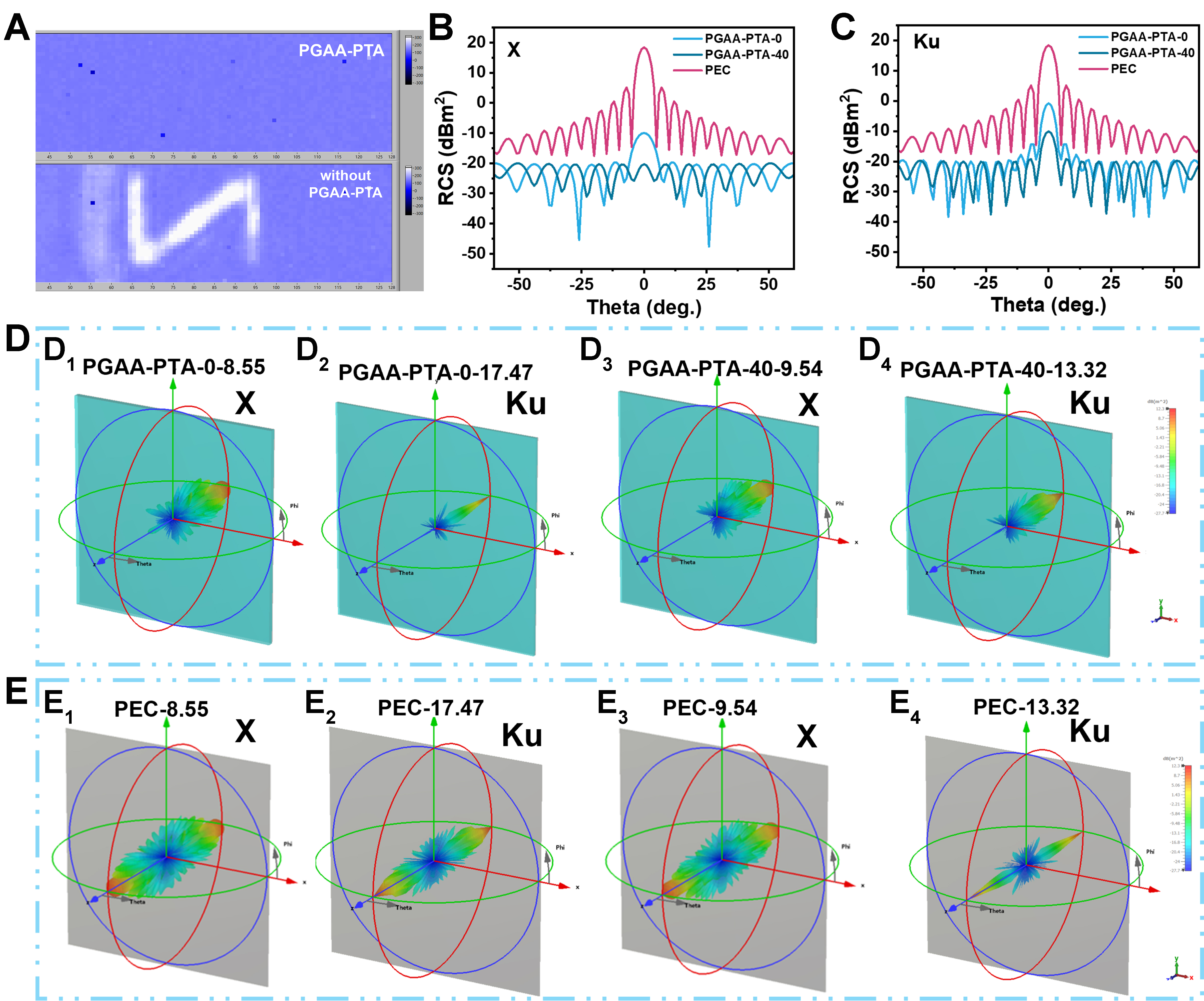
Figure 6. (A) Validation of the electromagnetic attenuation performance with and without PGAA-PTA in the THz region; RCS of PGAA-PTA-0, PGAA-PTA-40 and PEC in (B) X-band and (C) Ku-band; (D) 3D radar-wave scattering patterns of (D1-D4) RCS images of PGAA-PTA-0 in X-band, PGAA-PTA-0 in Ku-band, PGAA-PTA-40 in X-band, and PGAA-PTA-40 in Ku-band, respectively; (E) PEC results corresponding to (E1-E4) X-band, Ku-band, X-band, and Ku-band, respectively. PGAA-PTA: Polyimide/reduced graphene oxide/AgNW-poly(thioctic acid) aerogel; THz: terahertz; RCS: radar cross-section; PEC: perfect electric conductor; 3D: three-dimensional.
To assess this possibility, radar cross-section (RCS) simulations were carried out at the optimal absorption frequencies corresponding to the 0% and 40% strain states, representing the X-band and Ku-band conditions, respectively. As shown in Figure 6B and C, both PGAA-PTA-0 and PGAA-PTA-40 exhibit lower RCS values than perfect electric conductor (PEC) across most observation angles in the X-band and Ku-band ranges, confirming their ability to suppress electromagnetic scattering. Compared with PGAA-PTA-0, PGAA-PTA-40 shows a further reduction in scattering intensity, indicating that the locked compressed state is more effective in lowering radar signatures. The 3D scattering patterns in Figure 6D1-D4 further support this result. In contrast to the relatively broad and intense lobes observed for PEC in Figure 6E1-E4, PGAA-PTA shows more compact scattering patterns with reduced peak intensity. This difference becomes more pronounced in the locked state, consistent with its stronger electromagnetic attenuation and improved scattering suppression.
The oblique-incidence response of the PGAA-PTA aerogels was further evaluated using CST simulations at incidence angles of 15° and 45° in the X and Ku bands [Supplementary Figures 8 and 9]. The PGAA-PTA aerogels under compression strains of 0%, 20%, 40%, and 60% were individually benchmarked against a PEC plate with identical dimensions. At both investigated incidence angles, PEC produced a pronounced specular-scattering lobe and a high RCS near the dominant scattering direction. In contrast, each PGAA-PTA sample exhibited a weaker principal scattering lobe and a lower RCS than PEC. This reduction is associated with electromagnetic dissipation within the conductive and polarizable networks, as well as repeated reflection and scattering within the porous structure, which decrease the energy returned to the far field. These results demonstrate that PGAA-PTA maintains effective scattering suppression relative to PEC under the investigated compression states and at the selected incidence angles of 15° and 45°.
Thermal insulation performance
Beyond electromagnetic attenuation, the anisotropic porous architecture of the aerogel also contributes to thermal insulation. As shown in Figure 7A, the surface temperatures of both PGAA-x and PGAA-z increased with heating time and gradually stabilized, while PGAA-z consistently exhibited a higher surface temperature than PGAA-x. Correspondingly, Figure 7B shows that PGAA-x maintained a larger ΔT over the entire test period, indicating a stronger thermal-barrier effect. The IR thermal images and temperature profiles in Figure 7C further support this result. This anisotropic thermal-insulation behavior arises from the orientation of the aligned porous framework [Figure 7D]. In the PGAA-x mode, the layered solid/gas structure impedes heat transport across the thickness, whereas in the PGAA-z mode, the aligned channels facilitate heat propagation along the heating direction. These results show that the aerogel combines directional thermal insulation with tunable electromagnetic functionality, which is beneficial for multifunctional protection applications.
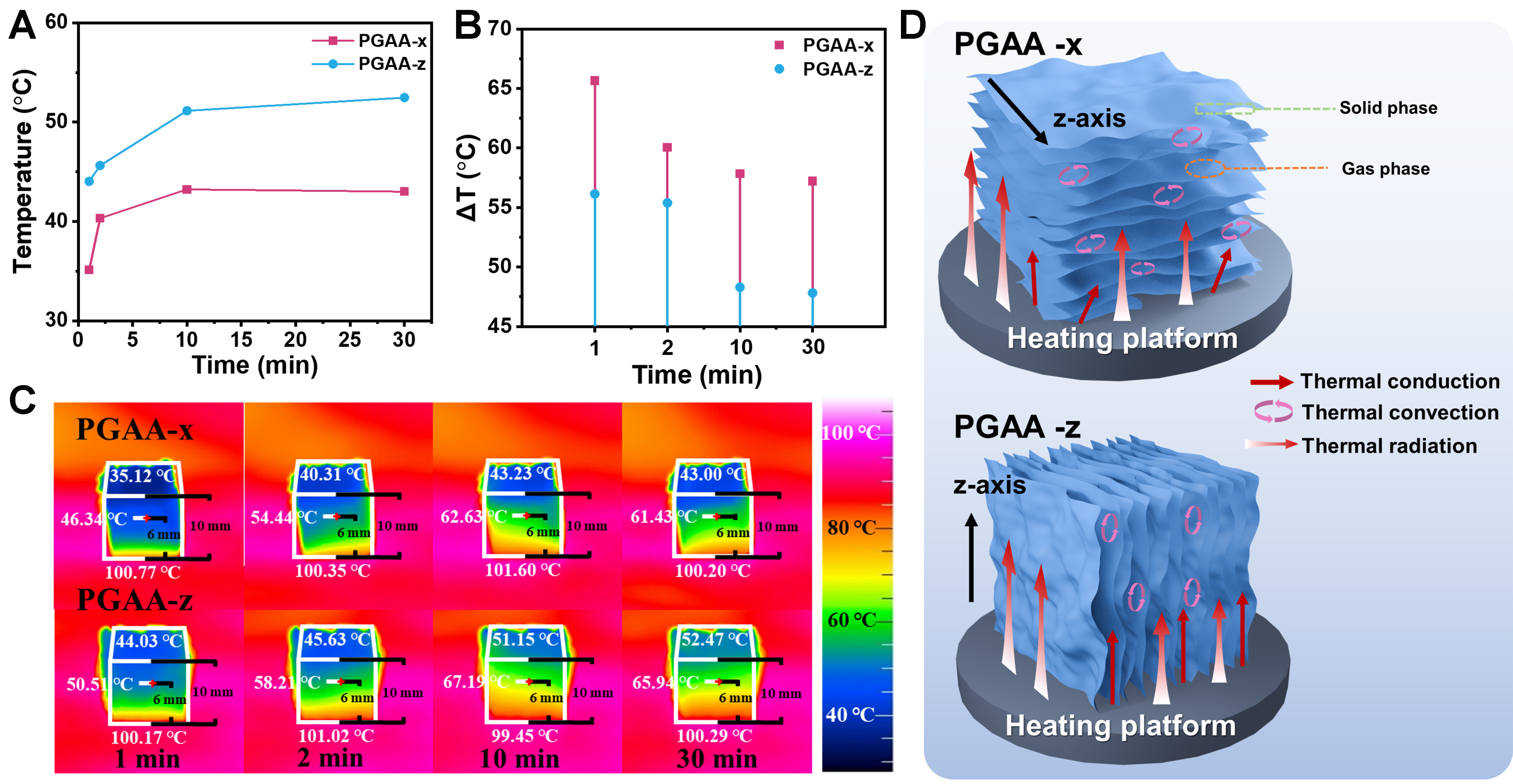
Figure 7. (A and B) Temperature-rise curves and corresponding ΔT values of PGAA during heating from 1 to 30 min; (C) IR thermal images and corresponding temperature profiles of PGAA composite aerogels recorded at different heating times; (D) Schematic illustration of the placement configurations of the PGAA composite aerogel. IR: Infrared.
CONCLUSION
In this study, the PGAA-PTA aerogel was developed by integrating freeze-casting with in situ polymerization to couple an aligned rGO/AgNW conductive aerogel framework with a PI/PTA crosslinked polymer network. The aligned conductive framework provides a compression-responsive electromagnetic structure, while the reversible PTA network fixes the programmed structure after unloading and enables recovery upon thermal activation. This coupling converts mechanical deformation into a lockable and reversible electromagnetic state, allowing microwave absorption to be modulated through strain-defined structural programming. Beyond electromagnetic attenuation, the anisotropic porous architecture also affords directional thermal insulation, demonstrating the potential of hierarchical aerogel design for multifunctional integration. This work establishes a structure-programming strategy for lightweight adaptive microwave absorbers and offers a pathway toward reconfigurable electromagnetic protection, deployable stealth systems, and intelligent multifunctional aerogels.
DECLARATIONS
Authors’ contributions
Methodology, investigation, data curation, formal analysis, writing - original draft preparation, review and editing: Yang, L.
Writing - review and editing, investigation, formal analysis: Wang, H.
Formal analysis, data curation: Yang, Z.; Qian, C.
Visualization, methodology, data curation: Toendepi, I.
Data curation: Mai, T.
Writing - review and editing, supervision: Yang, Q.
Review and editing, supervision, resources, project administration: Zhu, Y.
Availability of data and materials
The original contributions presented in this study are included in the article/Supplementary Materials. Further inquiries can be directed to the corresponding author(s).
AI and AI-assisted tools statement
Not applicable.
Financial support and sponsorship
This work was supported by the National Natural Science Foundation of China (Nos. 52373272 and 22505226) and the Zhejiang Provincial Natural Science Foundation of China (No. LQN25E020005).
Conflicts of interest
All authors declared that there are no conflicts of interest.
Ethical approval and consent to participate
Not applicable.
Consent for publication
Not applicable.
Copyright
© The Author(s) 2026.
Supplementary Materials
REFERENCES
1. Feng, Z.; Liu, C.; Li, X.; et al. Designing electronic structures of multiscale helical converters for tailored ultrabroad electromagnetic absorption. Nanomicro. Lett. 2024, 17, 20.
2. Chen, L.; Chen, H.; Ji, C.; Wang, Y.; Yang, L. Bacterial cellulose nanofibers-assisted construction of core-shell structured polyaniline aerogel for superior electromagnetic wave absorption. Carbohydr. Polym. 2025, 352, 123239.
3. Liu, Y.; Zheng, S.; Yang, Y.; Han, M.; Zeng, Z.; Wu, N. Advanced aerogels for high‐efficiency electromagnetic wave shielding and absorption. Adv. Funct. Mater. 2026, 36, e28226.
4. Zeng, X.; Nie, T.; Zhao, C.; Gao, Y.; Liu, X. In situ exsolution-prepared solid-solution-type sulfides with intracrystal polarization for efficient and selective absorption of low-frequency electromagnetic wave. Adv. Sci. 2024, 11, e2403723.
5. Xu, F.; Yang, Y.; Kong, Y.; Shen, X.; Shao, G. Fe3Si-encapsulated SiC aerogels enable low-frequency electromagnetic wave absorption with extreme-temperature resistance and thermal insulation. Compos. Part. B. Eng. 2026, 311, 113204.
6. Tang, X.; Wang, K.; Xu, M.; et al. Temperature‐induced impedance gradient polyimide nonwoven fabric for intelligently adjustable broadband microwave absorption. Adv. Funct. Mater. 2026, 36, e74633.
7. Wu, T.; Ren, F.; Guo, Z.; et al. Hierarchical assembly of ternary MOF-derived sandwich composites for high-efficiency tunable electromagnetic wave absorption. Small 2024, 20, e2407599.
8. Guo, M.; Zhang, Y.; Huang, C.; et al. Shape memory polyimide aerogel composites with high programming temperatures and exceptional shape recovery capability. Compos. Part. A. Appl. Sci. Manuf. 2023, 174, 107717.
9. Xu, C.; Ding, J.; Luo, K.; et al. Dielectric–magnetic synergized pores modulation engineering in polymer aerogels for integrated electromagnetic wave absorption and infrared stealth. Compos. Sci. Technol. 2026, 277, 111552.
10. Su, X.; Gao, X.; Wang, J.; Zhang, Y.; Liu, Y.; Liu, Y. Multifunctional broadband electromagnetic wave absorption through structural engineering of hierarchical aerogel-honeycomb metacomposites. Carbon 2025, 243, 120517.
11. Shi, T.; Gao, X.; Liu, H.; Wang, X. Multi-energy conversion and electromagnetic shielding enabled by carbonized polyimide/kevlar/graphene oxide@ZIF-67 bidirectional complex aerogel-encapsulated phase-change materials. Nanomicro. Lett. 2025, 17, 236.
12. Zhu, L.; Duan, X.; Wei, Z.; et al. Lightweight high-entropy alloy/N-doped carbon aerogel composites for high-efficiency electromagnetic wave absorption. Compos. Part. B. Eng. 2026, 311, 113199.
13. Xu, Y.; Tan, R.; Jiang, X.; et al. Hierarchical composite polyimide aerogels with hyperbranched siloxane for high electromagnetic wave absorption. Adv. Funct. Mater. 2025, 35, 2421389.
14. He, M.; Gu, J. Tunable low-frequency microwave absorption and thermal management through in-situ confined growth of alloys within aramid nanofibers. Eng. Transform. Mater. 2026.
15. Du, L.; Li, Y.; Zhou, Q.; et al. A flexible metamaterial based on CNTs/Cellulose aerogels for broadband and ultra-lightweight microwave absorbers. Compos. Sci. Technol. 2025, 261, 111024.
16. Ren, Q.; Zhang, X.; Wu, Y.; Sun, D.; Zhang, X. Electromagnetic wave absorption and enhanced mechanical properties of magnetic self-healing metal shell microcapsules filled polymer. Compos. Sci. Technol. 2025, 259, 110944.
17. Yang, J.; Wang, T.; Guo, R.; et al. Self-healing material with reversible luminescence switch behavior. ACS. Appl. Mater. Interfaces. 2020, 12, 54026-34.
18. Yang, Y.; Li, J.; Huang, S.; et al. Ultralight SiCTi/MXene composite aerogel with spider web structure for electromagnetic wave absorption. Chem. Eng. J. 2025, 522, 166867.
19. Zhang, Y.; Pan, L.; Cao, X.; Zhang, P.; Sun, Z. Boosting impedance matching by depositing gradiently conductive atomic layers on porous polyimide for lightweight, flexible, broadband, and strong microwave absorption. ACS. Appl. Mater. Interfaces. 2025, 17, 3796-805.
20. Li, H.; Ding, Z.; Zhou, Q.; et al. Harness high-temperature thermal energy via elastic thermoelectric aerogels. Nanomicro. Lett. 2024, 16, 151.
21. Tiwari, S. K.; Devadiga, M. M.; Sood, A.; Sahoo, S.; Hussain, I. Advances in MXene-polymer composites for cutting-edge supercapacitor and EMI shielding applications. Appl. Energy. 2026, 412, 127659.
22. Yu, G.; Shao, G.; Chen, Y.; Huang, X. Nanolayered ceramic-confined graphene aerogel with conformal heterointerfaces for low-frequency microwave absorption. ACS. Appl. Mater. Interfaces. 2023, 15, 39559-69.
23. Sharma, R.; Uyttersprot, S.; Baron, G. V.; Denayer, J. F. M. In situ ZIF-8-coated copper laminate system for fluid-phase adsorptive separation. ACS. Appl. Mater. Interfaces. 2025, 17, 30943-53.
24. Liu, Z.; Luo, Z.; Zhang, W.; et al. Construction of biomimetic sea urchin-like (BNf/BNNS)@C hierarchical porous aerogels for synergistic enhancement of electromagnetic wave absorption performance. Surf. Interfaces. 2025, 73, 107613.
25. Shu, X.; Yan, S.; Fang, B.; Song, Y.; Zhao, Z. A 3D multifunctional nitrogen-doped RGO-based aerogel with silver nanowires assisted self-supporting networks for enhanced electromagnetic wave absorption. Chem. Eng. J. 2023, 451, 138825.
26. Wang, S.; Zhou, D.; Tang, Z.; et al. Highly loaded actuation achieved by shape memory block copolyimide aerogels with tunable distribution of stationary and reversible phases. Macromolecules 2025, 58, 5852-61.
27. He, M.; Hu, J.; Yan, H.; et al. Shape anisotropic chain‐like CoNi/polydimethylsiloxane composite films with excellent low‐frequency microwave absorption and high thermal conductivity. Adv. Funct. Mater. 2025, 35, 2316691.
28. Malakooti, S.; ud Doulah, A. B. M. S.; Ren, Y.; et al. Meta-aerogels: auxetic shape-memory polyurethane aerogels. ACS. Appl. Polym. Mater. 2021, 3, 5727-38.
29. Zhao, X.; Bai, Y.; Lu, T.; Lu, Y. 3D-printed shape memory absorber based on CE/CNTs/CIP ternary composites for tunable and wideband electromagnetic wave absorption. Appl. Mater. Today. 2024, 41, 102504.
30. Xiao, X.; Huang, X.; Wang, A.; Cao, S.; Noroozi, M.; Panahi-Sarmad, M. Subtle devising of electro-induced shape memory behavior for cellulose/graphene aerogel nanocomposite. Carbohydr. Polym. 2022, 281, 119042.
31. Guo, F.; Zheng, X.; Liang, C.; et al. Millisecond response of shape memory polymer nanocomposite aerogel powered by stretchable graphene framework. ACS. Nano. 2019, 13, 5549-58.
32. Kong, L.; Mao, J.; Cui, H.; et al. Carbon nanotube composite foams with adaptive electromagnetic wave absorption via shape-memory-driven conductive network reconstruction. Carbon 2026, 253, 121434.
33. Qian, C.; Wang, D.; Zhao, W.; et al. Smart shape memory composite foam enabled rapid and conformal manipulation of electromagnetic wave absorption performance. Mater. Today. Nano. 2023, 23, 100354.
34. Zhang, H.; Fan, W.; Chen, K.; et al. Sulfur-based dynamic covalent polymers: from reversible bonds to smart materials. Precis. Chem. 2026.
35. Zhou, J.; Yue, H.; Huang, M.; et al. Arbitrarily reconfigurable and thermadapt reversible two-way shape memory poly(thiourethane) accomplished by multiple dynamic covalent bonds. ACS. Appl. Mater. Interfaces. 2021, 13, 43426-37.
36. Jia, Y.; Zhang, L.; Qin, M.; et al. Highly efficient self-healable and robust fluorinated polyurethane elastomer for wearable electronics. Chem. Eng. J. 2022, 430, 133081.
37. Wang, J.; Zheng, Y.; Qiu, S.; Song, L. Ethanol inducing self-assembly of poly-(thioctic acid)/graphene supramolecular ionomers for healable, flame-retardant, shape-memory electronic devices. J. Colloid. Interface. Sci. 2023, 629, 908-15.
38. Montarnal, D.; Capelot, M.; Tournilhac, F.; Leibler, L. Silica-like malleable materials from permanent organic networks. Science 2011, 334, 965-8.
39. Jiang, Y.; Ng, E. L. L.; Han, D. X.; et al. 4D printing of thermally activated self-healing shape memory polyurethanes. ACS. Appl. Polym. Mater. 2024, 6, 12394-404.
40. Li, P.; Ma, S.; Wang, B.; et al. Degradable benzyl cyclic acetal epoxy monomers with low viscosity: synthesis, structure-property relationships, application in recyclable carbon fiber composite. Compos. Sci. Technol. 2022, 219, 109243.
41. Zhou, Y.; Zhao, Z.; Fu, J. Reversible cross-linked epoxy adhesives based on dynamic covalent bonds. Chem. Eng. J. 2026, 533, 174666.
42. Zhao, H.; Feng, Y.; Zhao, J. Recyclable, biobased, and high-performance poly(amide-imine) vitrimers and the complexes with Co2+ ions. Mater. Today. Commun. 2025, 44, 112191.
43. Buaksuntear, K.; Panmanee, K.; Wongphul, K.; et al. Enhancing mechanical properties and stabilising the structure of epoxide natural rubber using non-covalent interactions: metal–ligand coordination and hydrogen bonding. Polymer 2024, 291, 126626.
44. Sun, Y.; Ren, Y.; Li, Q.; et al. Conductive, stretchable, and self-healing ionic gel based on dynamic covalent bonds and electrostatic interaction. Chin. J. Polym. Sci. 2019, 37, 1053-9.
Cite This Article
 Open Access
How to Cite
Download Citation
Export Citation File:
Type of Import
Tips on Downloading Citation
Citation Manager File Format
Type of Import
Direct Import: When the Direct Import option is selected (the default state), a dialogue box will give you the option to Save or Open the downloaded citation data. Choosing Open will either launch your citation manager or give you a choice of applications with which to use the metadata. The Save option saves the file locally for later use.
Indirect Import: When the Indirect Import option is selected, the metadata is displayed and may be copied and pasted as needed.
About This Article
Special Topic
Copyright

Data & Comments
Data
0








Comments
Comments must be written in English. Spam, offensive content, impersonation, and private information will not be permitted. If any comment is reported and identified as inappropriate content by OAE staff, the comment will be removed without notice. If you have any queries or need any help, please contact us at support@oaepublish.com.