



fig4
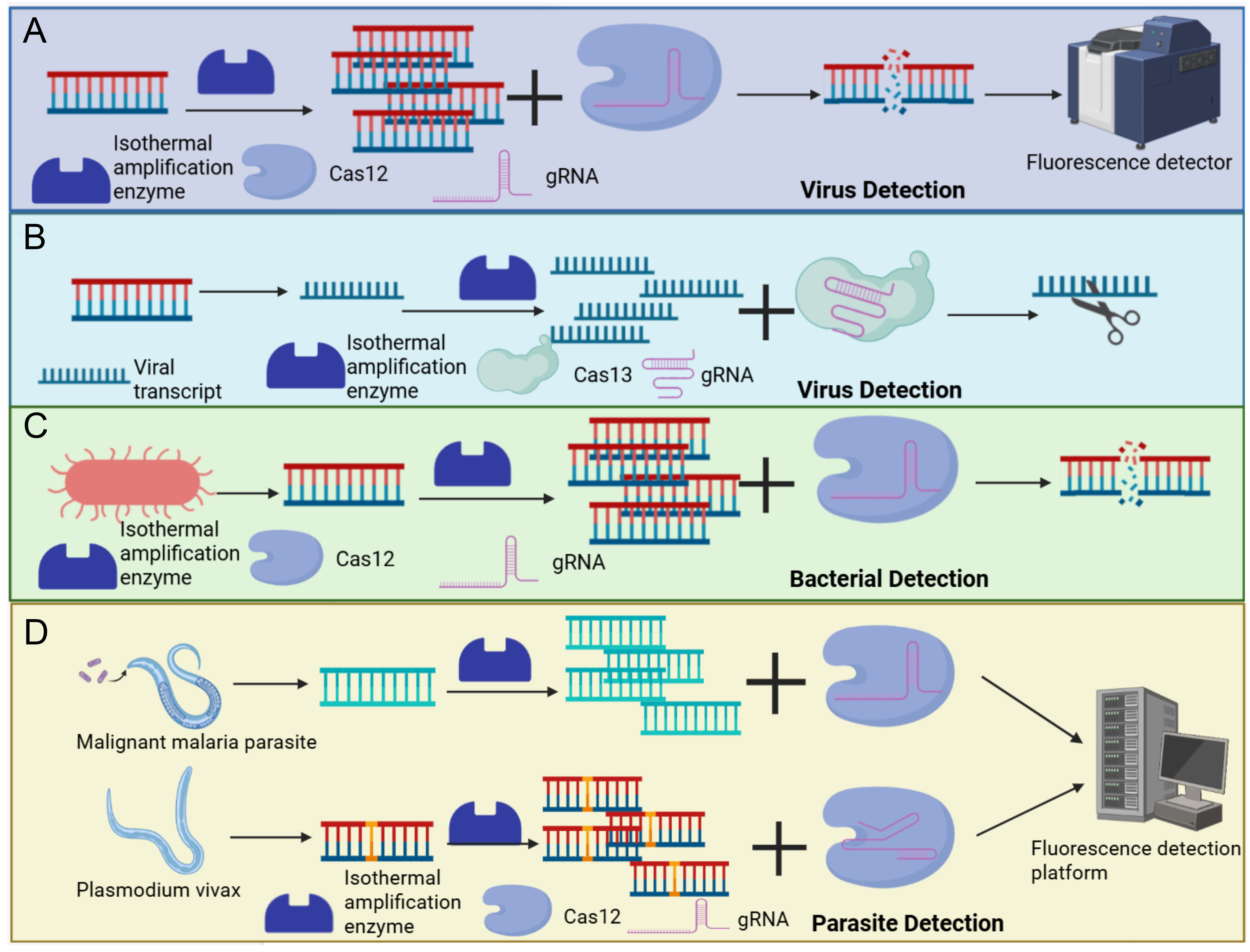
Figure 4. Mechanism of CRISPR-based pathogen detection. (A) illustrates the mechanism of the SHERLOCK detection platform based on Cas12a for specific detection of SARS-CoV-2. (B) depicts the CRISPR/Cas13 system combined with T7 RNA polymerase signal amplification technology for specific detection of HIV virus. (C) demonstrates the CRISPR/Cas12a detection system designed with specific gRNAs targeting beta-lactamase resistance genes (blaTEM and blaCTX-M) for rapid screening of antibiotic resistance in Enterobacteriaceae. (D) shows the mechanism by which the CRISPR/Cas12a detection platform distinguishes two Plasmodium species with high specificity, utilizing RPA isothermal amplification, CRISPR signal amplification, and specific gRNAs.(Created in BioRender. Gao, W. (2026) https://BioRender.com/mfu8j2d).