



fig5
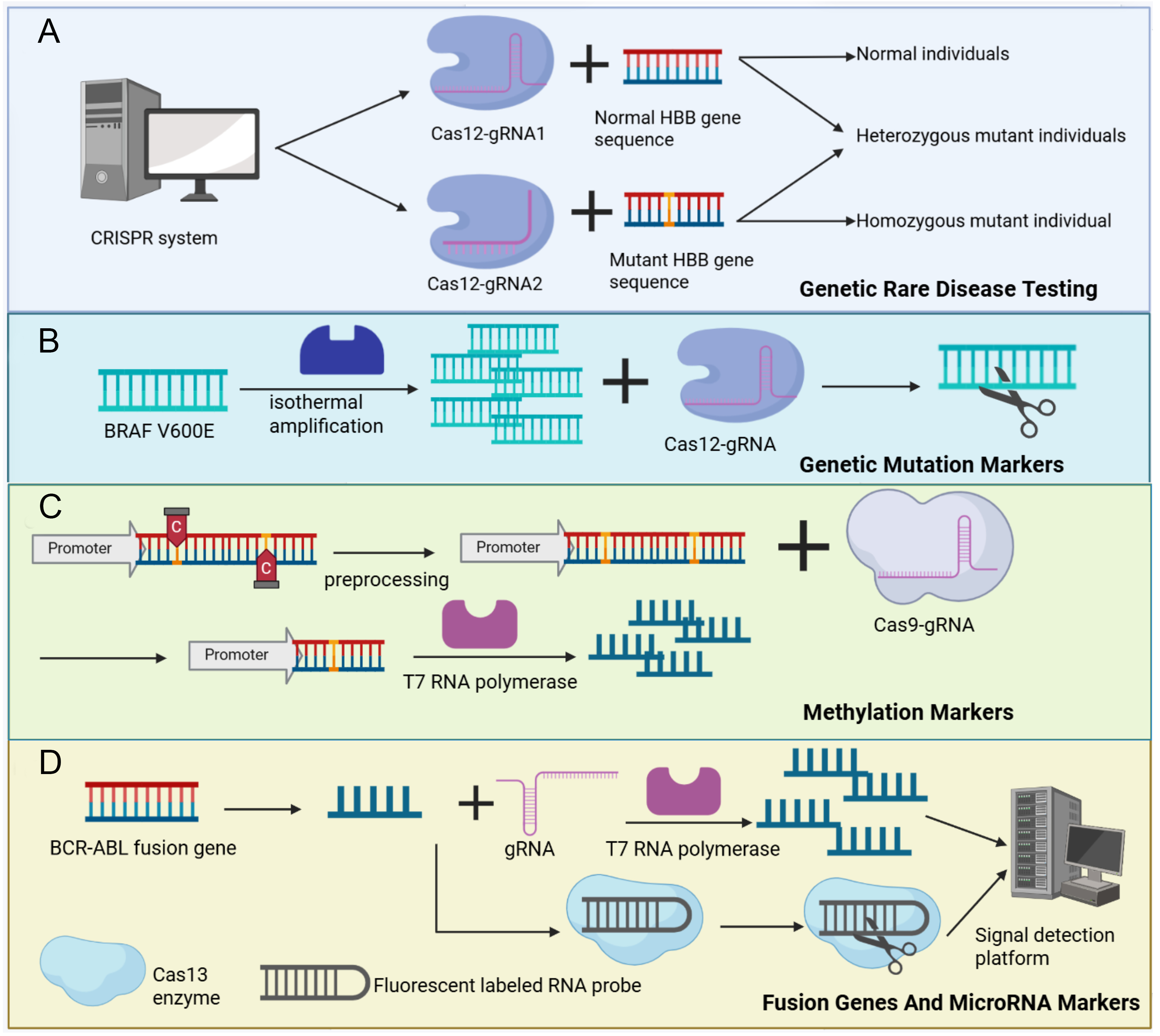
Figure 5. Mechanisms of CRISPR application in genetic rare diseases and early cancer screening. (A) Illustrates the CRISPR/Cas12 detection system incorporating a specifically designed gRNA, which rapidly distinguishes wild-type, heterozygous, and homozygous genotypes of the HBB gene for sickle cell disease screening. (B) Demonstrates the principle of the CRISPR/Cas12a detection system, which integrates RPA isothermal amplification technology and optimized reaction conditions for rapid detection of the BRAF V600E mutation in thyroid cancer. (C) Shows the mechanism by which Cas9 nickase, combined with T7 promoter amplification technology, enables methylation-dependent detection of the SEPT9 gene for early-stage colorectal cancer screening. (D) Presents the CRISPR/Cas13 system targeting the BCR-ABL fusion breakpoint, which specifically recognizes the fusion transcript and employs signal amplification technology to achieve rapid and highly sensitive detection of the BCR-ABL fusion gene for chronic myelogenous leukemia monitoring.(Created in BioRender. Gao, W. (2026) https://BioRender.com/i6qvsh1).