

fig3
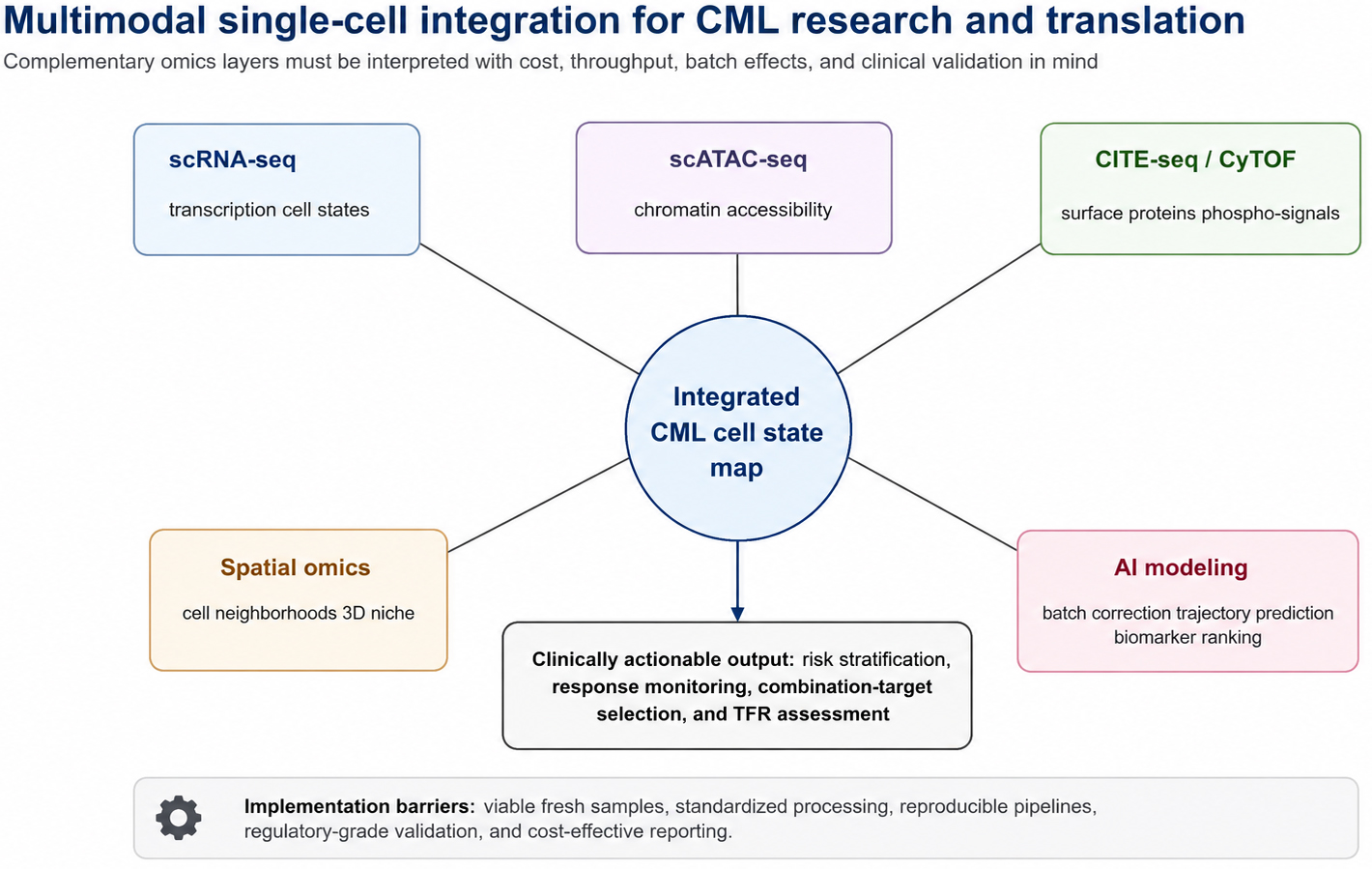
Figure 3. Technological synergy and multimodal data integration in CML research. A comprehensive framework demonstrating the convergence of diverse single-cell and multimodal technologies to resolve the biological complexity of CML. scRNA-seq defines transcriptional cell states; scATAC-seq maps chromatin accessibility and epigenetic regulatory programs; CITE-seq and CyTOF facilitate parallel profiling of surface protein abundance and intracellular signaling pathways; spatial omics, including CODEX-based approaches where available, helps characterize cell neighborhoods and three-dimensional bone marrow niche organization; and AI-assisted computational modeling supports batch correction, trajectory prediction, and biomarker prioritization. This integrated approach enables a holistic understanding of CML across multiple biological scales, from gene regulation and epigenetic states to protein execution, spatial organization, and clinically interpretable decision support. This figure was redrawn by the authors using Python-based vector drawing and Microsoft Office-compatible elements; no third-party copyrighted materials were reused. scRNA-seq: Single-cell RNA sequencing; scATAC-seq: single-cell assay for transposase-accessible chromatin using sequencing; CODEX: co-detection by indexing; CITE-seq: cellular indexing of transcriptomes and epitopes by sequencing; CyTOF: cytometry by time-of-flight; 3D: three-dimensional.