



Volume 5, Issue 2 (2026) – 18 articles
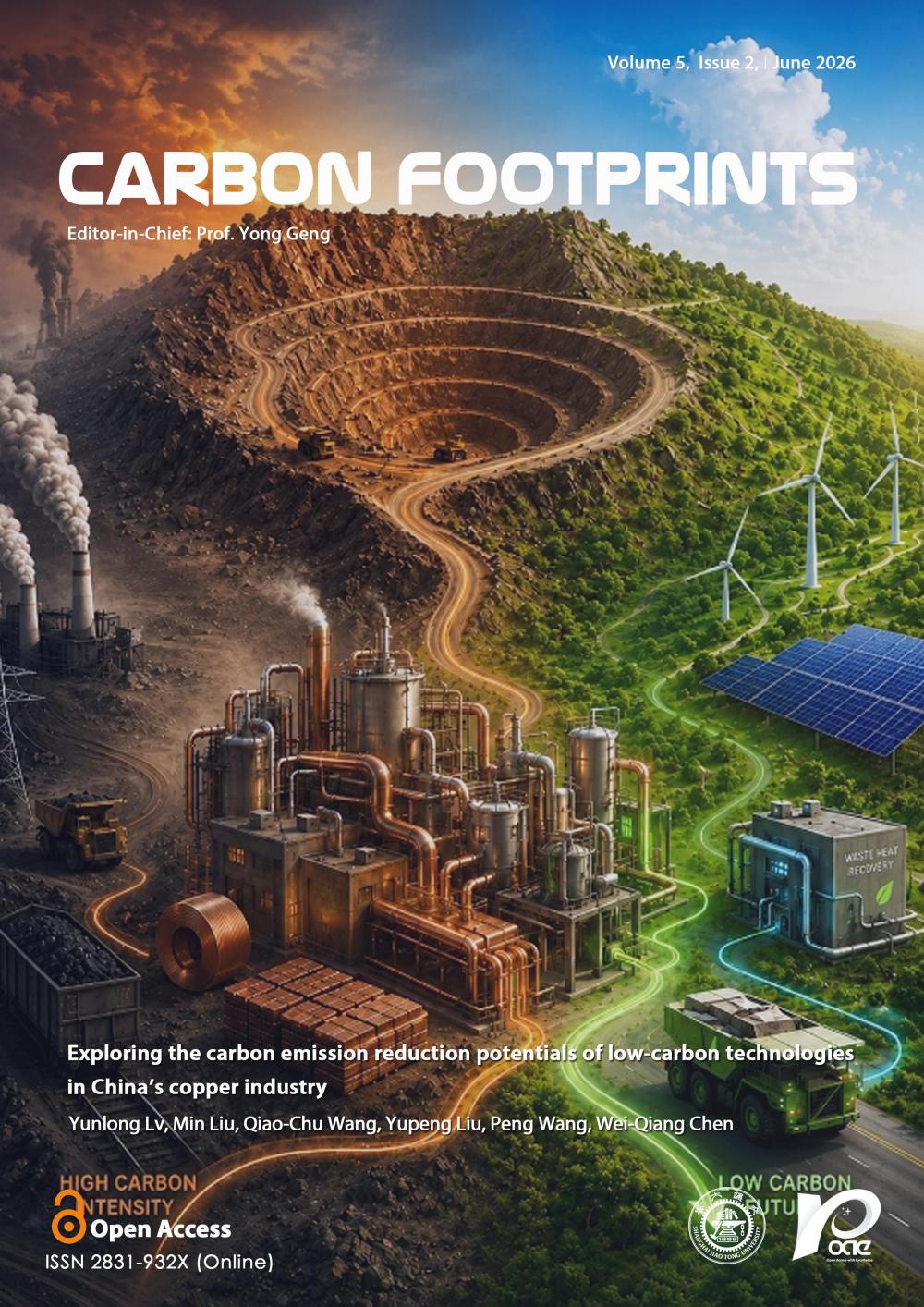
Cover Picture: Primary copper (Cu) production is highly carbon-intensive because mining, smelting, and refining require substantial energy inputs, posing a major challenge to the industry’s low-carbon transition. Although low-carbon technologies are widely regarded as essential for decarbonization, the costs, benefits, and emission-reduction effects associated with different levels of technology adoption remain unclear, thereby hindering the development of effective decarbonization strategies for the Cu industry. This study evaluates 44 low-carbon technologies for primary Cu production and identifies optimal technology packages and adoption pathways for China's Cu industry. The analysis yields three main findings. (1) At the technical level, molten-salt heat storage and exchange technology demonstrates substantial mitigation potential and strong economic performance, making it a priority option for low-carbon technological transformation. (2) At the firm level, firms with strong investment capacity for low-carbon technologies (≤ 2,600 CNY/tCu) can adopt the most comprehensive technology packages, contributing approximately 62% of the cumulative carbon emission reductions (CERs) in China’s Cu industry from 2025 to 2050. These firms are therefore expected to play a leading role in sectoral decarbonization. (3) At the industry level, deploying technology packages tailored to firms with different investment capacities could enable China’s Cu industry to achieve cumulative CERs of approximately 190 Mt CO2-eq by 2050, with a corresponding cumulative investment cost of approximately 20 billion CNY. This study provides decision support for screening and implementing low-carbon technologies in the Cu industry.
view this paper 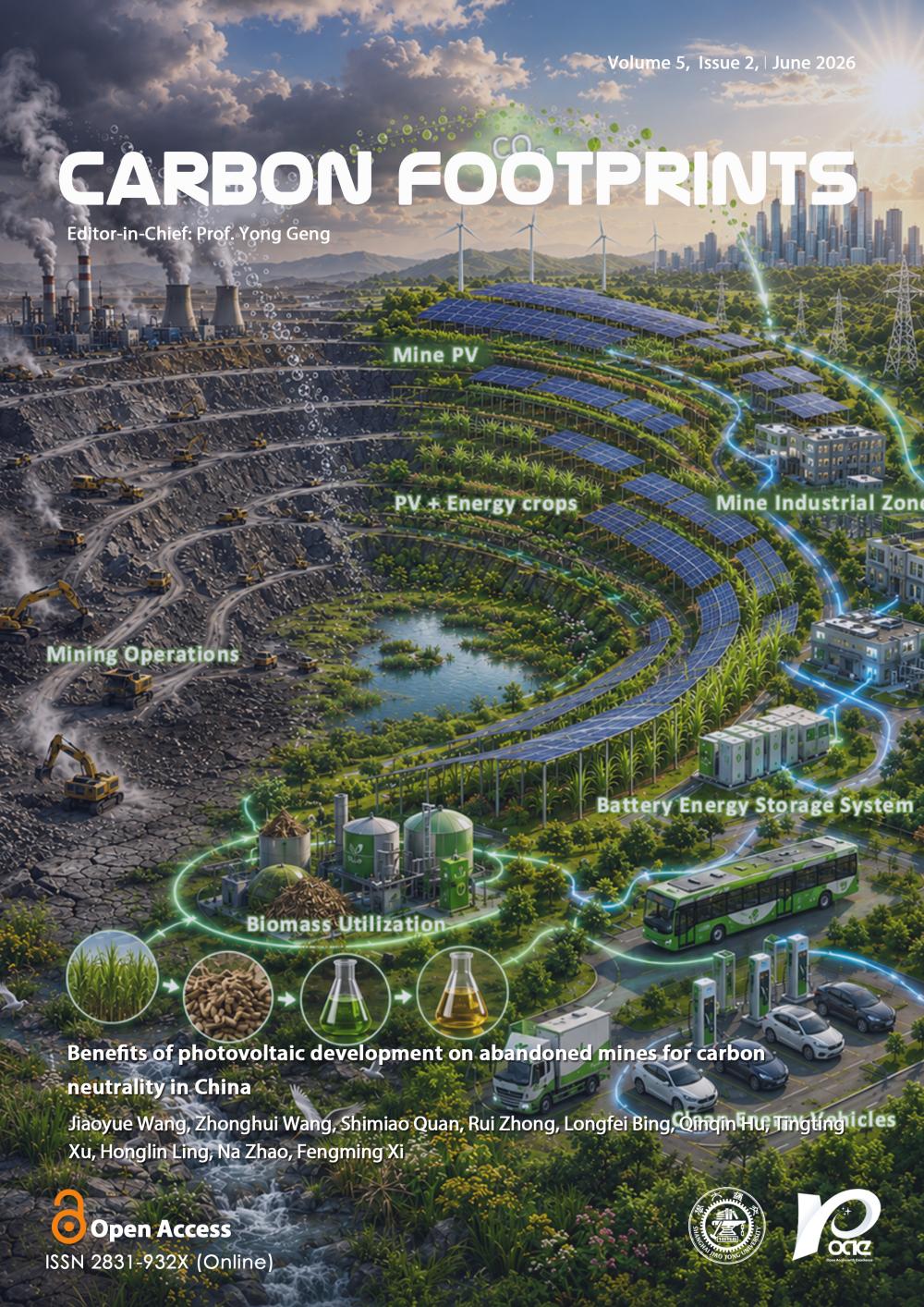
Back Cover Picture: Amid increasing pressure to reduce carbon emissions and address the energy crisis, solar power has emerged as a key alternative to fossil fuels. China possesses extensive abandoned open-pit mines suitable for photovoltaic (PV) power development; however, their carbon mitigation and energy conservation potential remains largely underutilized. In this study, we develop an integrated model to quantify the life-cycle carbon mitigation potential of PV systems on these mines, combining PV power generation with ecological restoration of mine sites. The results indicate that developing PV systems on abandoned open-pit mines in China could generate 1.34-2.93 EJ yr-1 of renewable energy and reduce CO2 emissions by 278.85-613.79 Mt yr-1, accounting for 5.9%-12.8% of China's coal-fired power generation and 2.8%-6.2% of its carbon emissions in 2020. Replacing conventional electricity with PV power yields greater carbon mitigation (611.63 t CO2 ha-1) than bioenergy alternatives, including biopower (102.96 t CO2 ha-1), ethanol (61.99 t CO2 ha-1), and biodiesel (17.13 t CO2 ha-1). Inner Mongolia, Xinjiang, Shandong, Hebei, Guangxi, and Yunnan were identified as key provinces with high renewable energy production and corresponding CO2 mitigation potential, collectively contributing 44%-45% of the total mitigation potential. Overall, an energy-oriented ecological restoration model, such as the “PV+” scenarios for abandoned open-pit mines, is economically feasible. This study provides geographically tailored information to help decision-makers optimize the use of multifunctional land resources, supporting the green transformation of the mining industry and advancing China’s dual carbon targets.
view this paper