


Volume 6, Issue 3 (2026) – 10 articles
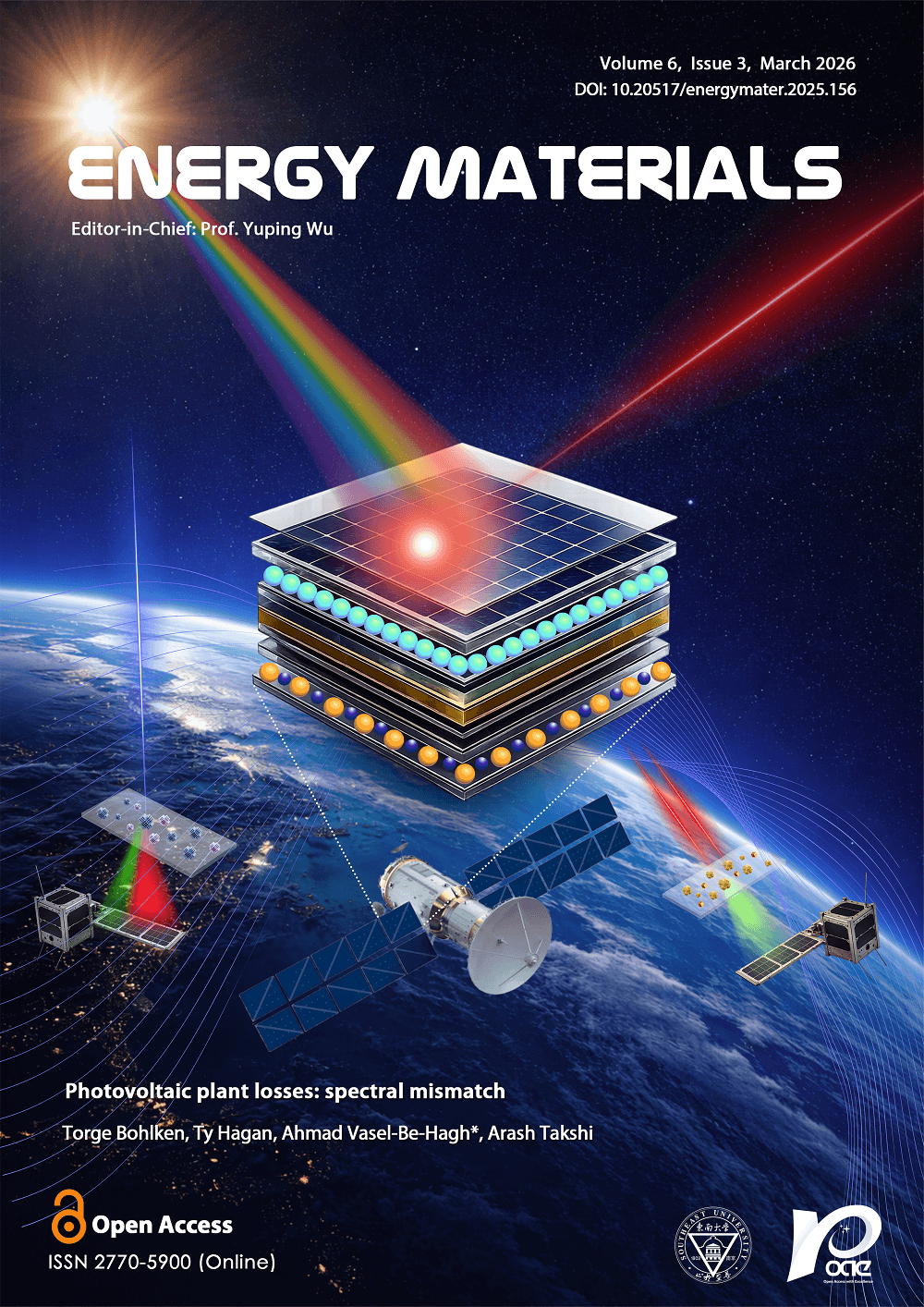
Cover Picture: Understanding solar photovoltaic plant losses, including optical and electrical losses, is vital to developing mitigating strategies and ensuring the economic viability of solar projects. The most significant optical loss is spectral mismatch. Spectral mismatch losses include thermalization and transmission. Spectral mismatch accounts for approximately 60% to 65% of total energy losses in conventional solar panels, with thermalization constituting around 2/3 and transmission representing the remaining. This paper shares the essential fundamentals underlying spectral mismatch, quantitatively reports spectral mismatch losses for various conditions, and discusses the mitigating strategies and their potential effectiveness. An intercomparison of the reviewed mitigation technologies is provided for PV stakeholders and researchers, comparing commercial readiness, cost, manufacturability, and efficiency improvement potential. Mitigation technologies include cell modification and spectral conversion, both of which are discussed in detail, including multijunction structures, co-sensitization, hot carrier and hybrid thermoelectric solar cells, quantum dot and quantum well solar cells, upconversion, downconversion, and downshifting.
view this paper 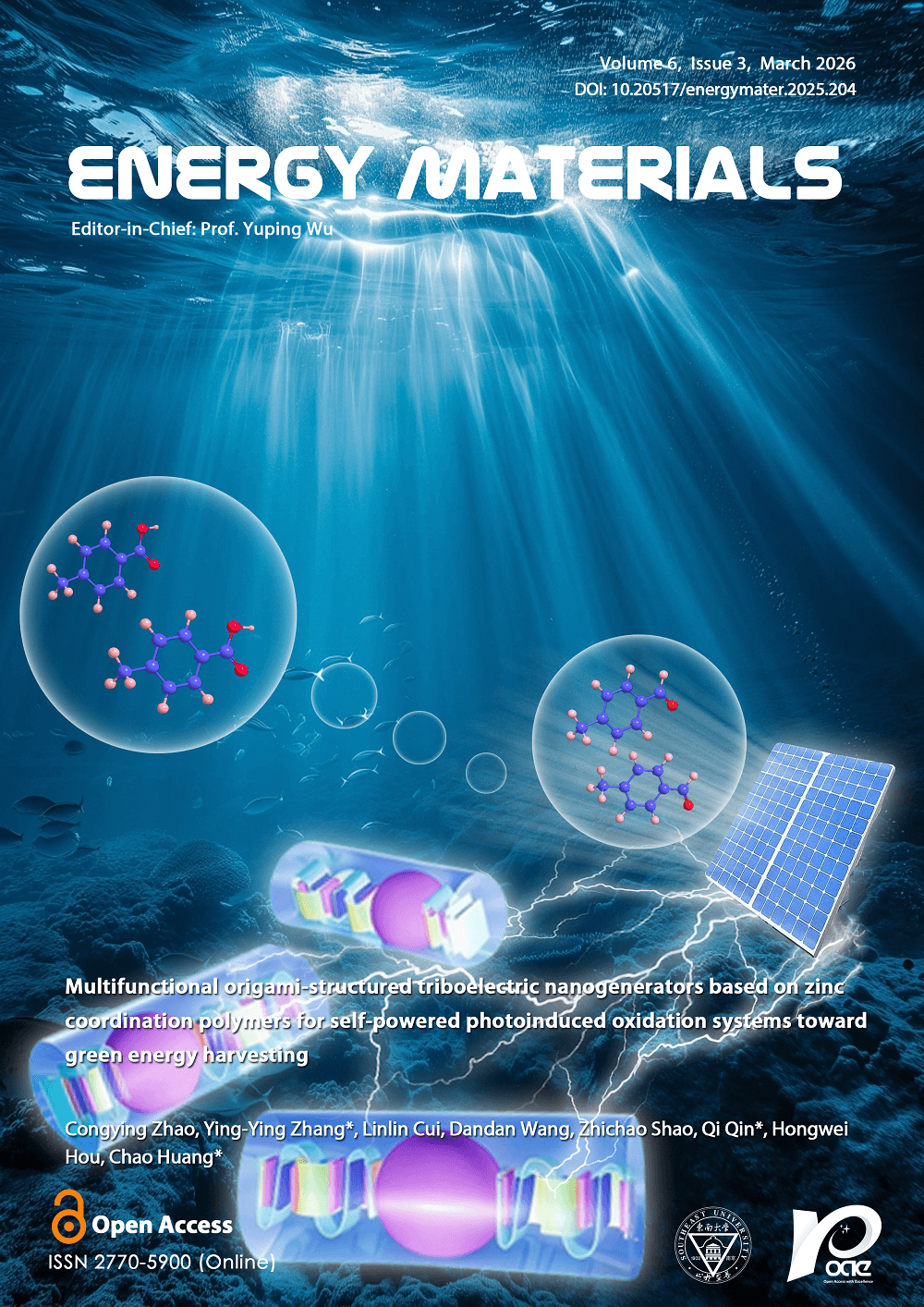
Back Cover Picture: Development of multifunctional triboelectric nanogenerators (TENGs) capable of efficiently harvesting diverse low-frequency mechanical energies for self-powered systems remains a significant challenge. To address this issue, we designed and fabricated a zigzag-origami-structured TENG based on composite films by integrating a zinc coordination polymer (Zn-CP) with ethylcellulose (EC), aiming to convert human-motion and water-wave energies into electricity to drive a self-powered photo-induced oxidation system. A series of flexible Zn-CP@EC composite films with varying Zn-CP contents were prepared, among which the 10% Zn-CP@EC composite film exhibited the best triboelectric performance. By scaling the film dimensions and integrating multiple origami-structured 10% Zn-CP@EC-TENGs (Z-TENGs), the output performance was further enhanced, with the six-unit device (Z-6) showing the best performance under palm pressure. The Z-6 device, encapsulated in a plastic enclosure, was deployed in an oscillating water tank to harvest wave energy, which successfully powered LEDs as light sources for the photo-induced oxidation of aldehydes to carboxylic acids with high selectivity and efficiency. This work demonstrates that CP-based composite films can serve as effective triboelectric materials for scalable TENGs, enabling the realization of self-powered photochemical systems driven by diverse environmental mechanical energies.
view this paper